Get Full Government Meeting Transcripts, Videos, & Alerts Forever!
Get email alerts on the Physician Assistants Workforce Ratios topic
No spam. Unsubscribe anytime.
Physician assistant board urges flexibility on supervision, cites workforce growth and asks for fee adjustments
Summary
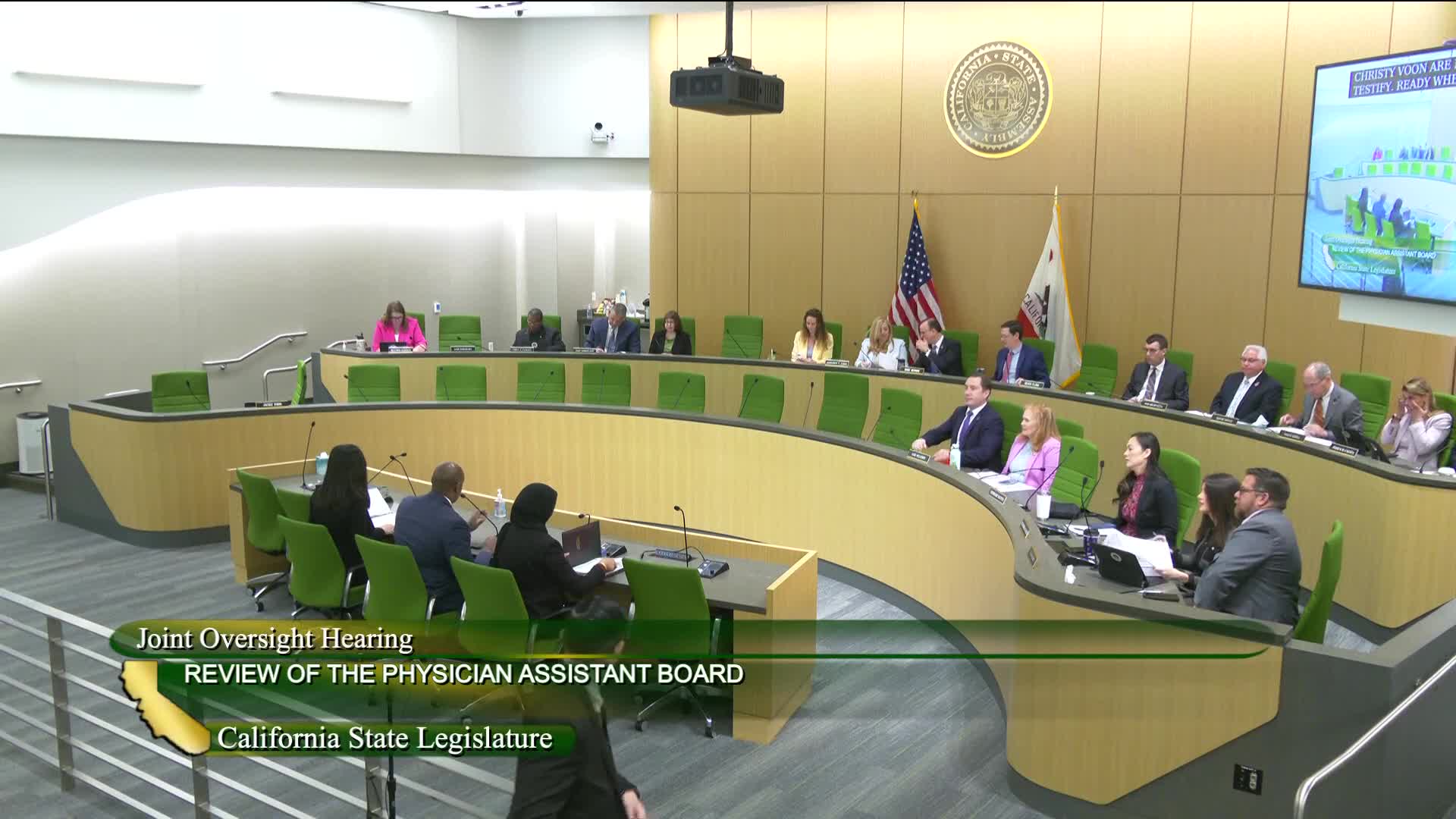
The Physician Assistant Board reported a 22% growth in licensed PAs since its last review and urged consideration of changes to supervision ratios and practice agreements to expand access to care, particularly in rural areas; stakeholders and medical groups debated safety and oversight tradeoffs.
The Physician Assistant Board told the joint Assembly and Senate committees that California is home to roughly 18,200 physician assistants and that the profession has grown about 22 percent since the last sunset review. The board asked lawmakers to consider modest fee adjustments to sustain enforcement and licensing operations and highlighted state efforts to modernize PA practice law (SB 697).
Why it matters: PAs are widely used to expand access to primary and specialty care, especially in undersupplied regions. Rules governing written practice agreements and physician‑to‑PA supervision ratios influence hiring, workforce deployment and clinic operations across the state.
Workforce numbers and education pipeline: The board said the number of PA education programs in California rose from 16 to 20 over the last five years, with several additional applicant programs awaiting national accreditation. If existing programs remain operational, the board estimated more than 1,000 PA graduates could enter the workforce annually.
Ratios and practice agreements: Committee members discussed whether California should relax its 1:4 physician‑to‑PA ratio or eliminate written practice‑agreement paperwork to allow teams to allocate supervision according to clinical needs. The board and many PA organizations argued that reducing or removing ratio and written‑practice rules could immediately increase access to care. Medical groups urged caution, saying written practice agreements clarify responsibilities and help ensure safe care.
Fees and enforcement: The board said enforcement accounts for roughly half its annual budget and that fees have not been adjusted in decades; the board proposed adjusting statutory caps and raising an initial licensing fee from $200 toward the existing statutory cap of $250 to cover rising administrative and enforcement costs. Board leaders said they had engaged stakeholders about fee changes, and that a regulatory package for incremental fee increases is in process.
Other issues: Committee members and public commenters raised AI and other emerging technologies as areas the board is monitoring but said they had not yet seen licensee complaints tied to AI. Lawmakers also asked about expedited licensing and military spouse accommodations; the board said it already has expedited review processes for military personnel and spouses.
Ending: Lawmakers encouraged continued work with stakeholders to identify actionable changes that would safely expand access, including potential changes to ratios and practice agreements, while maintaining oversight and consumer protections.