Get Full Government Meeting Transcripts, Videos, & Alerts Forever!
Get email alerts on the Psychotherapist Privilege topic
No spam. Unsubscribe anytime.
Board of Psychology argues limited access to psychotherapy records would harm investigations; therapists oppose proposed privilege exception
Summary
The Board of Psychology told the legislature it needs broader access to client records in some investigations — including child‑custody bias and alleged sexual misconduct — to pursue discipline, while professional associations urged keeping psychotherapist‑patient privilege intact and relying on subpoenas and court review.
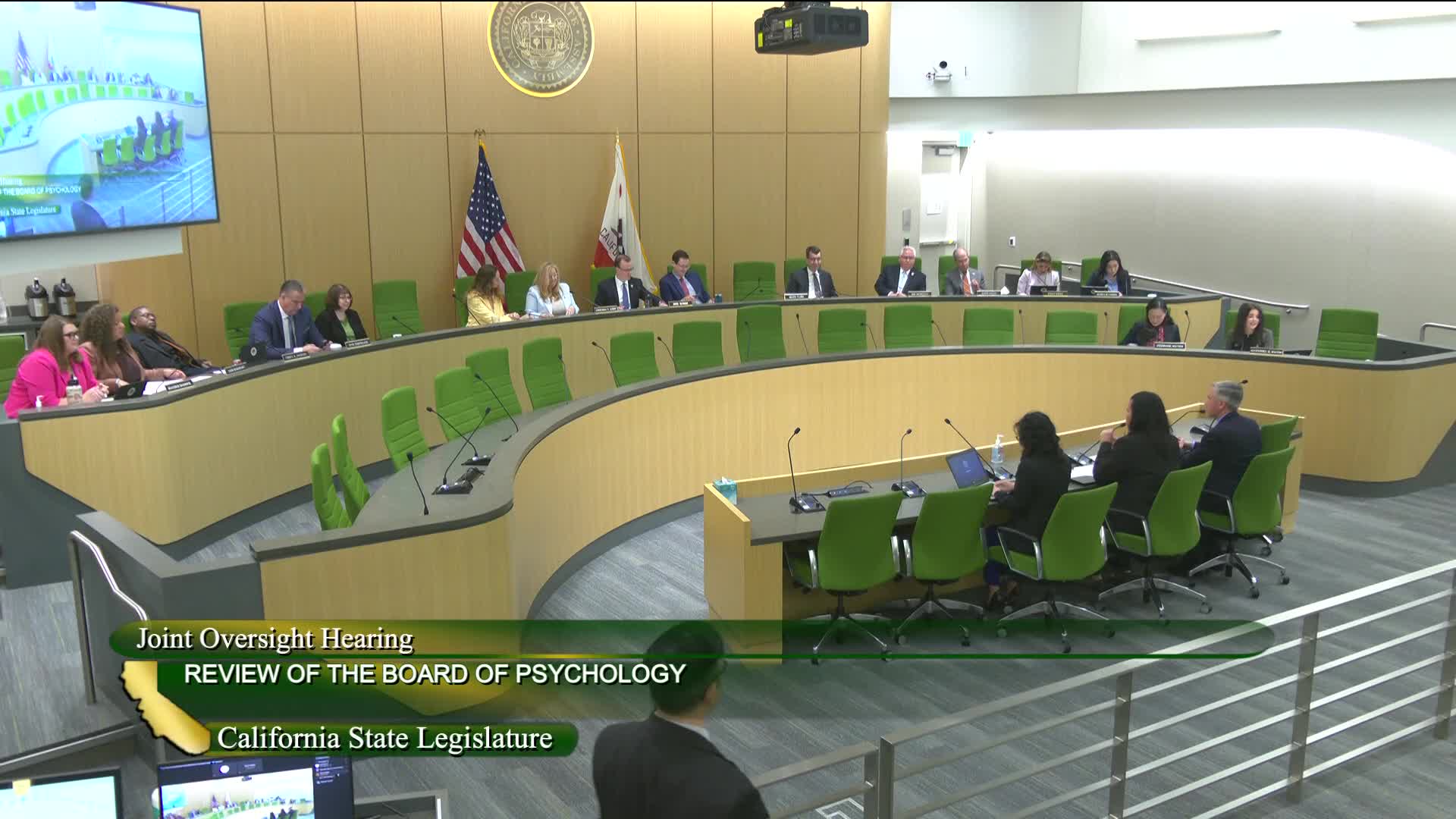
The Board of Psychology asked legislative committees to consider a statutory change that would allow board investigators limited access to psychotherapy records in some investigations without the client’s consent, a proposal that drew sharp pushback from psychologists’ associations and some committee members.
Board President Dr. Leah Tate described internal improvements the board has made since its last sunset review — including fee adjustments, continuing professional development requirements and new inactive and retired statuses — and said the board sometimes cannot obtain necessary records for investigations because patients will not consent. She cited child‑custody bias complaints and allegations of sexual misconduct as examples in which redacted or incomplete records can prevent meaningful investigative review.
Why it matters: Psychotherapy records are protected under evidentiary and confidentiality laws. The board says limited access to records would reduce case closures labeled "insufficient evidence" when full clinical notes and testing data are necessary to determine whether there was a departure from standards of care.
Board’s argument: The board described its current process for maintaining confidentiality of records and said when cases go to the Attorney General for prosecution, files are redacted and protective orders are obtained. The board told the committee the subpoena process to obtain records can be costly and slow — costing tens of thousands of dollars and taking over a year — and argued that a carefully circumscribed privilege exception would improve consumer protection by enabling the board to pursue meritorious complaints that are otherwise unprovable.
Opposition from professional groups: The California Psychological Association, the California Association of Marriage and Family Therapists and other groups told the committee they oppose an exception. They argued the current path — subpoenas and judicial review — protects patient privacy and self‑determination, and that changing the standard risks chilling patients from seeking care and could expose victims (for example, domestic‑violence survivors) to harm if records were disclosed without sufficient judicial oversight.
Committee reaction: Some legislators said they were inclined to protect psychotherapist‑patient privilege and wanted more analysis of how often the subpoena path results in closed cases and whether reforms to subpoena processes could be a narrower fix.
Ending: The hearing did not produce a legislative decision. Lawmakers asked for more data and for the board to provide examples and legal analysis so the committee could weigh patient privacy against the board’s disciplinary needs.