Get Full Government Meeting Transcripts, Videos, & Alerts Forever!
Get email alerts on the Small Business Workforce topic
No spam. Unsubscribe anytime.
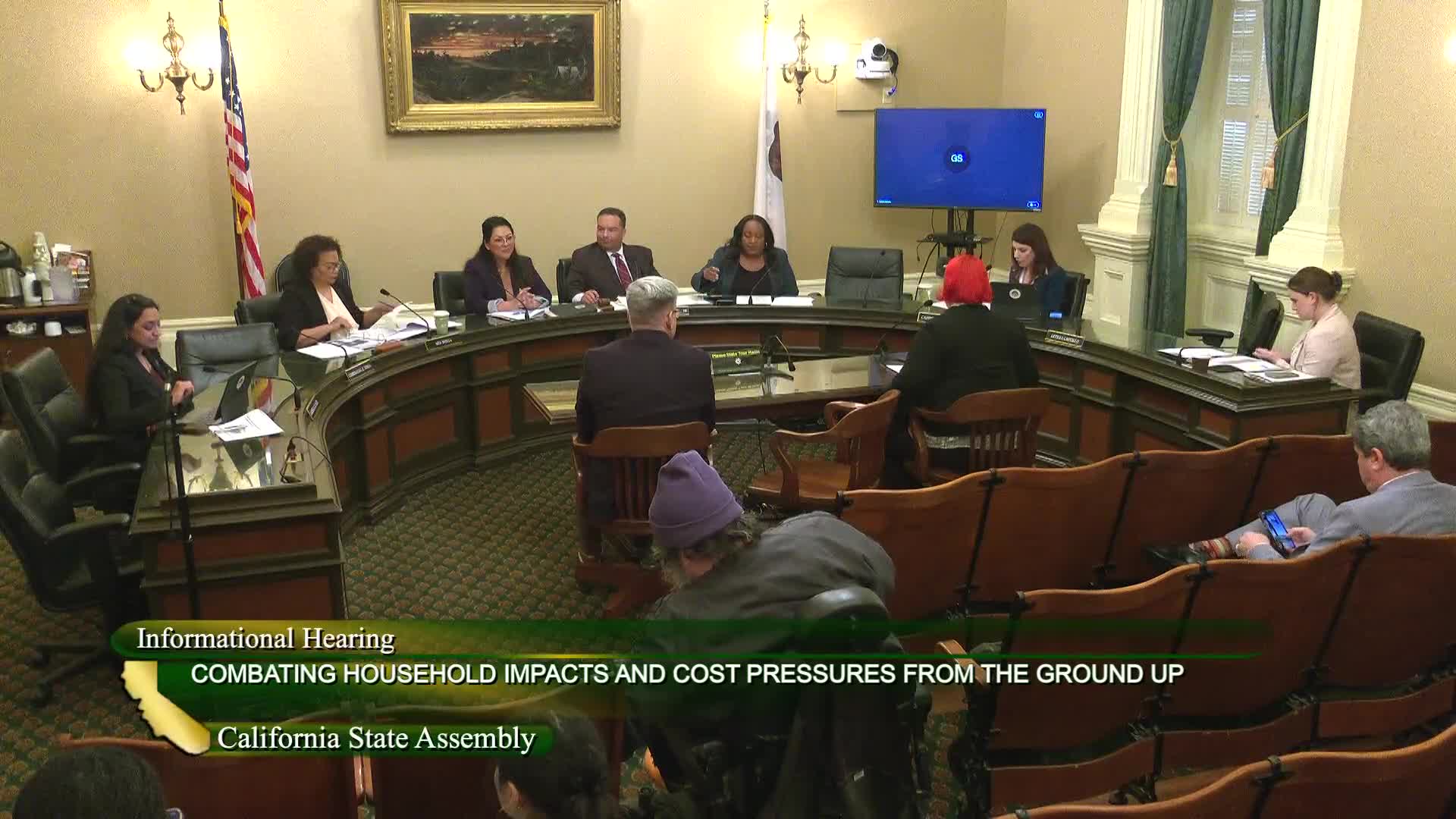
Small-business owners, SBDCs and regional training centers tell Assembly about boots-on-the-ground supports
Summary
Small-business support organizations and regional training programs described technical assistance, outreach gaps and successful workforce training that moves participants into higher-wage manufacturing and services jobs.
Small-business development centers (SBDCs), local workforce programs and a regional training institute described a mix of direct assistance, capital access and mobile training that they said is producing measurable results for entrepreneurs and jobseekers.
Juliana Ramirez, owner of JR Bookkeeping and an SBDC client and mentor, told the committee her firm grew from a living-room startup in 2012 into a multi-employee firm after technical assistance programs, workforce training and loan programs helped her secure capital and staff. "These organizations provide the mentorship, funding, and workforce support necessary for businesses not only to survive, but to thrive," Ramirez said.
Danny (David) Fitzgerald, who represents California's five SBDC networks, gave statewide program data: about 4.2 million California small businesses meet the SBA definition of fewer than 500 employees, and roughly 3.4 million have no employees. He said the SBDC networks provided more than 500,000 hours of advising to more than 20,000 clients from 2022–2024, helped clients access roughly $4.6 billion in capital and supported more than 57,000 jobs in that period. Fitzgerald urged additional outreach and funding to reach self-employed operators who are hard to identify and serve.
Dave White, CEO of Opportunity Stanislaus, described the Volt Institute, a regional industry-led training center that offers modular and mobile manufacturing training. Volt's on-site and "Volt to Go" mobile programs have placed a high share of trainees into jobs; White said Volt's overall placement rate is about 91 percent and noted recent U.S. Department of Labor and Economic Development Administration grants that funded mobile training equipment and expanded instrumentation and controls curricula.
Witnesses identified continuing needs: more outreach funding to reach sole proprietors and home-based businesses, stronger data on self-employed workers in labor statistics, and pathways to align short modular credentials with community-college credit. Committee members and panelists suggested pursuing prior-learning credit and other ways to link fast-track workforce credentials to college credentials to expand upward mobility.