Get Full Government Meeting Transcripts, Videos, & Alerts Forever!
Get email alerts on the Behavioral Health Workforce Telehealth topic
No spam. Unsubscribe anytime.
Board of Behavioral Sciences highlights workforce gaps, telehealth rules and licensure-pathway changes
Summary
The California Board of Behavioral Sciences told legislators it is working to expand the mental‑health workforce by easing licensure barriers, strengthening telehealth training and considering adoption of a national exam to improve portability for therapists.
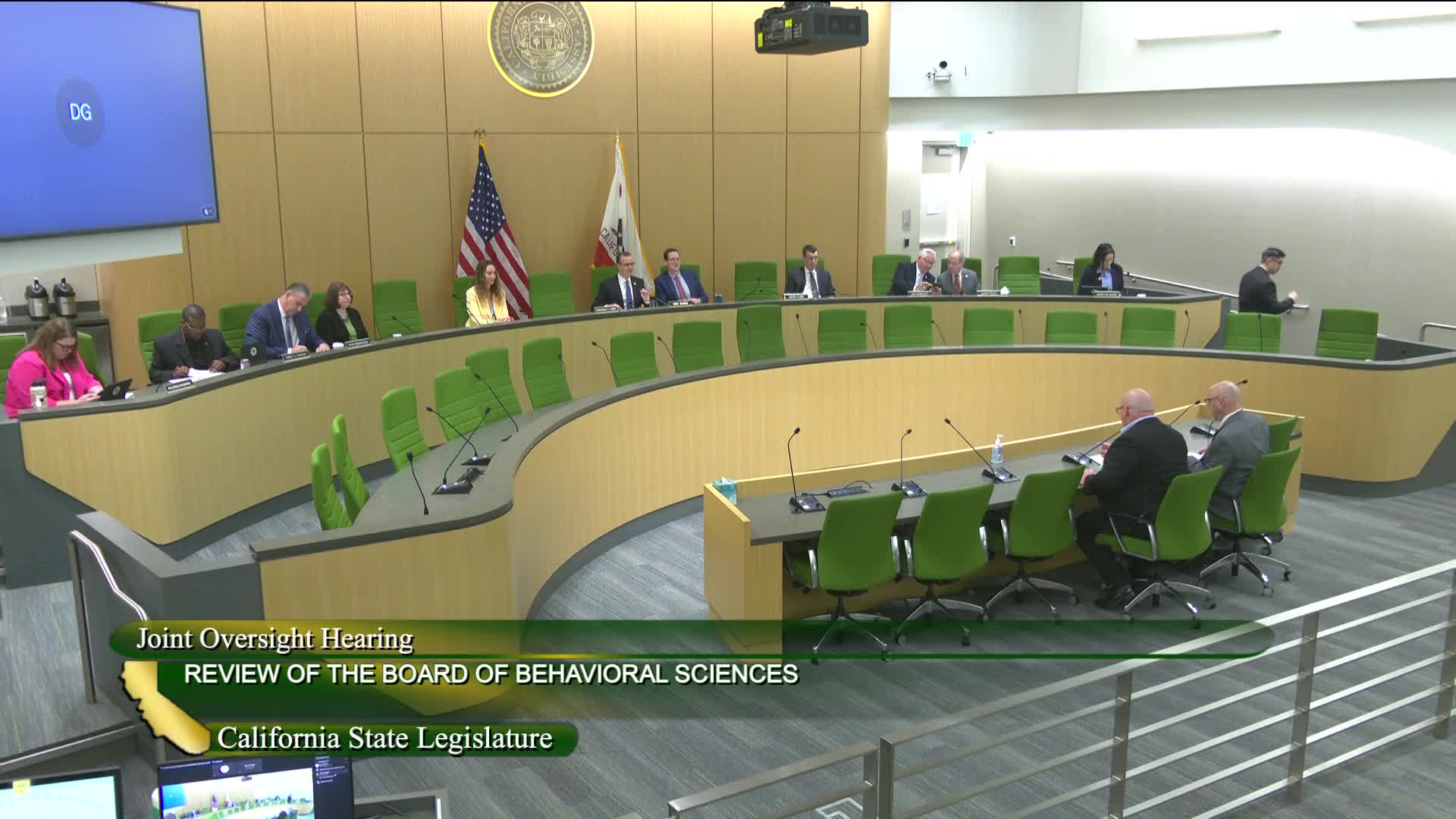
The California Board of Behavioral Sciences told the joint Assembly and Senate oversight committees that workforce development, telehealth regulation and supervision availability are top priorities as demand for mental‑health services grows statewide.
Chris Jones, president of the board, said the board regulates licensed marriage and family therapists, clinical social workers, professional clinical counselors and educational psychologists and that the board’s licensed population has grown roughly 25 percent over the last four years. He said the board is focused on “refining licensing requirements, adjusting supervision regulations to allow greater flexibility, and working to remove other hurdles that delay entry into the profession.”
Why it matters: California faces chronic shortages of mental‑health clinicians, especially in rural areas and in school settings. Board policies affect how quickly new clinicians enter supervised practice and how telehealth is regulated across jurisdictions.
Licensure pathway and portability: The board reported conducting a licensure‑pathway survey and creating handbooks and outreach materials to clarify routes to licensure. The board is also evaluating adoption of the AMFTRB national exam for licensed marriage and family therapists to improve portability and reduce multistate costs; the board said it has already used an expedited pathway for some out‑of‑state applicants and that “approximately 5,000 licensees” have applied through that pathway.
Supervision and schools: Committee members and board representatives discussed supervision shortages and incentives to increase supervisors, including continuing‑education credit for supervisors and expanding who may supervise certain registrants (noting AB1651 expanded supervision options for some license types). The board also highlighted pupil personnel pathways that allow social workers to work in schools and encouraged use of associates-employed models where schools hire associates and provide supervision locally.
Telehealth, privacy and new technology: The board has strengthened telehealth training requirements; as of July 2023 applicants and licensees must complete at least three hours of coursework in telehealth law and ethics. The board said it had issued telehealth best‑practice guidance and continues to study privacy, recording and data‑sharing risks, including concerns raised by platform layoffs (for example, Headspace) and potential artificial intelligence uses in mental‑health practice.
Next steps: The board said it will continue outreach and is finalizing an online registration system to shorten turnaround times. It also plans targeted surveys on supervision and workforce deployment to inform future regulatory changes.
Ending: Legislators encouraged the board to keep advancing licensure clarity, to monitor telehealth privacy and to refine supervision options to expand access, particularly in schools and rural communities.