Get Full Government Meeting Transcripts, Videos, & Alerts Forever!
Get email alerts on the Healthcare Workforce topic
No spam. Unsubscribe anytime.
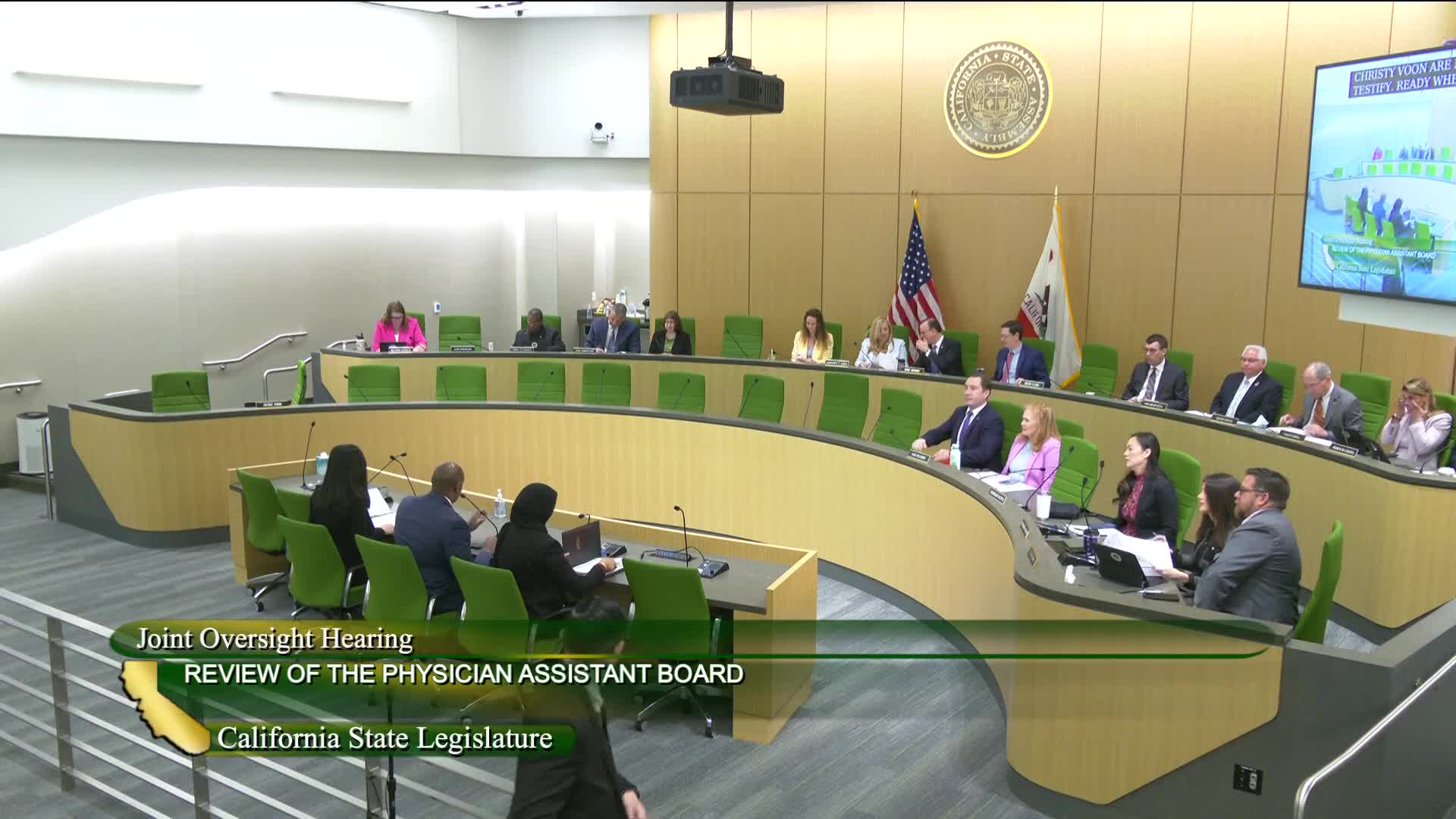
Physician assistant board urges flexibility as lawmakers probe practice agreements and workforce expansion
Summary
The Physician Assistant Board told lawmakers California now has about 18,200 PAs and more education programs; members and stakeholders debated whether physician–PA ratios and written practice agreements should be relaxed to expand access in underserved regions, with supporters urging employer- and site-level flexibility.
The Physician Assistant Board reported to the joint sunset committees that California’s PA workforce has grown and described regulatory steps intended to modernize practice while preserving patient safety.
Board president Vasco Deonkidd said the state has roughly 18,200 physician assistants—a 22 percent increase since the previous review—and currently 20 accredited PA education programs with more in the accreditation queue. The board said those increases could add more than 1,000 PA graduates to the workforce annually if programs remain active.
Committee focus: ratios and practice agreements Lawmakers and public witnesses repeatedly questioned whether the state’s statutory physician-to-PA ratio and written practice-agreement requirements limit access to care, especially in rural and medically underserved regions such as the Central Valley. The board said it is tracking reforms in other states and has not formally proposed removing practice agreements, but it noted precedent: California passed AB 1070 (2023) raising the ratio to 1:8 for home-health settings and other states have eliminated or loosened ratio requirements.
Supporters’ view Representatives of the California Academy of PAs, practicing PAs and several public commenters urged more flexibility, arguing ratios and a one-size-fits-all written practice agreement can block timely hiring and deployment of PAs. Testimony from clinicians and educators described scenarios where employers and medical directors could use discretion to expand supervision when needed to meet demand; several witnesses said evidence from other states did not show increased malpractice risk after reforms.
Board staff and concerns Board staff said the board has not yet taken a formal position to eliminate ratios statewide, and it cautioned any change must protect supervision, prescribing safety, and patient outcomes. The board said it is monitoring national trends and may bring the topic to its members for deliberation.
Other items The board described Senate Bill 697 (implementation completed Oct. 1, 2024) that modernized PA practice act administrative requirements and noted the board’s enforcement responsibilities and the share of budget consumed by enforcement activities. The board said it plans a modest fee regulation package to increase the initial licensing fee within statutory caps and will engage stakeholders through a formal regulatory comment process.
No decisions at hearing No statutory changes were adopted during the hearing. Committee members asked the board to examine ratio alternatives, pilot projects for increased site-level flexibility, and data on access and patient safety associated with ratio changes.