Get Full Government Meeting Transcripts, Videos, & Alerts Forever!
Get email alerts on the Transit topic
No spam. Unsubscribe anytime.
Committee approves sending 80 Second Avenue locally preferred alternative to full council
Summary
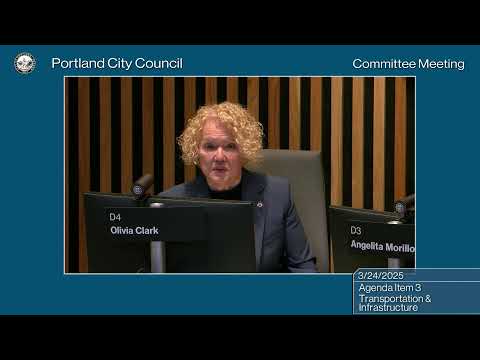
The Portland Transportation and Infrastructure Committee voted to send a resolution endorsing the locally preferred alternative for the 80 Second Avenue transit project to full City Council with a 5-0 recommendation.
The Portland Transportation and Infrastructure Committee voted to send a resolution endorsing the locally preferred alternative for the 80 Second Avenue transit project to full City Council with a 5-0 recommendation.
The LPA would establish bus rapid transit for Line 72, define the corridor alignment and station locations, and set conditions of approval that PBOT and project partners must meet as design continues and the city seeks federal funding. PBOT Director Melissa Williams said the city’s transfer of the roadway from the state included funding to “address the condition of the roadway and safety deficiencies,” and that recent council actions have already directed tens of millions in local funds toward corridor work and sidewalks.
Why it matters: Williams and TriMet staff told the committee the corridor is one of the region’s highest-ridership and highest-delay bus lines. Staff said the project is intended to improve transit speed and reliability, make sidewalks contiguous, add station amenities and curb ramps at every stop, and deploy transit signal priority and zero-emission buses. Committee approval of the LPA is a prerequisite to regional sign-off and strengthens the application for federal small starts-type funding.
PBOT and TriMet presenters said the project is now in early design and steered by a committee that included community representatives and organizations such as Oregon Walks, Unite Oregon and others. Michael Kaiser, TriMet project director, said the project will be opened to deeper community outreach this spring and “we are about to enter into 30% design, and we’ll continue all the way through spring of 2027 until we wrap up the complete design package and intend to move into construction at that point.”
Public testimony focused on access and equity. Zachary Lorentzen of Oregon Walks, who served on the project steering committee, praised the plan’s emphasis on sidewalks and cautioned that consolidating stops improves speed but only if people can reach the stops: “unless people can get to those stops, the sidewalk connectivity is completed, then we are really lower in service for people on the corridor,” he said. John Giacobbe, a South Tabor resident, asked whether TriMet had analyzed which stops are most used by riders with disabilities and urged that stop consolidation be considered alongside sidewalk upgrades.
Funding and next steps: Staff described a project cost estimate presented to the committee of roughly $340 million and said the city has already contributed and committed local funds to leverage additional dollars. Williams said the LPA adoption and partner approvals are required before a regional joint committee and Metro Council can consider the project; staff told the committee they expect the LPA to reach the City Council agenda on May 7 and expect the regional process to conclude in June.
The committee’s formal action was to forward Resolution Document No. 2020593 to full council with a recommendation that the resolution be adopted. The committee vote to send the resolution to council was unanimous and the item will return to the full City Council for final consideration and any formal adoption.
PBOT and TriMet staff said more design-level outreach and site-by-site work will take place in April and thereafter; the committee directed staff to continue community engagement and to consider sidewalk connectivity and priority design elements as the project advances.