Get Full Government Meeting Transcripts, Videos, & Alerts Forever!
Get email alerts on the School Funding topic
No spam. Unsubscribe anytime.
Lee County leaders get school‑funding primer, form 5‑on‑5 committee to pursue joint budgeting
Summary
A School of Government presentation outlined how state, county and federal dollars flow to schools and highlighted recurring funding disputes. After the presentation, Lee County commissioners and the school board voted to form a 5‑on‑5 committee and directed county and school finance staff to begin coordination.
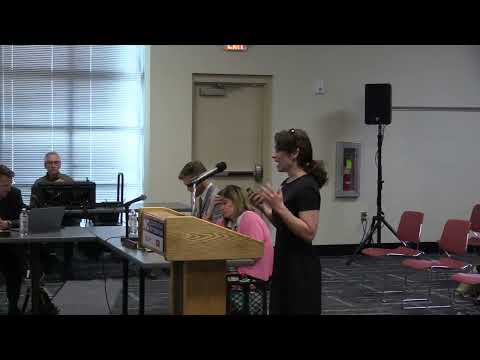
Grama Malanzi, an outreach associate with the School of Government, gave Lee County elected officials a one‑hour overview on school funding March 19 and described why counties and school boards frequently clash over capital and operating dollars.
Malanzi said the state provides the bulk of education funding: "The majority of public school funding comes from the state." She summarized how the state sends operational support through position allotments, dollar allotments and categorical allotments; how average daily membership (ADM) and reconciliations affect cash flow; and how earmarked sales tax and lottery dollars contribute to capital projects. She also reviewed the statutory dispute process that can lead to mediation or litigation when local boards disagree on funding levels.
The why: The presentation and Q&A underscored that Lee County faces the same tensions identified statewide — late state budgets, caps on categorical money, fluctuating student counts, charter‑school enrollment that shifts per‑pupil funding, and limits on what counties may legally direct local dollars to pay for. Malanzi noted the statutory language on facilities assigns overlapping duties, which can leave both boards uncertain about who must pay for what.
Dare County manager Bobby Allen described a multi‑year local approach his county uses to reduce annual budget conflict: a staff‑driven baseline built from the previous year’s actual operating and variable costs, a CPI adjustment, and a separate conversation about one‑time or new recurring items. "What we found was that the majority, 90 some percent of the cost of operating the schools are fixed," Allen told the meeting, explaining that focusing on fixed versus variable costs helped the county and school board reach a predictable funding baseline and reduce adversarial budget fights.
After discussion, the Lee County Board of Commissioners voted to direct county staff to coordinate with Lee County Schools staff to explore a similar collaborative process. The motion, seconded and approved, instructed the county manager and interim budget/finance staff to begin that coordination with the superintendent’s finance team. The board later approved a separate motion to form a formal 5‑on‑5 committee made up of county commissioners and school board members to further discuss capital improvement planning and other priorities.
Officials asked staff to bring back data during the coordination process. During the presentation board members pressed for clarity on several points Malanzi had raised: how categorical caps (she cited an example cap of 13% for certain special‑needs allotments) affect local budgets; how ADM reconciliation works under a recent change that gives districts a one‑year grace when ADM declines; and limits on counties’ ability to tie funds to specific teacher supplements or positions.
On capital finance, Malanzi said counties historically hold primary responsibility for facilities but the state has periodically contributed through bonds, targeted grants and earmarked sales‑tax and lottery funds. She also noted that if a capital funding dispute reaches litigation, courts must decide quickly for the fiscal year in question but appeals can take years, complicating remedies.
The meeting included a range of follow‑up direction: commissioners asked the county manager to work with the school superintendent’s team and with county finance staff on a schedule for comparative budgeting work. The school board and commissioners agreed to invite staff to reconvene with preliminary numbers and possible procedural proposals.
The meeting closed with an agreement to reconvene work through the new 5‑on‑5 committee; no change to Lee County’s existing capital plan or specific project schedules was approved at the meeting. Commissioners and school board members said they expect the committee and staff coordination to inform future budget decisions and to create more predictable operating and capital planning.
Ending — The March 19 joint session was framed as an information‑sharing and organizational step: officials received a technical primer on how state, federal and local funding interact and voted to pursue a locally tailored, staff‑led process to reduce annual conflict and improve joint planning.