Get Full Government Meeting Transcripts, Videos, & Alerts Forever!
Get email alerts on the General Government Operations And Appropriations topic
No spam. Unsubscribe anytime.
Legislature trims proposed 30‑year commercial lease cap to 15 years and advances bill to third reading
Summary
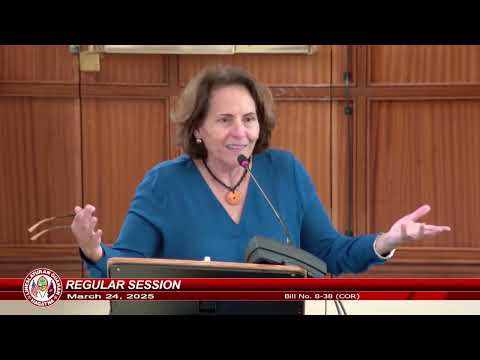
After hours of debate on bipartisan concerns about public oversight and investment certainty, the Guam Legislature amended Bill 8‑38 COR to lower a proposed maximum commercial lease term from 30 years to 15 years, rejected an amendment that would have grandfathered renewals for long‑term tenants, and moved the measure to third reading.
The Guam Legislature on Monday amended Bill 8‑38 COR to change a proposed maximum for commercial leases of government property from 30 years to 15 years, then moved the measure to third reading after a roll‑call vote to end debate.
Supporters said the change is intended to encourage long‑term private investment on Guam by giving tenants a longer horizon than the current five‑year limit. Opponents argued that extending terms too far away from legislative review would reduce transparency and risk locking public land into poor deals.
The bill, originally offered to amend provisions in what the author described as section 5‑1‑27 (Article 2, Chapter 5, Title 5 of the Guam Code), would increase the maximum commercial lease term for government property. The author framed the bill as a response to testimony that five years is too short for investors to recover major infrastructure investments and said agencies often face difficulty securing long‑term commitments under the present law.
“By the time most businesses recover their initial investment, their lease expires,” Senator Tydigwu said on the floor while urging a more moderate change. “A 15‑year lease strikes a fair balance between sustainability and accountability.”
During debate, several senators warned that removing or reducing legislative review for leases longer than the statutory maximum could create a procedural loophole. Senator Barnett offered an amendment intended to restore the Legislature’s final approval for “exceptional‑term” contracts that exceed the new limit, but the presiding officer ruled the Barnett amendment non‑germane and it was set aside after consultation with legal counsel. Barnett then proffered a separate amendment to reinstate the review language; that amendment failed on the floor.
Opponents of the measure repeatedly pointed to past lease arrangements that, they said, had undervalued public assets or lacked transparency. “This is a protection for [the people], against corruption, against a risk,” said a senator objecting to the blanket authority that would allow boards to approve long leases without legislative oversight.
Supporters countered that some public entities — including the Guam International Airport Authority, which testified in hearings — told lawmakers that prospective investors seek long terms, sometimes 20 to 30 years, to justify large capital investments. Senator Mamuto Tumayri, who offered a separate amendment proposing renewal rights for long‑standing tenants, said his aim was to reward businesses that have been “responsible tenants” and created local jobs.
Floor action on the measure included the author’s acceptance of an amendment to reduce the maximum from 30 to 15 years; the body adopted that amendment without objection. A motion to end debate (call the question) passed on a roll call of eight ayes and seven nays. The presiding officer then recognized the motion to move Bill 8‑38 COR to third reading; the motion carried and the bill was placed on the third‑reading calendar.
What happens next: the bill will appear on the Legislature’s third‑reading list where final debate and a vote for passage will occur. If enacted, the change would alter which agency approvals and legislative reviews apply to government commercial leases and could affect future procurement and negotiation processes.