Get Full Government Meeting Transcripts, Videos, & Alerts Forever!
Get email alerts on the Traffic Enforcement topic
No spam. Unsubscribe anytime.
Council reviews draft stop-sign camera ordinance as work session item; no final vote
Summary
City staff presented draft ordinance authorizing stop-sign monitoring systems under state law and discussed locations, technology and public-notice requirements. Council members asked about rental vehicle handling, school drop-off impacts and implementation safeguards; staff said the item will return as draft legislation for introduction.
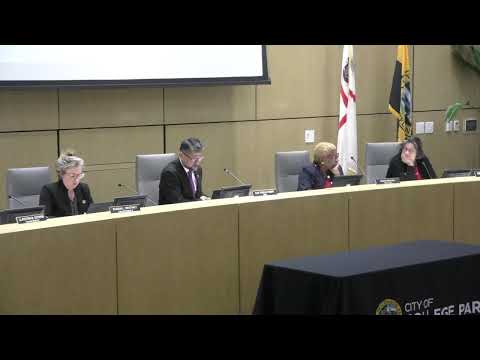
City staff presented a draft ordinance March 18 to authorize stop-sign monitoring systems under the Transportation Article of the Annotated Code of Maryland, and council members discussed technology, locations and implementation before directing staff to return the measure for formal introduction.
Public Services Director Jitendra Kukar briefed the council on a pilot program the city ran starting in September that tested enforcement at nine locations. Kukar said staff reviewed that data, consulted with the Bicycle and Pedestrian Action Committee and prepared proposed amendments to the city code to allow a stop-sign monitoring system consistent with state authority in Prince George’s County.
The draft ordinance cited the state provision that permits local jurisdictions in Prince George’s County to operate monitoring systems and establishes civil penalties for recorded stop-sign violations when no police officer issued a citation at the time of the incident. Staff said the statute authorizes a civil penalty up to $40.
Council members raised implementation questions. Councilmember Whitney asked how “highway” is defined in the state text; staff said the ordinance language reflects the state term and that a precise statutory definition would be provided with the draft ordinance. Councilmember Hale asked how citations are sent when the recorded plate belongs to a rental company; staff said the process parallels existing automated enforcement systems, which typically require the owner of record to receive notice while vendors and the city have processes to identify the actual driver when necessary.
Several members stressed the need to coordinate with schools and principal stakeholders before installing equipment. Councilmember Hernandez asked that staff consult with nearby school administrators before activating any camera site that could interact with school-drop-off patterns; staff said vendor systems can be configured and that the pilot approach allows adjustments.
Councilmember Mackey confirmed that the current step was consideration of draft enabling legislation and not vendor selection; staff said vendor and site specifics would follow public hearings and the formal ordinance process. City attorney (Stephanie) reminded council that the state statute includes notice and other procedural requirements that must be followed.
Mayor Curtad Mitchell asked staff to bring the draft ordinance forward for introduction at a future meeting; the council signaled support for returning the item with the draft ordinance and associated notice plans so the public may comment during the required hearing.
Provenance: staff presentation and council exchange on stop-sign monitoring systems occurred in a March 18 work session.