Get Full Government Meeting Transcripts, Videos, & Alerts Forever!
Get email alerts on the Governance topic
No spam. Unsubscribe anytime.
Placer County Planning Commission reviews draft procedures, officer roles and meeting format
Summary
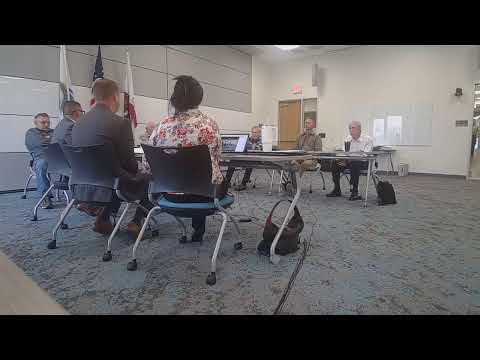
The Placer County Planning Commission held a workshop to review a draft procedures document and related governance topics, with staff asking commissioners for direction before bringing a revised version back for formal adoption.
The Placer County Planning Commission held a workshop to review a draft procedures document and related governance topics, with staff asking the commission for direction before bringing a revised version back for formal adoption.
Commissioners spent the session on a handful of administrative items that staff said were intended to modernize meeting operations and clarify expectations. Planning Director Chris (presenting the report) told commissioners the draft covers officer roles and a proposed change from a secretary role to a second vice chair, timing and format of meetings (9 a.m. start), the use of Zoom only for reasonable accommodations, and a clearer process for mileage reimbursement when commissioners travel to inspect project sites.
The draft procedures would formalize an existing practice of rotating chair and vice-chair roles, with the clerk maintaining a rotation list. Staff said the rotation is guidance and that commissioners retain the authority to vote differently if they choose. Commissioners generally supported keeping three executive officers (chair, vice chair and a second vice chair) to ensure leadership coverage when officers are unavailable.
On reimbursements, staff proposed a simple approval step: commissioners who plan to request mileage for site visits should email the planning director in advance so the department can document authorization. Staff said the change aims to make reimbursement requests auditable and to encourage site visits while ensuring finance can process payments with an approval chain.
Commissioners also discussed meeting logistics and public participation. Staff proposed moving the general public comment period to follow the planning director and commissioner reports so members of the public could comment with full context. Commissioners agreed staff responses to common public concerns should be summarized in the record where feasible, especially for large projects, to reduce repeated questions at hearings.
The workshop included discussion of Municipal Advisory Councils (MACs). Staff described an ongoing county effort to standardize MAC procedures, including better training, consistent agendas and minute-taking, and clearer expectations of MAC roles (review and comment on projects). Staff said Board Support Services and County Counsel are coordinating the changes and that some MACs will be provided additional staff support to improve records and public-facing materials.
Staff noted that the commission will continue to hold occasional hearings in Tahoe when items have local significance and that reasonable-accommodation options will be provided at such offsite locations. Commissioners were reminded that only one upcoming meeting (the next meeting) remains set as a remote/Zoom meeting because it was noticed that way prior to the change in remote-comment policy.
No formal motion or vote was taken at the workshop; staff recorded direction and will prepare a revised procedures document for a future meeting where the commission can adopt it formally.
Ending: Staff will revise the draft procedures to reflect the direction given at the workshop — including officer roles, meeting format, site-visit reimbursement documentation, and MAC process changes — and will present the updated document to the Planning Commission for formal consideration at a later date.