Get Full Government Meeting Transcripts, Videos, & Alerts Forever!
Get email alerts on the Ai Policy topic
No spam. Unsubscribe anytime.
Utah creates Office of AI Policy to study risks, offer regulatory relief for innovators
Summary
Utah officials described a new Office of AI Policy that will run a learning lab to study AI risks and a regulatory mitigation program to allow controlled experimentation, with early recommendations focused on AI in mental health and plans for public hackathons.
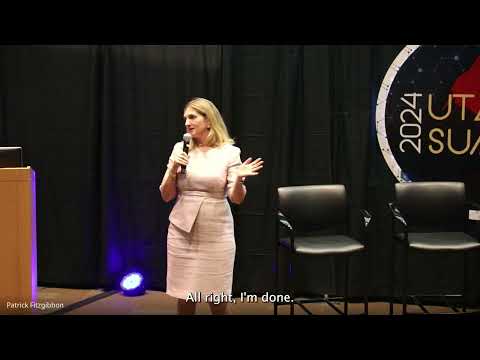
SALT LAKE CITY — Utah officials described a newly created Office of AI Policy onstage at a state business and commerce forum, saying the office will run a “policy learning lab” and a regulatory mitigation program intended to both protect the public and let companies test new AI products without immediate regulatory penalties.
Margaret (presenter) said the office has three goals: foster innovation, protect the public, and maintain an active learning posture so policymakers can adapt as technology changes. “We wanted to have an active way to observe and learn what was happening so we could make good decisions as policymakers,” she said.
The nut graf: The office will conduct deep dives on specific sectors, recommend statutory or regulatory changes to the legislature, and negotiate time-limited mitigation agreements with companies that want to pilot AI products in Utah. Officials presented the mental-health sector as the first deep-dive topic and outlined preliminary recommendations intended to balance consumer protection with paths for legitimate innovation.
Officials explained two main functions. First, the learning lab will identify high-priority problem areas — privacy and bias were explicitly mentioned — bring in experts and the public, and produce recommendations for lawmakers. Second, the regulatory mitigation program will allow companies to request temporary relief from enforcement or capped penalties while they test models, with oversight coordinated among relevant regulators.
Representative Jeff Moss said the approach was collaborative across the executive branch and the legislature and has drawn attention from other states. “We wanted to be the first. We wanted to do something,” Moss said, adding that the project involved legislators, academics and entrepreneurs to build “goodwill” and industry buy-in.
Zach Boyd, identified as director of the Office of AI Policy and introduced as a Ph.D. in mathematics, described how the mitigation process would work and gave a concrete example focused on mental-health chat services. Boyd said the office would weigh potential benefits, such as increased low-cost access to support, against harms from incorrect advice or failed human oversight. “We are never gonna fully exempt people from consumer harms laws. That’s a bad thing to do,” Boyd said, adding that mitigation contracts could, for example, provide a short “curing period” for companies to fix problems before facing heavy regulatory fines.
On the mental-health deep dive, Boyd said the office heard from “hundreds and hundreds” of stakeholders and proposed three broad state actions: strengthen consumer protections to prevent harmful actors from outcompeting responsible providers; issue clear regulatory guidance for licensed therapists who oversee AI tools; and create a safe-harbor framework that, if followed, would offer limited shields from some state enforcement actions and an affirmative defense in civil suits.
Officials repeatedly emphasized the limits and oversight envisioned for mitigation agreements: the office would consult with relevant regulators (many of which sit in the Department of Commerce), stakeholders and legal advisers before negotiating any contract. Boyd said interested organizations could initiate the process by emailing AI@utah.gov and described a four-step intake-to-contract pathway: initial inquiry, consultation, stakeholder consultation, then negotiation of a governance contract.
Presenters also announced that the event would include hackathons later in the day and invited stakeholders to suggest future learning-agenda topics through the office’s website or a contact form. No formal legislation, vote or regulatory exemptions were issued at the event; officials framed the office as a policy-development and pilot-authority mechanism that will return recommendations to the legislature for any statutory changes.
Ending: Officials said the mental-health study was the office’s first completed deep dive and that other topics are under consideration. The office’s email contact and public forms aim to invite continued stakeholder input as Utah tests its model for balancing innovation and consumer protection.