Lifetime Citizen Portal Access — AI Briefings, Alerts & Unlimited Follows
UN Security Council hears Secretary‑General report citing settlement expansion, heavy casualties and halted aid in Gaza and West Bank
Loading...
Summary
A Secretary‑General report read to the United Nations Security Council said settlement approvals continued, dozens of UN staff and civilians were killed or injured, and Israeli restrictions on humanitarian and commercial deliveries to Gaza have halted since March 2, 2025, severely affecting relief operations.
The United Nations Security Council on March 19 heard a reading of the Secretary‑General’s report on the implementation of Security Council resolution 2334 (2016), which said settlement activity in the occupied West Bank continued at a high rate, heavy civilian casualties were recorded across Gaza and the West Bank, and humanitarian deliveries into Gaza have been halted since March 2, 2025.
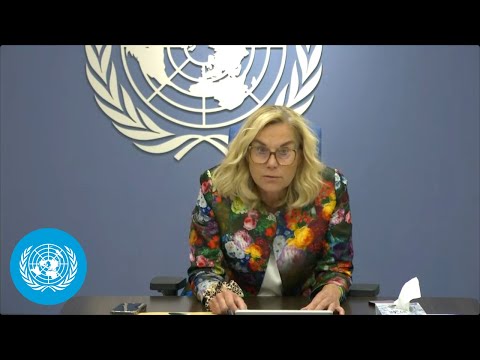
The reading, delivered by Miss Siegfried Kirk on behalf of the Secretary‑General, said “hostages must be released immediately and unconditionally” and reiterated calls for an immediate ceasefire, unimpeded humanitarian access and full respect for international humanitarian law.
The report covers the period from Dec. 7, 2024, to March 13, 2025, and documents both escalation in hostilities and continuing actions on the ground that the Secretary‑General said risk undermining a two‑state solution. It said Israeli planning authorities advanced or approved approximately 10,600 housing units in settlements in the occupied West Bank during the reporting period, including 4,920 units in East Jerusalem, and that tenders were announced for roughly 700 units near Bethlehem.
On demolitions and seizures, the reading reported that Israeli authorities demolished, seized, sealed or forced people to demolish 460 structures, displacing 576 people, including 287 children and 149 women. The reader said that during the reporting period at least 897 Palestinians in Gaza were killed and at least 5,979 were injured, citing the Gaza Ministry of Health; Israeli sources were reported as saying 59 hostages remain alive in captivity.
The report said 251 people were abducted on Oct. 7, 2023, and described ongoing ill treatment of hostages and of detainees. It said 777 Palestinian prisoners and detainees were released by Israel during the reporting period and that some reported serious ill treatment while in detention. The reading also stated that at least 21 U.N. personnel were killed in Gaza during the reporting period and that one U.N. staff member was killed in strikes at a deconflicted U.N. site on March 19.
On the West Bank, the report documented 123 Palestinians killed in operations, airstrikes and other incidents during the reporting period, including 19 children, and a substantial number of injuries tied to security-force actions and settler violence. It said Israeli operations since Jan. 21, 2025, included air strikes and the deployment of tanks and resulted in the demolition of residential buildings and large‑scale displacement, with the reader saying some refugee camps had been nearly emptied of residents.
The Secretary‑General’s report warned of measures by some Israeli officials that “call for the displacement of Palestinians from the Gaza Strip” and quoted the International Court of Justice advisory opinion of July 19, 2024, in recalling obligations tied to the occupation. The reading reiterated that settlements have “no legal validity” and said the expansion of settlements and demolition of Palestinian‑owned structures raise concerns about forcible transfer and violations of international law.
The report also described the humanitarian situation in Gaza as “catastrophic.” It said that when a ceasefire and hostage‑release deal took effect on Jan. 19, the entry of supplies enabled the delivery of more than 57,000 metric tons of food and that more than 1,900,000 people received food parcels; but it added that “since March 2, the entry of all humanitarian and commercial supplies into Gaza have been halted by the Israeli authorities, severely impacting humanitarian operations.” The reader said Israel cut power to a desalination plant serving some 600,000 people and cited WHO figures that roughly 26,000 people, including more than 4,500 children, remained in urgent need of medical evacuation.
The Secretary‑General’s text urged accountability for violations of international humanitarian and human rights law, condemned indiscriminate attacks and the use of human shields, and said reconstruction planning for Gaza will require «appropriate security and governance frameworks» alongside international support. It called for efforts to re‑establish negotiations on final status issues and stressed that Gaza and the West Bank must be treated in a politically, economically and administratively coherent manner to preserve a two‑state outcome.
The Security Council exchange that followed included a brief acknowledgement from the Council President and a thank‑you to the Special Coordinator for her briefing; no formal Council decision or vote on the report was recorded in the meeting transcript.
Less critical details from the reading included references to meetings of the Global Alliance for implementation of the two‑state solution held in Oslo (Jan. 19) and Cairo (Feb. 17), an Arab League emergency summit on March 4 endorsing an Arab‑Islamic Gaza reconstruction plan, and an interim rapid damage and needs assessment estimating $53,200,000,000 in needs for Gaza over the next decade.