Get Full Government Meeting Transcripts, Videos, & Alerts Forever!
Get email alerts on the Energy topic
No spam. Unsubscribe anytime.
House splits over expanding GEFA financing to natural gas and undergrounding lines; bill passes 109-50
Summary
The Georgia House on March 21 approved Senate Bill 13 to let the Georgia Environmental Finance Authority finance natural gas infrastructure and certain undergrounding of electrical lines, passing 109-50 after extended debate over rural development and fossil fuel policy.
The Georgia House on March 21 approved Senate Bill 13, which expands the Georgia Environmental Finance AuthorityGIFAto allow low-interest financing for projects related to natural gas infrastructure and certain electrical line undergrounding. The bill passed on a roll-call vote of 109-50 following extended floor debate that highlighted an urban-rural divide over energy policy and economic development.
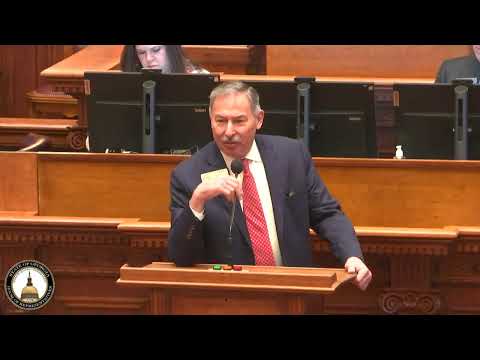
Representative Angie O'Stein, who presented the measure on the House floor, said it responds to infrastructure needs in parts of South Georgia. "Senate Bill 13 would make natural gas infrastructure projects eligible for low interest GIFA financing," she said, adding that counties such as Douglas and Coffee lack sufficient gas capacity to attract industry and that upgrades would support local economic development and resiliency.
Opponents argued the bill expands GIFA's mission beyond its original focus on water and sewer projects and risks subsidizing private commercial activity. Representative Carla Dreener said, "This bill represents a misguided expansion of the Georgia Environmental Finance Authority's mission, pushing our state government into an area best managed by the private sector and local authorities." Representative Vermont raised similar concerns about incentivizing continued reliance on fossil fuels and said the state should prioritize weatherproofing and sustainable investments.
Supporters disputed the characterization that GIFA would be acting for private profit and said the authority's loans are intended for municipal gas systems that serve local customers. Whit Burchett, who represents Coffee County, told members the bill "is to allow for GEFA to loan for gas natural gas infrastructure for municipalities" and emphasized that the measure was a recommendation of the Rural Development Council.
Chairman Corbett urged passage, saying the bill provides a needed tool for counties with no natural gas service, arguing that once capacity exists "economic development can come." After several rounds of debate and questions, the House adopted the committee substitute and passed the bill by a recorded vote of yays 109, nays 50.
The debate included multiple floor questions about scope and funding; members asked whether the measure would divert GIFA resources from water and wastewater projects and whether local municipalities could opt in. Sponsors said the loans would be repaid to GIFA and used for future projects.