Lifetime Citizen Portal Access — AI Briefings, Alerts & Unlimited Follows
Puerto Rico committee to study annual cap, other changes to AutoExpreso fines after system outage
Loading...
Summary
The House Transportation and Infrastructure Committee opened a technical and economic review of a resolution to study an annual cap on AutoExpreso fines and other options; officials said fines have been suspended since a 2022 cybersecurity incident and that changes could affect millions in revenue.
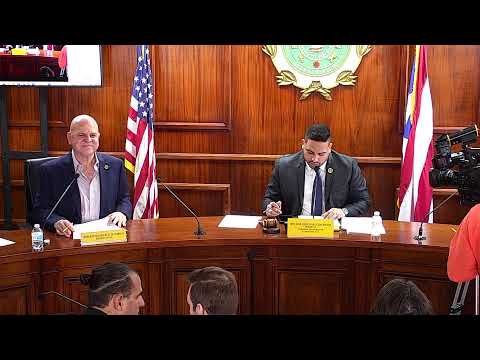
The House of Representatives’ Comisión de Transportación e Infraestructura on March 21 opened a technical and economic review of Resolución de la Cámara Núm. 72, which orders a study into the viability of imposing an annual cap on fines charged to users of Puerto Rico’s AutoExpreso toll system.
The committee chair said the study will examine how a cap would affect user behavior, system efficiency and public finances; he also previewed two alternative measures under consideration: lowering the per-infraction fine and consolidating fines by day rather than by individual tolls. The committee indicated it will file a bill in the coming weeks that will present one or more of those options.
Marco García, representing the Departamento de Transportación y Obras Públicas (DETOP) and the Autoridad de Carreteras y Transportación (ACT), told the committee that ACT “favorece que se establezca un tope anual en las multas de AutoExpreso,” but that an exhaustive analysis is required because the change could materially reduce ACT revenue. García said ACT is continuing its analysis and “esperamos poder compartir los resultados de nuestro análisis con esta comisión durante las próximas semanas.”
Manuel Rodríguez Boissen, general counsel for Metropistas, which operates several tolled highways under public–private concession agreements, urged that any change be based on study and reminded the committee of contractual and operational constraints. Rodríguez said Metropistas has invested “un exceso de cuatro mil millones de dólares” for the rights to operate PR-22, PR-5, PR-20, PR-52, PR-53 and PR-66 and that the company assumed traffic risk and maintenance obligations under its contracts. He added that Metropistas receives only toll revenues and does not manage or collect AutoExpreso fines.
Metropistas’ operational representative, Jorge Besi, described recent system upgrades including new free‑flow gantries and cameras and said Pam (Professional Account Management), a third party, validates and posts transactions and issues violations. Besi said the authority (ACT) handles administrative collection of fines, not Metropistas.
Committee members pressed staff and presenters on several operational and financial points raised in the hearing. DETOP/ACT and Metropistas gave these details and estimates during testimony: - AutoExpreso currently operates as a prepaid system with a grace period before a violation is generated; witnesses described a five‑day grace period and also referenced a 120‑hour (five‑day) window for users to recharge. - Violations in the system rose markedly while fines were suspended: speakers said the share of violating transactions rose to about 30 percent, compared with historical levels of about 6–8 percent when fines were active. - ACT’s annual revenue from fines varies by year; witnesses estimated between roughly $30 million and $60 million per year in prior collections.
Witnesses and representatives also discussed practical options the committee is evaluating: (1) an annual cap on total fines per user, (2) lowering the per‑infraction fine (examples discussed but no amount specified), and (3) charging one fine per day regardless of the number of tolls with unpaid balances that day. DETOP/ACT and Metropistas cautioned that some options may require software or operational changes and that the current system’s capabilities will determine what can be implemented immediately vs. later.
Committee members requested additional documents and data. The chair directed that, within five business days, Metropistas provide an exact count and locations of free‑flow gantries (pórticos) and confirm whether they are functioning; DETOP/ACT was asked to provide the precise outstanding balance and number of users with unpaid AutoExpreso charges for prior enforcement periods; and the committee asked for a list of vehicle inspection/registration centers that have been enabled to accept AutoExpreso payments. Metropistas and ACT agreed to supply the requested information.
No vote was taken at the hearing. The committee said it will consult with Pam (Professional Account Management) and the Financial Oversight and Management Board (Junta de Supervisión Fiscal) as it develops the bill and completes its technical and fiscal analysis. Committee members said the goal is to propose a legislative solution before fines are reactivated in the future.
Next steps recorded at the hearing: ACT will finish its internal analysis and share results with the committee; Metropistas and Pam will be invited to a future hearing to comment further; and the committee plans to file a legislative measure presenting the alternatives discussed.