Get Full Government Meeting Transcripts, Videos, & Alerts Forever!
Get email alerts on the Public Hearing topic
No spam. Unsubscribe anytime.
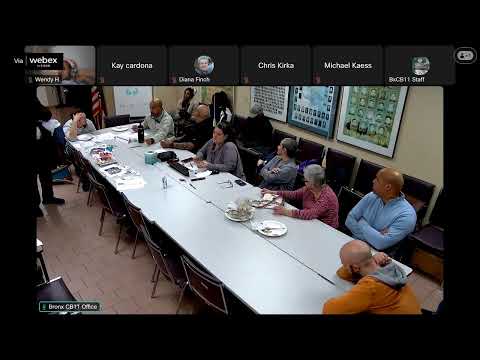
Community Board 11 leadership to trial monthly public hearing before full board; registration required
Summary
Leadership agreed to a trial “public hearing” to run before the full board meeting to solicit community concerns, set a 6:45–7:15 p.m. window for the test run, and require registration; staff will issue public notice and refine rules after the pilot.
Community Board 11 leadership agreed on a trial public hearing to be held before the next full board meeting as a way to collect community concerns and to separate gallery comments from the formal meeting.
The leadership committee set a pilot public hearing time of 6:45–7:15 p.m. on the night of the next full board meeting, to be run as a discrete segment that will be advertised in advance and will require registration. Jeremy (staff member) told the committee the board could define the hearing’s purpose in its agenda — and noted that the New York City charter and a recent comptroller audit had been cited in guidance to the board about specifying a topic when public hearings are held.
Why it matters: Community hearings are one of the board’s main avenues to receive public input on local issues. Leadership said the pilot is intended to give the public an easier opportunity to comment while enabling the board to test a clearer structure for turn-taking and time limits.
Committee members debated format and notice. Some members argued that required topic language and a posted purpose make the hearing more formal; others said a general “community concerns” topic would satisfy procedural requirements while allowing broader input. Board member Diana Finch urged the committee to avoid a rushed, minimal session and to provide ample notice to residents: “It sounds like you just wanna get rid of it and make it as short as possible,” she said, arguing the board should publicize the hearing and follow the bylaws’ procedures for public notice and sign-ups.
Leadership agreed that the first trial would be brief and tightly timed, with registration encouraged; staff was asked to send an email blast and post the item to the board’s usual distribution lists and social channels. Jeremy said the office would add bylaws-based guidance on speaker time limits and the required “brief statement of purpose” to the meeting materials.
The committee also clarified that if few or no residents register, the hearing would conclude early; conversely, if many residents register, leadership said it will revisit timing and notice for later hearings.
Next steps: Staff will publish the hearing time on the agenda and send outreach to the distribution list and social channels. The leadership committee will evaluate the pilot after the next full board meeting and consider changes — including allowing sign-up on-site, a registration form tweak, or moving the hearing date if broader outreach is needed.