Get Full Government Meeting Transcripts, Videos, & Alerts Forever!
Get email alerts on the Local Taxation topic
No spam. Unsubscribe anytime.
Committee holds bill to reallocate county innkeeper and food-and-beverage taxes; Ellettsville seeks portion to fund rural transit
Summary
House Bill 10 80, which would make multiple local changes to innkeeper and food-and-beverage taxes and reallocate part of Monroe County's county portion to the Town of Ellettsville to support transit, was held for further local testimony and negotiation.
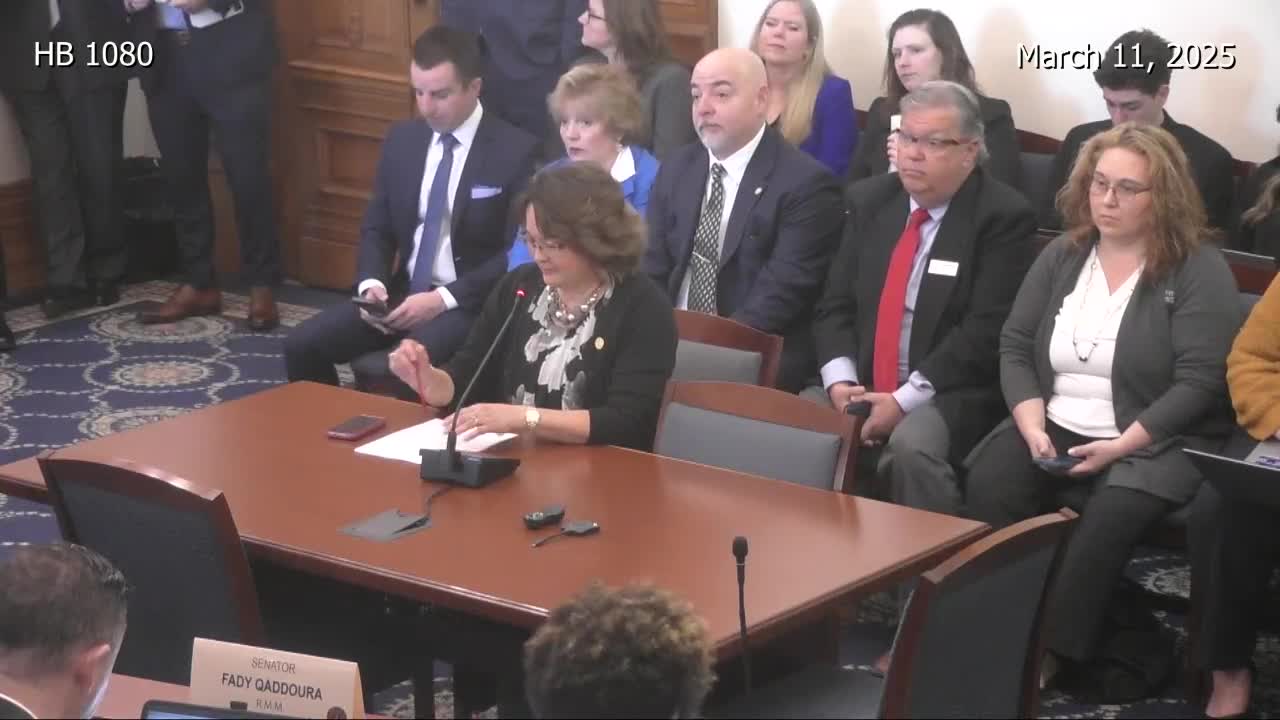
Representative Mayfield presented House Bill 10 80 as a vehicle to address several local requests regarding innkeeper and food-and-beverage taxes. The bill proposes a suite of local changes: LaGrange and Delaware counties would increase innkeeper taxes from 5% to 8%; Vanderburgh County would reallocate how its innkeeper tax is distributed among local entities; Shelbyville would receive enabling legislation to impose a food-and-beverage tax; and, most controversially, the bill would reallocate part of Monroe County's county food-and-beverage share to give the Town of Ellettsville a direct share to fund local needs such as transit.
Representative Mayfield said the bill would not touch the 90% of Monroe County collections that go to Bloomington'the city's convention center project would remain untouched. The change affects the county's 10% share; under the proposal the county's portion would be split 50/50 between the county and Ellettsville even though Ellettsville already collects more than 50% of the county's food-and-beverage receipts. Mayfield said the purpose is to let Ellettsville dedicate local collections to local transit and other infrastructure as the town has grown.
Town Council member William Ellis and Noel Conyer, Ellettsville clerk-treasurer, testified that federal funding rules reclassified Ellettsville as an urban area following the last census, which reduced or eliminated eligibility for the rural transit funds the town previously relied on. Ellis told the committee the town has already contracted rural on-demand transit service, that monthly round trips average about 250 (roughly 3,000 round trips annually), and that the town spent about $69,000 on trips in 2024. Conyer said the town has used general fund appropriations and county ARPA funds to maintain service while seeking a sustainable local funding source.
Support testimony came from Sonya Nash of the LaGrange County Convention and Visitor Bureau explaining LaGrange's tourism-driven plan to expand visitor services; Attorney Mike Chodmeier testified on behalf of the Vanderburgh County CVB supporting Vanderburgh's reallocation. Patrick Tam with the Indiana Restaurant & Lodging Association opposed the Ellettsville provision on precedent grounds, saying allowing county tax reallocation to a single town could invite numerous similar requests statewide and that Shelbyville opted for a locally focused approach instead.
Committee members asked for documentary proof of local support where required by Senate practice, and several senators said they wanted community leaders, county officials or business representatives present to testify in person before the panel. Representative Mayfield and witnesses said local entities had passed resolutions of support in the House process but the Senate requires in-person testimony in some cases.
Committee members acknowledged the political sensitivity of reallocating county-collected tourism taxes and said they would continue discussion; the bill was held for further local testimony and negotiation rather than being advanced at the May 20 hearing.