Get Full Government Meeting Transcripts, Videos, & Alerts Forever!
Get email alerts on the Capital Budget Roads topic
No spam. Unsubscribe anytime.
Ashland County committee approves 2026 highway capital request and equipment purchases, endorses hiring mechanic to build trucks in‑house
Summary
The committee approved its 2026 capital improvement submission — including major paving projects and a request for vehicle and equipment purchases — and endorsed a plan to hire a mechanic and build some plow trucks in-house to speed delivery and reduce long‑term costs.
The Ashland County Highway Committee voted to send its 2026 capital improvement request on to county finance, including paving projects, chip/seal maintenance and vehicle and equipment purchases, and it approved building one plow truck in-house by hiring a mechanic to reduce lead time and possibly lower costs.
Highway Commissioner Matt summarized the packet: the largest paving item is a 6.3‑mile paving of County Highway GG (described in the packet as mostly to be covered by federal grant) and a 1.5‑mile mill-and-overlay of County Highway M. He said GG was expected to be largely grant-funded and that he included a $100,000 buffer in the county’s share in case bids exceeded estimates. "The big project will be GG for 6.3 miles. That is mostly, well, hopefully, a 100% covered by federal grant. I did put a $100,000 buffer in there," Matt said.
The packet also listed seal-coat/preservation work on County Highways GG and N, and a project labeled McCarthy Creek bridge on G G (commissioner noted that the McCarthy Creek bridge project included federal dollars and a county contribution). Matt said total road and bridge requests and the county’s portion were designed to keep the county’s annual road spending relatively flat because state gas tax aid (GTA) is calculated on a multi-year average.
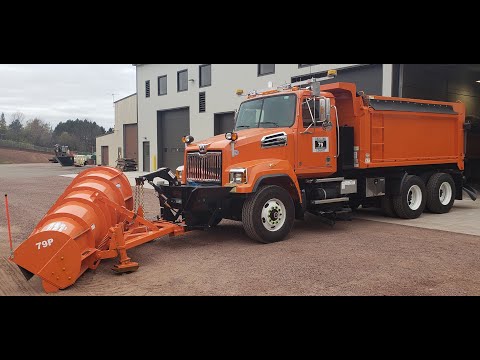
On equipment, the committee approved requests totaling about $590,000 for a plow truck (listed at $365,000), a shop truck (about $155,000), a supervisor truck and a heavier trailer. Matt and committee members discussed the county’s fleet-replacement cadence, trade-in strategy and long lead times for chassis and builder completion. Matt said building trucks in-house by hiring a mechanic would shorten the elapsed time between chassis arrival and a road-ready plow truck: "By going, hiring a mechanic and doing it in house, we will be able to say next year, the chassis will hit us in June like it does usually every year ... and 3 to 4 months later, before winter comes, we would have that truck on the road and usable rather than, you know, 8 months later."
Commissioner Matt described a financing approach: the committee would fund the mechanic out of equipment usage revenue rather than the debt levy; he said roughly $70,000 of the builder’s labor estimate could be covered by using county labor instead of paying the builder, and that state contract pricing for components could limit parts costs. Finance committee members had previously questioned the hire; Matt said he planned to present the extra detail to finance and that the executive committee must approve a new position if finance supported it.
Tom Trudeau moved the committee’s full capital request (including equipment) forward; the motion carried on a voice vote. Committee members asked that staff note on the finance presentation that the highway committee members were unanimous in support.
Committee discussion also touched on vehicle lifecycles, warranty periods and resale/trade-in values. Matt said older trucks currently serve as backup units and sometimes are repurposed. The committee did not change levy policy as part of the vote; the motion approved the capital request for submission to finance and signaled support for pursuing an in-house truck build if finance and exec committee approvals follow.