Get Full Government Meeting Transcripts, Videos, & Alerts Forever!
Get email alerts on the County Budget topic
No spam. Unsubscribe anytime.
Dorchester County officials warn of $6M-plus FY26 shortfall tied to state education and tax changes
Summary
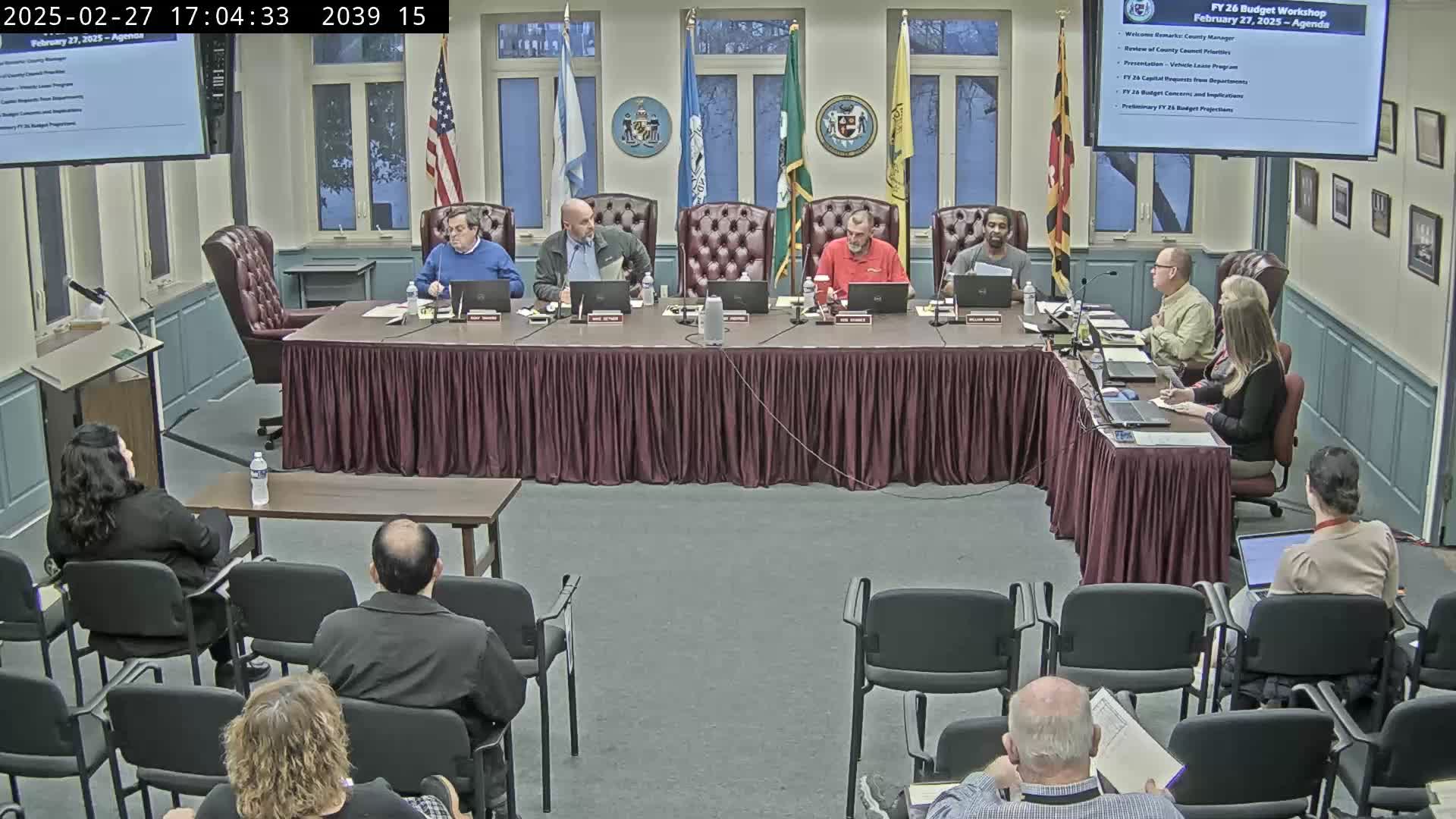
County staff and council members said at a budget work session that proposed state changes—including shifts in school retirement and assessment funding tied to the Kerwin Blueprint and other state actions—could create a multi‑million dollar, recurring gap in the FY26 budget and beyond.
Dorchester County Council and county staff told a budget work session that proposed changes from the State of Maryland could force the county to find at least $5.6 million in new, recurring revenue or cuts for fiscal year 2026.
County Manager Jerry Jones said the picture is unstable: “This is a moving target,” and staff are reviewing operating and capital budgets to identify efficiencies while awaiting clearer state guidance.
The shortfall stems from multiple state proposals and formula changes county officials cited at the session. Those items include a proposed shift that would make the county responsible for a larger share of teacher retirement costs (the figure discussed at the meeting moved from $550,000 to $1,100,000), a change in the county share for property assessment funding (an additional $192,000), a $283,000 reduction in the county’s disparity grant, a projected $1.3 million loss tied to proposed income tax changes, and a $2,575,000 increase in the education “maintenance of effort” calculation. County staff summarized those items as about $5.646 million in additional near‑term obligations; when other assumptions are changed (for example, if reserves are not used), staff said the gap could rise further.
“My priority would be to be able to pay our bills,” Councilman Travers said. “This is absolutely positively the worst budget that I’ve seen since I’ve been sitting here.” Travers and other council members pressed that the state’s education and tax proposals—particularly elements of the so‑called Kerwin Blueprint—are driving the county’s new costs and that much of the county’s previous savings had already been realized in prior rounds of cuts.
County staff emphasized the problem is recurring rather than a one‑time gap. The manager noted that a portion of last year’s budget used $2.449 million in surplus and that discontinuing that practice would widen the shortfall. With the state changes applied, the staff projection shown at the meeting moved from a near‑balanced position to a multi‑million dollar deficit.
Officials discussed options but gave no final decisions. The county manager said staff will return with specific reduction scenarios and that he has a meeting planned with the State Board of Education to seek clarity on maintenance‑of‑effort calculations. Council members said some will travel to Annapolis to testify before legislative committees about the proposed state measures.
Council questions and public comments at the meeting raised additional concerns about the local consequences: potential property tax increases (one working estimate presented at the meeting translated the gap into an illustrative increase of roughly 18.27¢ per $100 of assessed value), impacts on staffing and service levels across public safety and public works, and longer‑term capital priorities that could be deferred if operating costs rise. Council members noted Dorchester’s limited ability to raise income tax revenue—the county is already at the state cap of 3.2 percent—and said that the state withholding mechanisms in current proposals create few practical choices for the county beyond accepting the changes, pursuing legal remedies or intensive lobbying.
Why it matters: Council members and staff framed the issue as more than one budget year’s problem. Because many of the state changes are formula‑driven and recurring—especially the maintenance‑of‑effort and retirement elements—officials said Dorchester faces sustained pressure on its operating budget that could reduce services or require repeated tax increases.
Looking ahead, the manager said staff will continue line‑by‑line reviews of departments and will bring a set of options to the council at a future work session once the state numbers firm. Multiple council members urged immediate, targeted outreach to legislative leaders in Annapolis to seek modifications or delay of the most burdensome provisions.