Get Full Government Meeting Transcripts, Videos, & Alerts Forever!
Get email alerts on the Cannabis Advertising topic
No spam. Unsubscribe anytime.
Oregon committee hears bill to clarify OLCC authority on marijuana marketing to children
Summary
The House Committee on Economic Development, Small Business and Trade held a public hearing on House Bill 3,724, which would direct the Oregon Liquor and Cannabis Commission to adopt clearer rules restricting marijuana product marketing and packaging that could appeal to minors.
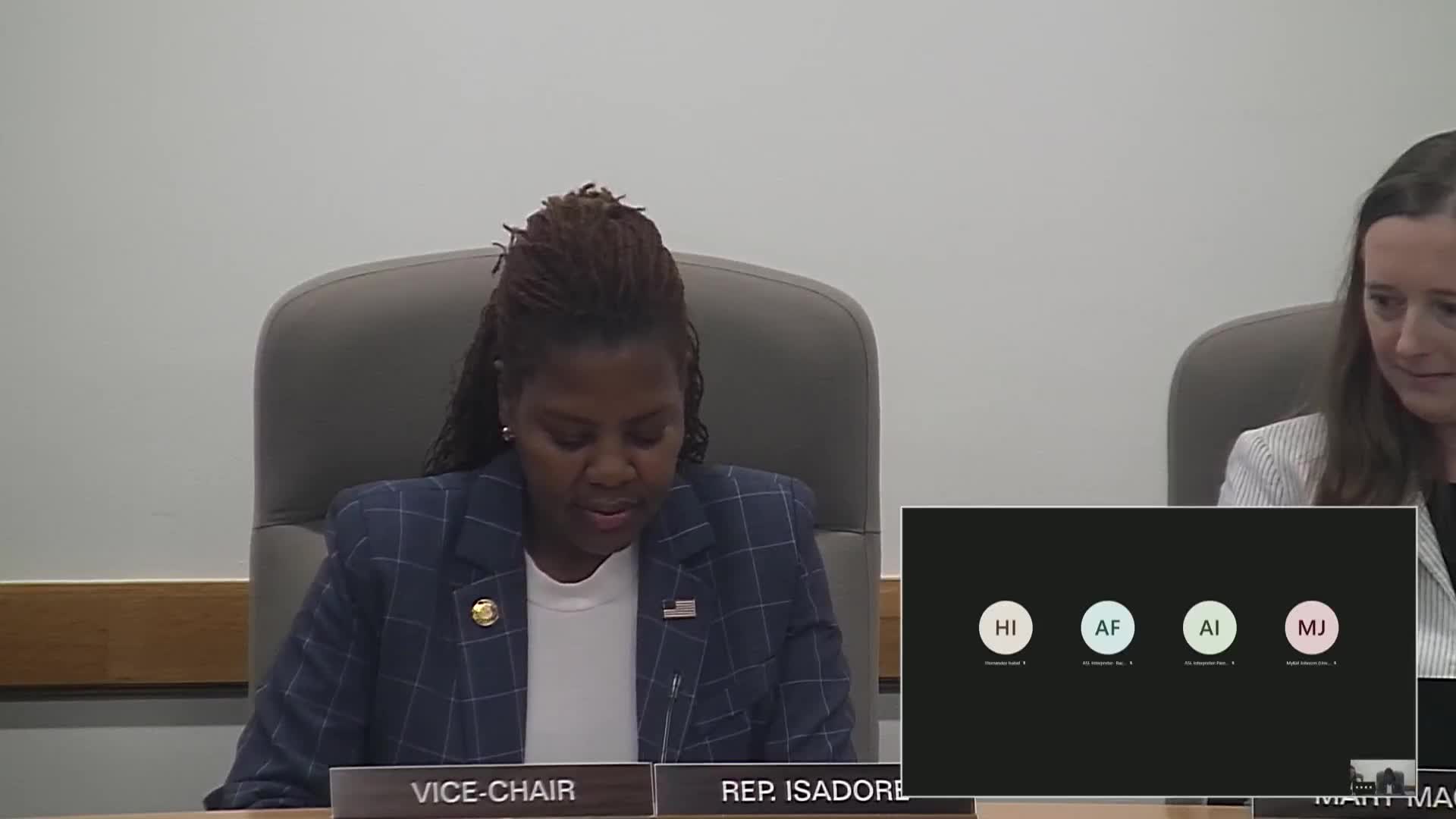
Vice Chair Isidore opened a public hearing March 24 on House Bill 3,724, a proposal that would direct the Oregon Liquor and Cannabis Commission (OLCC) to expand rules restricting advertising and packaging of marijuana products likely to cause minors to unlawfully possess or consume them.
The bill, introduced to the committee by State Representative John Lively, would require OLCC to adopt objective criteria describing packaging and marketing that are likely to cause minors to unlawfully possess or consume cannabis products. "I'm here this morning to encourage you support House Bill 3,724," Representative John Lively said.
Why it matters: supporters said the bill clarifies existing regulatory authority in light of recent court decisions about nicotine-product marketing and shields OLCC staff decisions from successful legal challenges. "HB 3,724 is about really 1 thing and only 1 thing, which is keeping our products out of the hands of kids," said Mike Gatlin, immediate past board chair for the Cannabis Industry Alliance of Oregon and chief public affairs officer for Nectar Markets.
Supporters framed the measure as a public‑health protection and as a continuation of Oregon's previously bipartisan regulation of intoxicating hemp and cannabis products. Gatlin cited Oregon's 2021 legislation on hemp-derived intoxicants (HB 3000) as an example of standards that other states have adopted. He told the committee Oregon has a strong record of age‑gate enforcement and high minor‑decoy success rates.
Committee members asked how the bill would work in practice and whether it would affect current retailers. Representative Yonker said she had signed on to the bill and called it "common sense" to prevent marketing that appeals to children. Representative Ollsberg asked if current distributors would be affected; Gatlin answered that the bill "basically is just clarifying existing authority" and that the industry did not expect the clarification "to be used inappropriately." Representative Dobson and others raised concern about products that might resemble candy once taken from childproof packaging and stressed that packaging design can influence post‑sale risks.
Supporters said day‑to‑day determinations about packaging and labeling would remain with OLCC staff, whom Gatlin described as experienced and consistent in their approvals process. "Somebody does have to make that subjective decision at some point. And that's really what this bill is about," Gatlin said, adding the bill gives staff the confidence to continue making those judgments.
There was no formal vote on the bill during the hearing; the committee opened and then closed the public hearing on HB 3,724 and moved on to the next item on the agenda.
The committee record includes testimony from Representative John Lively and Mike Gatlin and questions from multiple committee members. The hearing transcript records statements about prior Oregon legislation, the OLCC's role in packaging review, and concerns about products that could be attractive to children if removed from childproof containers.