Get Full Government Meeting Transcripts, Videos, & Alerts Forever!
Get email alerts on the School Finance Grants topic
No spam. Unsubscribe anytime.
Lansing School District outlines $286 million budget; grants make up 45%
Summary
District finance staff presented a grants-focused budget update showing grants account for roughly $128.4 million of the district's $286.4 million budget and detailed major federal and state awards including Title I and 31a funding.
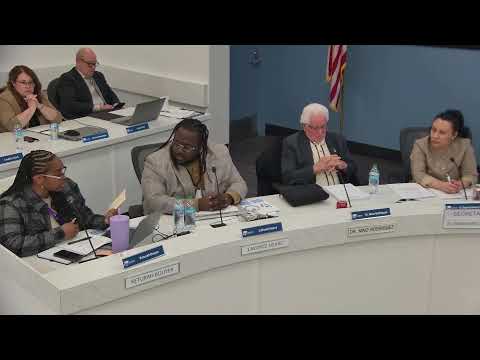
Kim Adams, a district grants presenter, told the Lansing Public School District Board of Education on March 20 that the district's amended budget for the current school year is $286,414,000 and that grants account for about 45% of that total.
Adams said the district currently lists approximately $128,400,000 in grants and $158,000,000 in the general fund. "Grants are generally purpose driven, application based, non reimbursable, and there is accountability required," Adams said.
The presentation listed local, state and federal, and competitive grants. Adams called out Title I, Part A at about $9,300,000, which she described as focused on targeted academic support, professional development and family engagement. She also listed Title III (limited English proficiency), the 31a grant (described by Adams at about $17,800,000 this year) and a state pilot High Impact Tutoring grant worth $500,000 used at Atwood and Dwight Rich. Competitive grants named included a magnet grant (about $3,000,000) and a 12c consolidation grant (noted as roughly $24,400,000) supporting several schools' mental-health resources.
Adams explained the budget columns: "The budget is the total amount we have to spend. The spent column is what we physically have paid out. The encumbrance column are things that may be planned to spend." She said some grants span two fiscal years and that encumbrances can include blanket purchase orders and staff wages through June 30.
Board members asked clarifying questions about discretionary funds, grant durations and specific grant uses. Trustee Williams asked what the companion document meant by "discretionary budget." Adams replied that discretionary funds are "everything except for staff cost" and are amounts departments and schools can allocate.
Board members also discussed contingency planning if federal funding were reduced. Superintendent (name not specified) said most multi-year awarded competitive grants had been renewed when requested, but acknowledged uncertainty about future federal appropriations and said the district is preparing three scenarios: fully funded, a roughly 50% reduction in major federal grants, and a scenario in which most federal funding would not continue. "Every time we've asked to draw down any grant we've had, the money has been sent," the superintendent said.
The presentation also noted smaller local grants such as the MSU Alliance stipend ($8,515), Project Crescendo ($19,260) and a Capital Region Community Foundation grant (about $53,000) used for classroom initiatives and arts. Adams said a stop school violence grant funded two software tools: the Rave mobile app for geolocated emergency alerts and ALICE training for school safety.
The board did not take action specifically on the grants presentation; the session included questions and clarifications and moved on to other agenda items.