Get Full Government Meeting Transcripts, Videos, & Alerts Forever!
Get email alerts on the Public Transit topic
No spam. Unsubscribe anytime.
Residents urge council to fund 80 CAT bus drivers to reduce long wait times
Summary
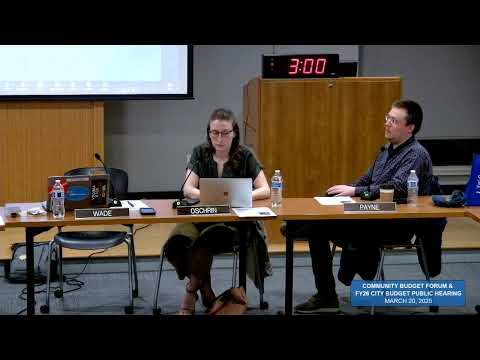
Dozens of residents spoke at the Charlottesville City Council special work session on March 20, urging the council to fund more CAT (Charlottesville Area Transit) bus drivers so that routes meet a 30‑minute wait standard.
Dozens of residents spoke at the Charlottesville City Council special work session on March 20, urging the council to fund more CAT (Charlottesville Area Transit) bus drivers so that routes meet a 30‑minute wait standard.
The petitioners — riders, clergy and health‑care providers — said long and unpredictable waits make it difficult for people to get to jobs, medical appointments and other daily needs. "I ask that you make every effort to fund 80 bus drivers in the fiscal year 2026 budget," said Suzanne Bailey, identifying herself as a resident and a member of the interfaith advocacy group Impact, citing a CAT director goal to reduce wait times to 30 minutes on all routes.
Why it matters: Riders and service providers said unreliable transit increases car trips, worsens access for people with disabilities or limited funds, and raises public‑health and equity concerns. Pastor Alex Joyner, who said he regularly rides the 5 and 7 lines, told the council: "Without regular wait times ... that's where the growth needs to happen." Dr. Mary Preston, who said patients sometimes hike up steep streets because stops are distant, warned chronic long waits can harm patients' health.
City staff described budget constraints and the reasons the current draft did not include the full set of new driver positions residents want. City Manager Sam Sanders said the proposed budget absorbs a higher local cost for transit in this year’s proposal and called attention to two factors that raised costs: the expiration of certain flexible federal COVID funds that had previously reduced local match requirements, and newly budgeted collective‑bargaining costs. "While we did not make an investment in additional drivers," Sanders said in the meeting, "you are making a significant increase in what it costs you for a transit service locally." He also described a one‑time local increase to the city’s transit match this year and said the county’s local match increased as well.
Councilors and staff discussed next steps rather than voting on a change to the draft budget that night. Sanders said staff will provide further numbers and a revenue update before the council must adopt a final budget in April. Several speakers urged immediate action by councilors to allocate funds in the FY26 budget, while staff and councilors noted hiring constraints: vacancies take months to fill even after funding is approved.
Ending: The council did not adopt new driver funding that evening. Staff committed to return with updated vacancy and cost figures before the budget closing and asked councilors to prioritize whether to use discretionary funds or seek other budget offsets in order to add driver positions in a future step.