Get Full Government Meeting Transcripts, Videos, & Alerts Forever!
Get email alerts on the Roads Infrastructure topic
No spam. Unsubscribe anytime.
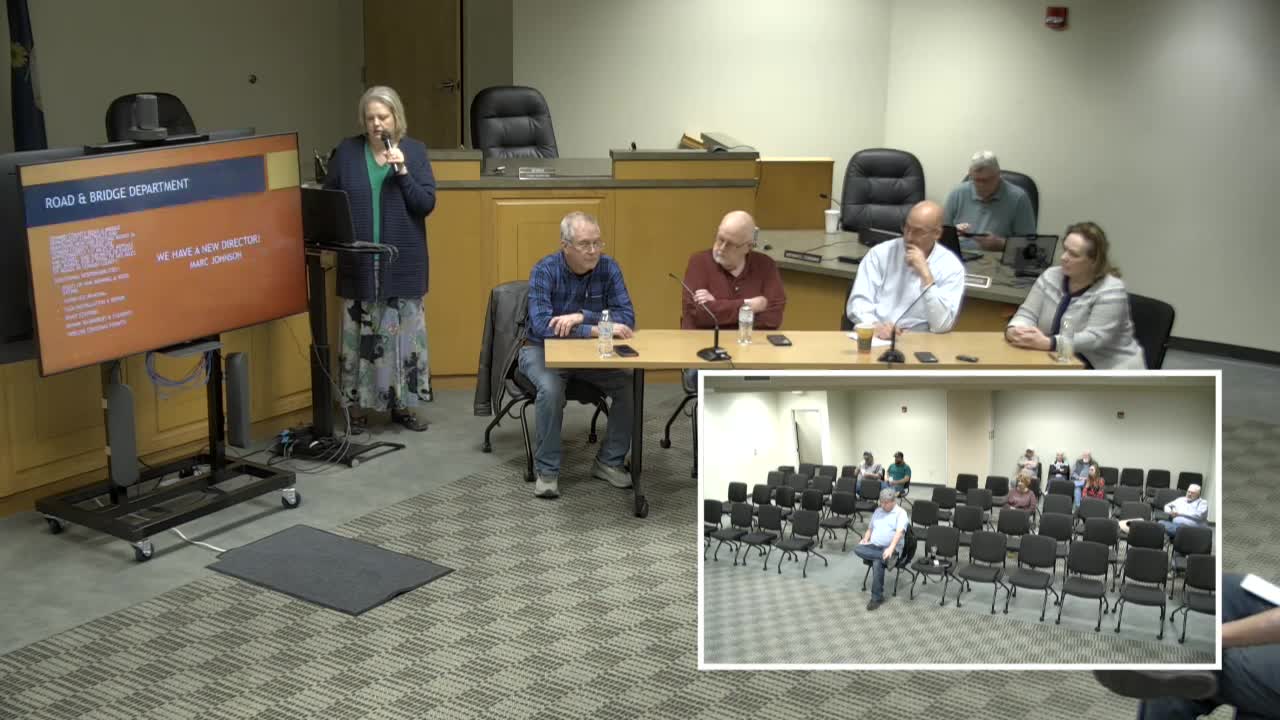
Seward County introduces new road and bridge director, outlines major repairs and pilot treatments
Summary
Seward County officials introduced Mark Johnson as the new road and bridge director and described recent and planned projects including a four-mile rebuild on Road 0, PermaZyme soil stabilizer trials, a 28-mile overlay program and a new asset-management system to track culverts and signs.
Mark Johnson, the new Seward County road and bridge director, met with residents at a March town-hall meeting to outline major road projects, staffing additions and new maintenance technology.
Johnson said he joined the county after 17 years with ExxonMobil and invited questions from attendees: "So you got any questions for me? I'll try to answer them." County staff and road crews described work completed on Road 0, planned work on Road P and a broader overlay program covering roughly 28 miles across several county routes.
Officials said Road 0 was a four-mile complete rebuild in which sections were raised as much as 34 inches, had compacted material placed and received an Oklahoma road gravel base. The project’s preliminary budget was $500,000; staff said final costs were about $450,000–$475,000 and that county forces completed much of the work. Road 0 has required only minor blading since completion, staff said.
For Road P, crews plan to pull back some widening where pavement exceeds the county's intended 27-foot road top, re-crown the surface and address heavy silage-truck traffic. Road-surface samples were submitted for compatibility with PermaZyme, a chemical soil stabilizer the county will trial on Road 0 first. Staff explained the PermaZyme application process: blade six inches to the crown, apply chemical with water, replace material, then allow 72 hours of no traffic above 40°F. County staff said the PermaZyme cost for Road 0 was about $52,000.
The county also plans a 28-mile overlay program that will include Road R (US-54 to US-160), Mead Lake Road (US-54 to the Mead County line), Road V and other segments. Mead Lake Road is slated for a 3-inch mill and 3-inch overlay (rather than a 2-inch overlay) as part of a cost-share; staff said the state picked up about $1 million and the county contributed about $750,000 toward that project.
Seward County has added a new asset-management layer (the STAR program) to inventory materials, signs and culverts and integrate GPS and GIS map layers. County staff said operators are GPS’ing culverts and will add a sign layer with photos so crews can rapidly locate and dispatch repairs. Staff expect the system to let supervisors track equipment hours, fuel, gravel and labor costs closely.
Officials said they plan to experiment with integrating millings into low-lying or sandy road bases where erosion and washouts occur. They also discussed crack-seal and chip-seal costs: about $10,000 per mile to crack-seal (more in heavily cracked sections) and about $20,000 per mile to chip-seal.
Staff said they had recently hired two new road workers and that developing a multi-year maintenance program — including an annual budget amount to guide crack sealing, chip sealing and gravel addition — will take time. The county noted that extremely dry, windy conditions and limited moisture are making maintenance more difficult on sandy roads.
Residents asked about other local roads such as Road 25, and staff said crews completed two to three miles in the county's northeast corner. County leadership asked for patience while the new director and staff finalize a multi-year prioritization and implementation plan.
Ending: Officials urged the public to stay informed via county communications as crews implement trials and the overlay program; they said several of the projects and the STAR inventory will be rolled out over the coming months.