Get Full Government Meeting Transcripts, Videos, & Alerts Forever!
Get email alerts on the Stormwater Drainage topic
No spam. Unsubscribe anytime.
Flower Mound residents press council for action on chronic drainage and culvert failures in Cross Timbers
Summary
Dozens of residents of the Cross Timbers area appealed to the Flower Mound Town Council at a March 20 work session for repairs and a broader study after repeated flooding, washed-out yards and eroded culverts in neighborhoods including Ridgecrest, Raintree, Sunset Trail, Surveyors Lane and Woodridge.
Dozens of residents of the Cross Timbers area appealed to the Flower Mound Town Council at a March 20 work session for repairs and a broader study after repeated flooding, washed-out yards and eroded culverts in neighborhoods including Ridgecrest, Raintree, Sunset Trail, Surveyors Lane and Woodridge.
The residents urged immediate repairs and a longer-term, town-funded stormwater study. At the meeting town staff described a short-term maintenance project — replacement of a failing headwall and about 25 feet of 48-inch reinforced concrete pipe at the Sunset Trail crossing — and recommended residents fill out drainage-assessment forms so staff can inspect private-property issues and prioritize work. James (staff), speaking near the start of the town presentation, told residents to “fill those forms out before you leave and leave that information so we can, get you in the queue.”
Why it matters: Residents say the drainage path that runs from Raintree south across Ridgecrest and under Sunset Trail to Grapevine Lake has become shallower and more obstructed over years of silt and vegetation growth, leaving many yards and low-lying properties frequently waterlogged and accelerating erosion. Several speakers said erosion has undermined fences, deposited sediment on yards and exposed previously buried utilities. The council and staff said the problem requires a combination of right-of-way maintenance, private-property remedies and a possible comprehensive study to identify capital projects.
Residents’ accounts and concerns
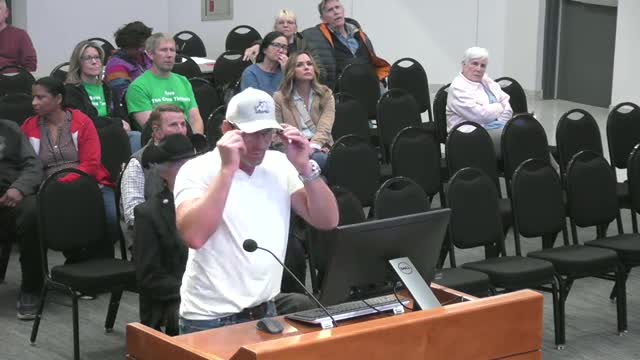
Craig Lombatus (2955 Surveyors Lane) opened public comment with photos and video, saying the “drainage issues and how it impacts our property” now expose buried cables, flood front yards and cause “significant” financial burdens for homeowners who have tried to redirect flow themselves. Lucille Delvecchio (7003 Woodridge Drive) said her property is in a “moat” during heavy rain and requested that the council “order a comprehensive stormwater study.” Jeannie Ferrier (6604 Sunset Trail) told councilmembers she pays the stormwater fee and asked why residents see little remedial work, noting the area’s trails and private properties are regularly unsafe or unusable after storms.
Several equestrian property owners and residents warned of environmental and animal health impacts from uncontrolled runoff; Natasha Nichepranko (3514 Raintree Drive) described runoff carrying fertilizers and herbicide residues into equine pastures and Grapevine Lake. Stephen Wood (3032 Monet Court) said recent clearing in the Knights Landing site upstream removed vegetation from a dry-creek channel and that a major rain event after that clear-cut caused loss of embankment and several trees on his property.
Staff findings and short-term actions
Blake Hummel, senior project engineer for the Town of Flower Mound, presented historical aerials and LiDAR-derived contours showing a roughly 30-acre drainage basin that flows from the Raintree/Ada area south across Ridgecrest, under Sunset Trail, through the Knights Landing parcel and into Grapevine Lake. Hummel reported a failing drop inlet and armoring (headwall) at the Sunset Trail crossing and described a town maintenance project planned for the current fiscal program: replace about 25 feet of 48-inch reinforced concrete pipe (RCP), reconstruct the inlet on the north side of the road, rebuild the south-side headwall and add riprap or gabion baskets for erosion protection at the outfall.
Hummel and other staff emphasized that the town can perform maintenance and make right-of-way repairs but cannot unilaterally perform or pay for work on private property without easements or property-owner cooperation. They encouraged residents to: (1) complete drainage-assessment forms so staff can inspect and document problems; (2) consider coordinated private-property swale regrading that would deepen and re-define the drainage channel through several adjacent lots; and (3) allow staff to identify maintenance items that Public Works can address (for example, partially buried culverts and plugged pipes).
Longer-term study and funding
Council members and staff discussed the scope and cost of a comprehensive third-party stormwater study. Blake Hummel estimated a focused study of the immediate drainage basin would likely be on the order of $100,000; council staff warned that a broader Cross Timbers–area study would be more expensive and that any study typically would produce a list of capital projects that would then require funding. James (staff) explained that a study would generate capital project recommendations that must be funded from the stormwater enterprise fund and that such projects could drive meaningful increases to town stormwater fees if undertaken without a multi-year financing plan.
Council direction and next steps
While there was no formal vote, councilmembers agreed on a multi-step approach: (a) staff will meet with residents who submit drainage-assessment forms and perform field inspections; (b) the town will schedule immediate right-of-way maintenance and the Sunset Trail culvert/headwall replacement described by staff; and (c) staff will prepare a decision package for the FY 2026 budget process to fund a scoped stormwater study for the basin(s) identified by resident requests and inspections. Councilmembers asked staff to return to the council with findings and recommended projects after initial inspections and maintenance work are complete.
Quotes that reflect the record
“I’m just here to speak, of course, about the drainage issues and how it impacts our property,” said Craig Lombatus, summarizing the photographs and video he brought to the meeting.
“I beg you to help these neighbors, help us all, and the Cross Timbers by ordering a comprehensive stormwater study,” said Lucille Delvecchio.
Blake Hummel, the town’s senior project engineer, told the council: “We have a failing system there. The drop inlet isn’t in the best condition... the current plan right now would be replacing about 25 feet of 48-inch RCP storm line and replacing the inlet on the north side of the road and reconstructing the headwall on the south side.”
James (staff) told residents: “Fill those forms out before you leave and leave that information so we can, get you in the queue.”
What to expect next
Staff asked residents to complete drainage-assessment forms before leaving the meeting so crews can schedule on-site inspections. Public Works will address obvious maintenance items promptly (for example, partially buried or clogged culverts in the public right of way). Staff will return to the council with a proposal to include a stormwater study in the FY 2026 decision package; if funded, that study would identify capital projects and potential easement needs and inform later budget requests. The council did not adopt any ordinance or formal funding commitment at the March 20 work session.
Ending
Residents and councilmembers reiterated that solving the Cross Timbers drainage problems will require a mix of public maintenance, coordinated private-property work and, likely, capital projects identified by a study. Staff asked for patience and cooperation while town crews and engineers inspect the sites identified on assessment forms and refine options for council consideration.