Get Full Government Meeting Transcripts, Videos, & Alerts Forever!
Get email alerts on the Special Education topic
No spam. Unsubscribe anytime.
CCIU audit says Kennett must add staff to pupil services as special-education caseloads rise
Summary
A Chester County Intermediate Unit staffing audit presented to the Kennett Consolidated School District board recommended an additional administrator, clerical support and teacher-on-assignment roles to handle rising special-education enrollment and growing student needs.
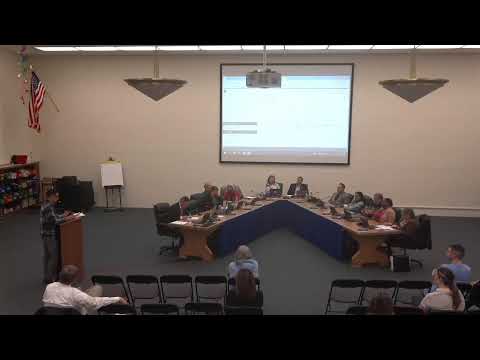
Kennett Consolidated School District on March 10 received a staffing audit from the Chester County Intermediate Unit that recommended adding an administrative position, clerical support and teachers-on-assignment to the district’s pupil services and special-education teams to address growing caseloads and compliance risk.
The audit, presented by Sam Ewing of the Chester County Intermediate Unit (CCIU), found rising special-education enrollment and demographic changes — and concluded that “if those additional supports are added, you would see, improved retention across the district, strength in compliance, and reduced legal risks, enhanced supports for the children with disabilities in your district,” Ewing said.
CCIU conducted the audit at the district’s request and delivered a 20-page report, an executive summary and an infographic attached to the board packet. The review combined staff and focus-group interviews with district enrollment data and found that special-education numbers have increased substantially in recent years and that the district’s pupil-services team is burdened by high volumes of documentation and lower-level administrative tasks.
Key findings and figures cited in the presentation: - Special-education enrollment cited in the report was 708 students (not including gifted or Section 504 caseloads). The audit noted the district’s earlier snapshot used 613 and that enrollment has risen since that snapshot. - Preschool-to-K special-education transfers were noted at about 58–59 students in the year reviewed. - Demographic changes flagged by CCIU included migrant students rising from 138 to 213, homeless students rising from 195 to 245, English learners from 573 to 647, and a large low-income population (the report lists 1,851 low-income students for 2023–24). - A supervisory ratio referenced in the presentation was roughly one special-education supervisor per 236 students.
Ewing told the board that much of the administrators’ time is consumed by recordkeeping, uploading documents and other tasks that could be performed by clerical staff. His written recommendations included adding one administrative position focused on special education oversight, adding clerical support to relieve administrators of high-volume paperwork, and piloting teachers-on-assignment to support classroom teachers and interventions.
Board members pressed on implementation details and timelines. Latoya Myers asked whether recommendations were short-term fixes or intended as a longer-term restructuring; CCIU staff and district leaders said the work requires both immediate support and phased program planning. Mr. Finnegan and others noted the need to keep staff in place long enough to evaluate changes — the district hopes for at least a year of stable staffing to properly assess impact.
President Cronenberg framed the report as “a formidable problem for the Kennett Consolidated School District” that will require multi-year attention. Board members and district staff described the audit as a roadmap rather than immediate action; there was no motion or vote on replacing or adding positions at the March 10 meeting.
Next steps discussed by the board included using the audit to develop a timeline for staffing decisions, aligning any hires with strategic priorities, and returning to the board with recommended job descriptions, costs and an evaluation timeline. No formal staffing actions were approved at the meeting.
The CCIU audit and supporting documents were attached to the board packet; the board asked staff to bring follow-up proposals with cost estimates and evaluation milestones to a future meeting.
Ending: The board accepted the CCIU presentation as information and directed staff to return with concrete proposals and timelines; no vote was taken on hiring or funding at the March 10 meeting.