Get Full Government Meeting Transcripts, Videos, & Alerts Forever!
Get email alerts on the Enrollment Funding topic
No spam. Unsubscribe anytime.
California Community Colleges report surge in enrollment, ask Legislature to fund $157 million to cover growth and unfunded seats
Summary
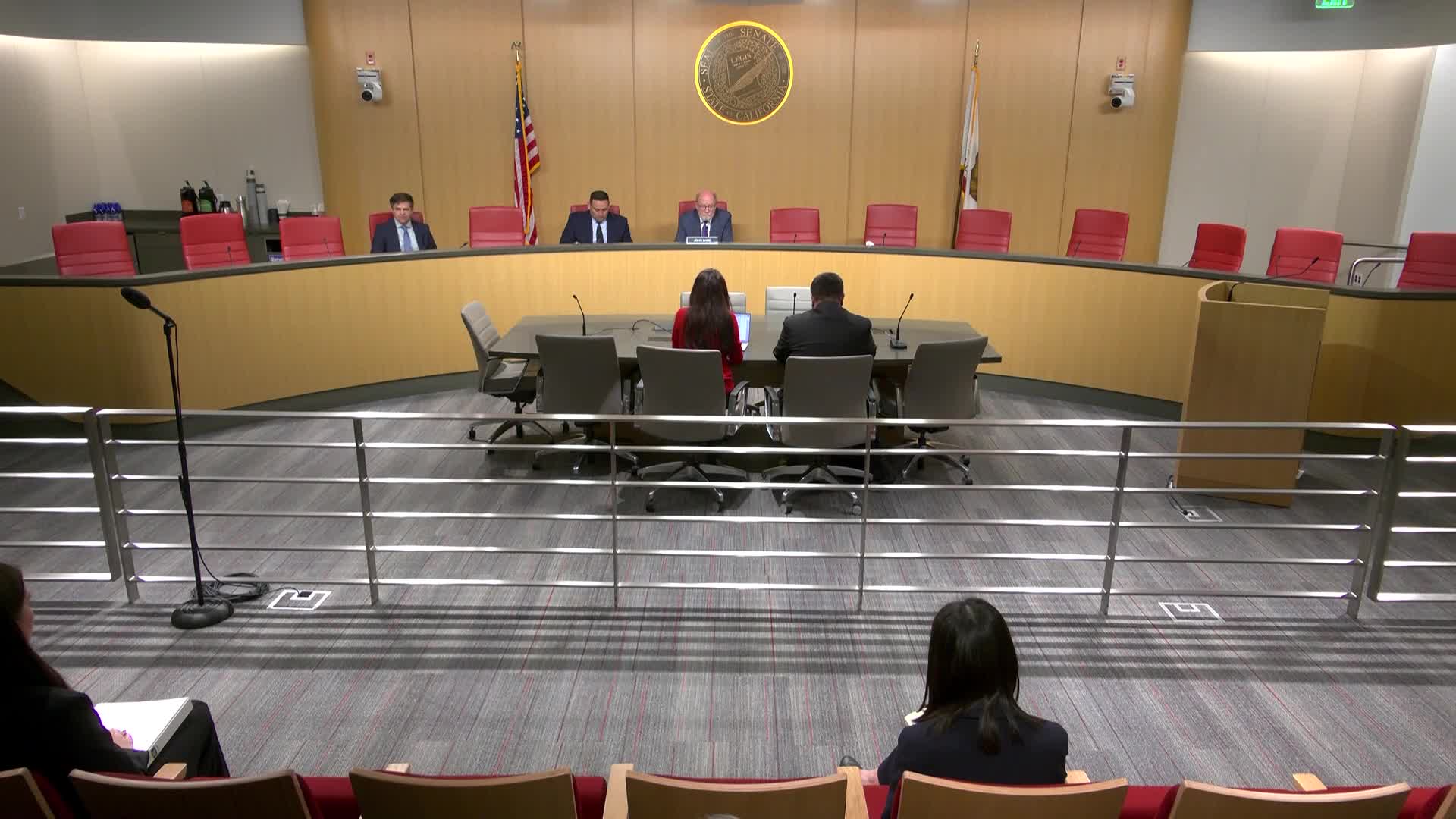
Chancellor Sonia Christian told the Senate Budget Subcommittee No. 1 on Education that California Community Colleges have seen a sharp return of students since the pandemic, and urged the Legislature to fund recent growth so colleges can continue to serve Californians.
Chancellor Sonia Christian told the Senate Budget Subcommittee No. 1 on Education that California Community Colleges have seen a sharp return of students since the pandemic, and urged the Legislature to fund recent growth so colleges can continue to serve Californians.
"Enrollments have increased by 9.6% in 2023–24," said Sonia Christian, chancellor of the California Community Colleges, adding that the system now projects roughly 2,100,000 students for the 2024–25 academic year. Christian said that if fall 2024 trends continue, the system should return to roughly pre‑pandemic headcounts.
The chancellor's office and system finance officials asked lawmakers to fund both currently unfunded seats and ongoing enrollment growth. "There are roughly 22,566 full‑time equivalent student enrollments that are unfunded right now," said Chris Ferguson, Executive Vice Chancellor for Finance and Strategic Initiatives. Ferguson estimated that gap at approximately $126,700,000 in ongoing cost and said the governor's budget includes $30,400,000 to support a 0.5% enrollment growth proposal.
Why it matters: Districts that cannot get funding for enrollment growth may be forced to reduce course sections, the chancellor's office warned, limiting student access even as demand rises. Committee members and the Legislative Analyst's Office noted trade‑offs in the state budget and emphasized the importance of protecting a one‑time cushion in Proposition 98 planning.
Details from the hearing
- Chancellor Christian and system staff said growth has not been uniform: some districts have double‑digit gains while others have not yet returned to pre‑pandemic levels. Christian said the system is widening access through dual enrollment, workforce programs and credit for prior learning.
- The chancellor's office requested policy changes to how growth is counted in the student centered funding formula: (1) use the greater of a three‑year rolling average or the current year FTES (estimated cost ≈ $20,000,000 ongoing) and (2) lift the 10% statutory cap on year‑to‑year district growth (estimated cost included in the overall request; Ferguson estimated about $15.6 million associated with the cap lift for six specific districts).
- Finance Department official Justin Hurst confirmed the governor's budget proposes $30.4 million for 0.5% growth. The Legislative Analyst's Office recommended funding at least the governor's 0.5% and said the Legislature could fund more growth if it reprioritizes other ongoing spending.
- Ferguson said one approach would be to fund the roughly $126.7 million in current unfunded FTES plus the governor's $30.4 million growth proposal, a combined ask he gave as roughly $157 million.
Quotations
"We have a commitment to all Californians and all students... Every student is welcome at a California Community College," Christian said.
"If we are unable to find a plan to fund that enrollment growth, what would likely occur is campuses would be unable to sustain long term the number of course sections that allow them to continue serving that level of student population," Ferguson told the subcommittee.
What the lawmakers and analysts said
Legislators pressed for clarity about the dollar gap and the trade‑offs in Proposition 98. Lisa King of the Legislative Analyst's Office recommended funding at least the 0.5% in the governor's budget and noted regional demographic and labor‑market differences that could justify funding more in some areas.
Next steps
Committee members said they were open to finding ways to fund more growth but emphasized the need to preserve a prudent one‑time cushion in the overall Proposition 98 package. The subcommittee will consider these trade‑offs as the budget process proceeds toward the May Revision.