Get Full Government Meeting Transcripts, Videos, & Alerts Forever!
Get email alerts on the Pesticide Regulation Funding topic
No spam. Unsubscribe anytime.
Pesticide regulator describes new mill funding and expanded enforcement, monitoring plans
Summary
The Department of Pesticide Regulation told senators that a multi-year mill assessment reform will phase in 120 positions and increased mill assessments to stabilize funding and expand registration review, enforcement and monitoring.
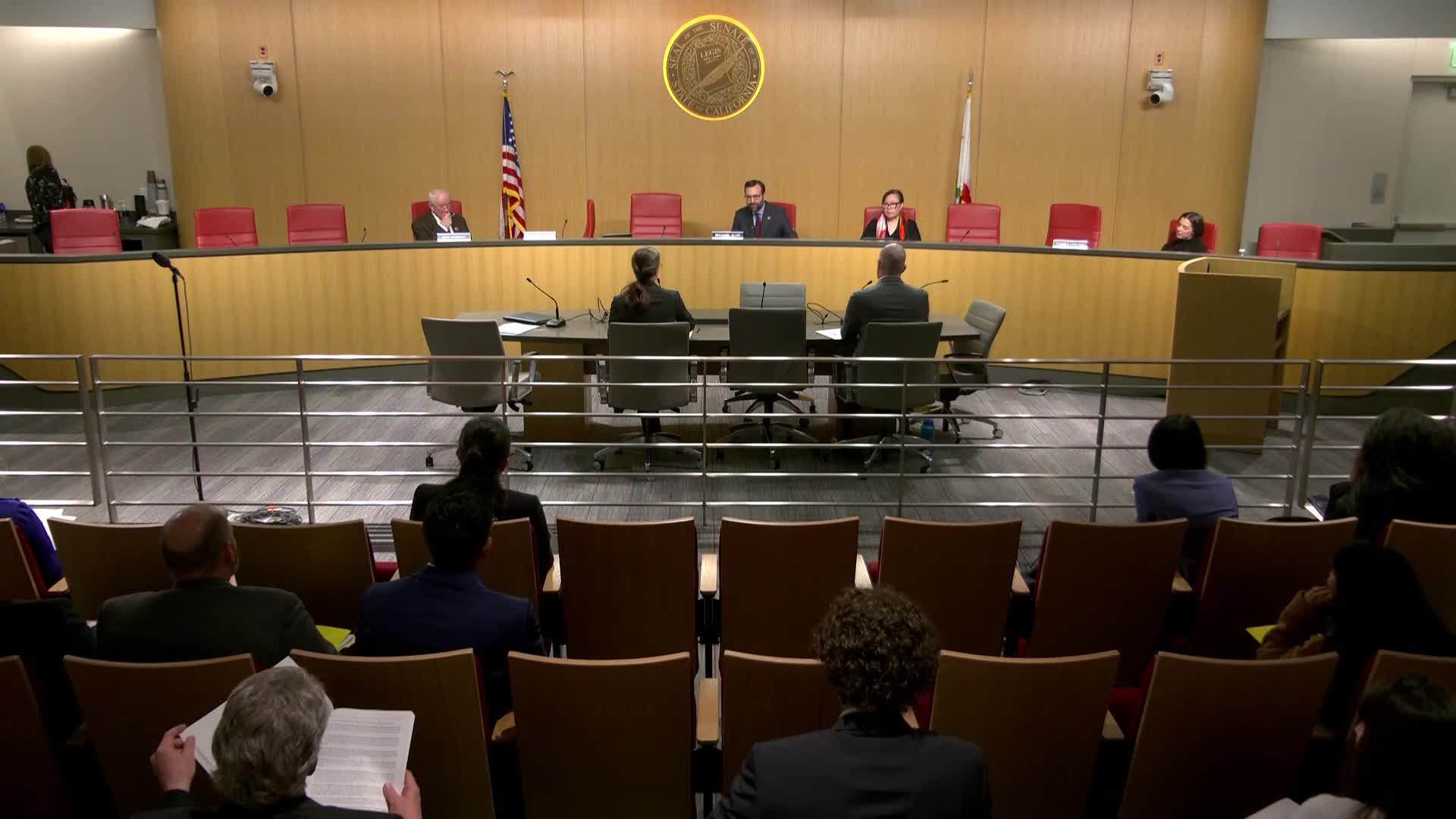
Dr. Karen Morrison, director of the Department of Pesticide Regulation, told the Senate Budget Subcommittee No. 2 that last year—s budget and AB 2,113 created a multi-year plan to address a longstanding structural budget shortfall by phasing in staff and increasing the mill assessment charged on pesticide sales.
"Our primary funding source, the mill assessment, comes from the sale of pesticides in California," Morrison said, explaining that the assessment had been fixed statutorily for two decades and left DPR under-resourced to carry out registration reviews, reevaluation and enforcement.
Morrison said the 2024-25 budget package and AB 2,113 provide resources to hire approximately 120 positions over a three-year period and increase mills up to 30 mills in 2027 to support registration reviews, risk mitigation and monitoring. The law also imposes transparency and timeline requirements tied to the additional resources.
Why it matters: DPR oversees registration and reevaluation of pesticides, residue and environmental monitoring, licensing of applicators, and enforcement through county agricultural commissioners. The department said additional staffing will accelerate registration review timelines and boost enforcement capacity in response to concerns raised by lawmakers and stakeholders.
Questions from senators focused on long-term sustainability: some lawmakers asked whether DPR—s revenue model, which depends heavily on the mill assessment, could be affected if the state successfully reduces pesticide use in the long term. Morrison said DPR has examined long-term scenarios and will monitor revenues and program needs.
Ending: The department said funds are being used to stand up grant programs, expand local monitoring and begin a pesticide prioritization process with public workshops planned to solicit stakeholder input.