Get Full Government Meeting Transcripts, Videos, & Alerts Forever!
Get email alerts on the Plastic Waste Sb54 topic
No spam. Unsubscribe anytime.
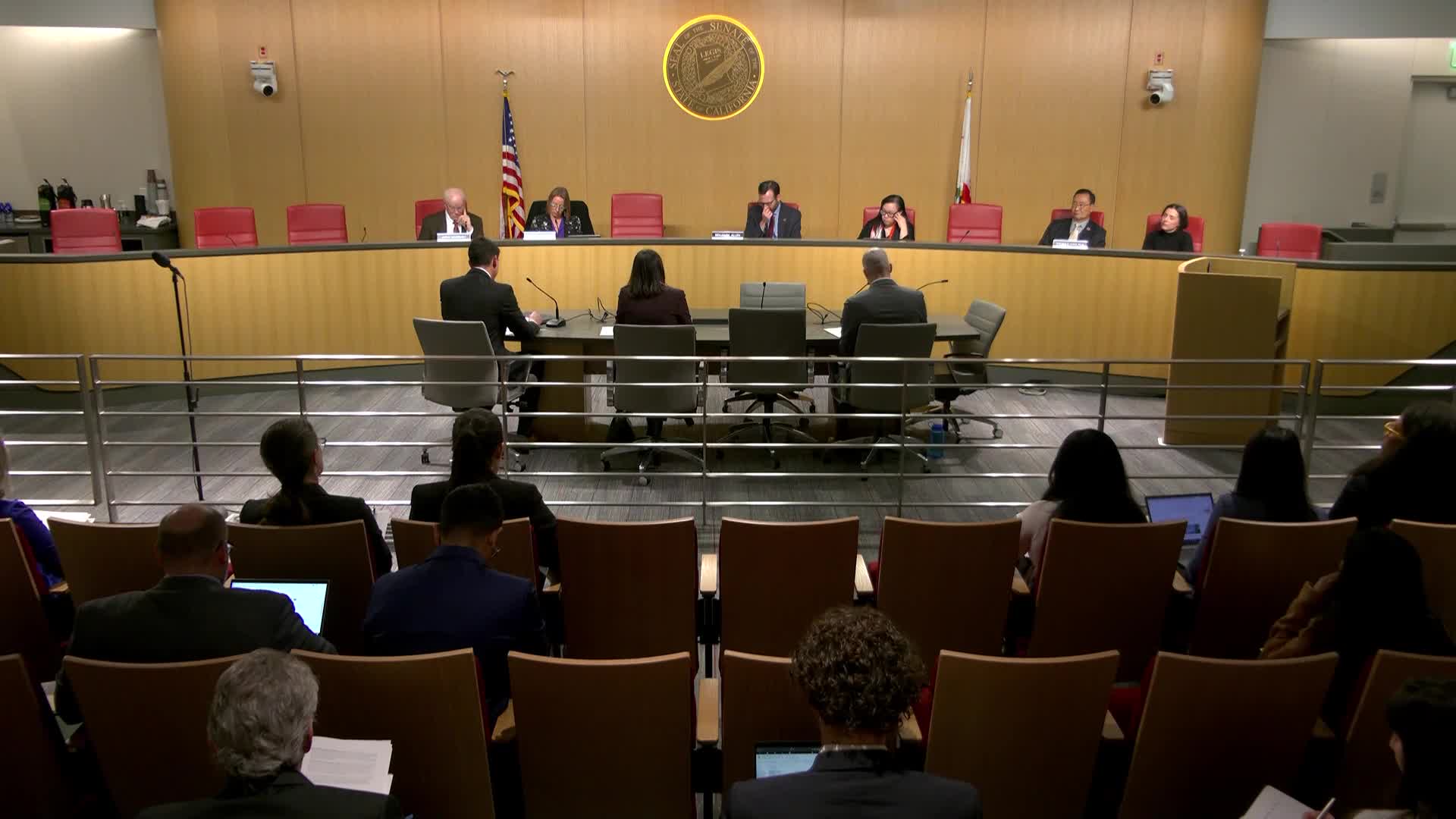
Senators demand timeline after administration pulls SB 54 regulations
Summary
Senators pressed CalEPA and CalRecycle leaders at a March 20 budget subcommittee hearing for a firm schedule to reissue rules implementing SB 54 after the administration withdrew the first regulatory submission. Stakeholders warned the delay is harming businesses and undermining confidence in Extended Producer Responsibility.
At a March 20 hearing of the California State Senate Budget Subcommittee No. 2, senators demanded a clear schedule from CalEPA and CalRecycle for reissuing regulations implementing SB 54, the 2022 producer-responsibility law intended to cut plastic waste and boost recycling.
Sen. Ben Allen, the bill—s author, said stakeholders who spent years participating in CalRecycle—s initial rulemaking were left frustrated after the administration withdrew the regulations. "It was very disappointing to see those—s regulations shelved," Allen said during questioning of CalEPA Secretary Yana Garcia and CalRecycle Director Zoe Heller.
"We have every intention of making the implementation of this law successful in the long term," Garcia told the committee. She and Heller said the administration is re-evaluating the regulatory pathway and will report back with a timeline in the coming weeks. Heller said CalRecycle will lean on the advisory board process and stakeholder input to finalize a revised package that the agency can defend in the administrative process.
Why it matters: SB 54 is meant to require producers to reduce plastic packaging and deliver recyclable material to vetted end markets. The law sets statutory rates and deadlines for recycling performance; delay in regulations increases uncertainty for manufacturers, the new producer responsibility organizations (PROs), local governments and recycling operators.
What senators and stakeholders pressed: Committee members pushed the administration to honor statutory dates and to avoid a protracted restart that could push implementation past the law—s deadlines. Senators said the withdrawal has left businesses without the guidance they need to plan investments and risked eroding trust between stakeholders and state regulators.
Garcia and Heller said they remain committed to the law—s goals and to protecting affordability for households and small businesses while ensuring environmental safeguards. They also acknowledged concerns about potential substitution technologies such as certain forms of "chemical" or "advanced" recycling; Heller said the department intends to set clear guardrails to prevent hazardous waste outcomes.
Public comments and stakeholder remarks at the hearing amplified the urgency. Representatives of environmental groups and recycling advocates told the committee that the delay is discouraging producers who had planned investments in California and that the administration should pursue an expedited regulatory path.
Next steps: Garcia said the administration will provide a more concrete timeline to Senate leadership within weeks. CalRecycle said it will continue advisory-board engagement and post updates on items the department can implement outside of formal rulemaking, such as product categorizations and recycling-claims guidance.
Ending: Lawmakers told administration officials they expect close oversight and quick follow-up; the committee signaled it may reconvene on implementation progress if the administration does not provide timely updates.