Get Full Government Meeting Transcripts, Videos, & Alerts Forever!
Get email alerts on the Safe Haven Baby Boxes topic
No spam. Unsubscribe anytime.
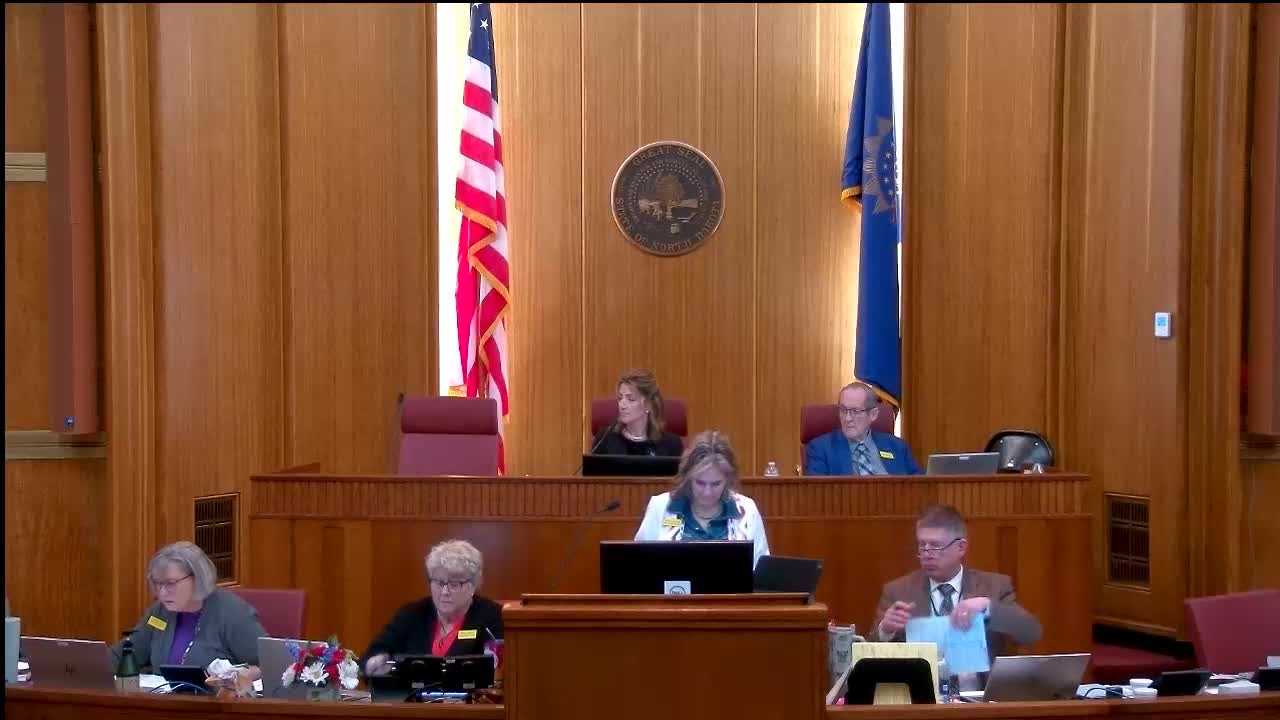
Senate approves law allowing safe-haven baby boxes after extended debate
Summary
The North Dakota Senate passed House Bill 1205 to allow anonymous surrender of infants via safe-haven baby boxes, 44–2, amid debate over safety, family rights and implementation details.
The North Dakota Senate passed House Bill 1205 on final passage, allowing mothers to anonymously surrender infants using licensed safe-haven baby boxes. The final tally on House Bill 1205 was 44 ayes, 2 nays and 1 absent not voting.
Supporters said the measure expands existing safe-haven options by adding an anonymous, climate-controlled drop box as an alternative to face-to-face surrender. "This bill will offer public awareness of our safe haven laws, and the physical safe haven box is an option," said Senator Van Oosting, the bill carrier. She noted safe-haven laws have been in place in North Dakota since 1998 and that safe-haven boxes operate in other states.
Proponents and committee testimony described the boxes as designed with multiple silent alarms and climate control; one senator said the average time a newborn remains in a box is two minutes, with a typical maximum of five minutes. Supporters also cited examples from other states and testimony from foster parents and advocates who described prior safe-haven surrenders.
Opponents raised concerns about infants arriving with no identifying or medical history and about parental and paternal rights. "If you have an infant with no identity, where do you begin?" said Senator Hogan, who voted no and urged caution about the risk that children could lack a known origin. Other senators asked about how the boxes would connect with existing child-welfare processes and whether the boxes would be adequately monitored.
Senators who supported the bill said existing statute and practice would address follow-up, including court hearings to terminate parental rights where required and the use of DNA and other medical tests when needed. Senator Reynolds Ding pointed to current law that requires social service agencies to seek permanent placement and schedule hearings to terminate birth parents' rights when appropriate.
The bill passed on a roll-call vote. The Senate's debate included technical questions about approved locations and implementation; the carrier and other senators said approved locations and oversight are defined in existing Department of Health and Human Services guidance and in testimony submitted to committee.
The measure moves into the next steps for enrollment and implementation under state statute.