Get Full Government Meeting Transcripts, Videos, & Alerts Forever!
Get email alerts on the Pfas Biosolids topic
No spam. Unsubscribe anytime.
Bill would require PFAS testing of biosolids before land application; sponsor cites Maine experience
Summary
House bill 5844 would require quarterly PFAS testing of biosolids prior to land application and require results be reported to DEM; sponsor cited farm closures in Maine after PFAS‑contaminated biosolids caused high levels in milk and soil.
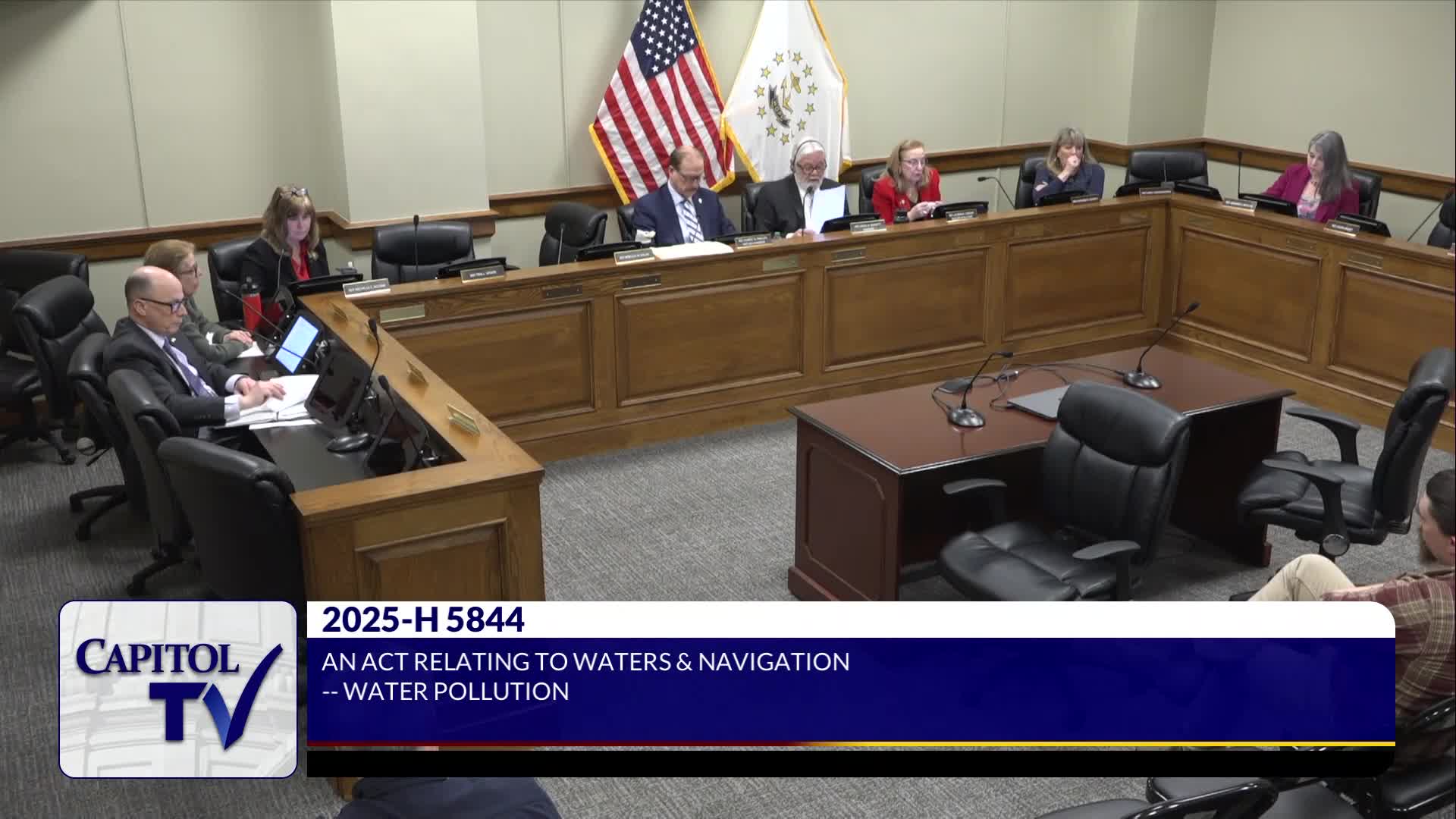
Representative Courtfriend (listed as the sponsor in the hearing) presented House bill 5844, which would require quarterly testing for PFAS in biosolids proposed for application to land and require applicants to report testing results to the Department of Environmental Management as part of the permitting process.
The sponsor said Rhode Island facilities currently ship much of their biosolids out of state for incineration or alternate handling because of PFAS concerns; she described the Maine experience in which farms were closed after PFAS‑contaminated biosolids were spread on farmland and resulted in PFAS in milk, soil and groundwater. The sponsor said current state permitting does not require routine PFAS testing of biosolids entering the state, and the bill would close that gap for large‑scale land applications.
Backcountry Hunters and Anglers, Save the Bay, Clean Water Action and other witnesses testified in favor, highlighting risks to food, wildlife and drinking water. Testimony noted that consumer‑scale products (bagged fertilizers, household products) are not the target of the bill; the measure focuses on large biosolids applications that require DEM permits. Save the Bay and other speakers urged the committee to require testing and develop a monitoring plan.
Witnesses noted there is not a single nationwide standardized lab method for microplastics testing, but for PFAS testing laboratories and standards exist; speakers urged the committee to require applicants to provide third‑party test results as part of the permit application. Sponsor said the bill would not require DEM to perform the tests; applicants or providers would provide results to the agency.
Committee members asked whether biosolids are currently land‑applied in Rhode Island; the sponsor replied that most in‑state biosolids are being shipped out of state, though some municipalities compost or otherwise handle biosolids locally. The committee concluded the hearing on H‑5844 with no final vote and accepted testimony from multiple groups supporting the measure.
Background: Testimony repeatedly cited Maine and Michigan cases where biosolids with PFAS led to contamination of agricultural products and the need for restrictions and monitoring to prevent similar outcomes in Rhode Island.