Get Full Government Meeting Transcripts, Videos, & Alerts Forever!
Get email alerts on the 340b Contract Pharmacies topic
No spam. Unsubscribe anytime.
Hospitals, health centers and pharmacists clash over 340B contract pharmacy protections as Senate panel reopens bill
Summary
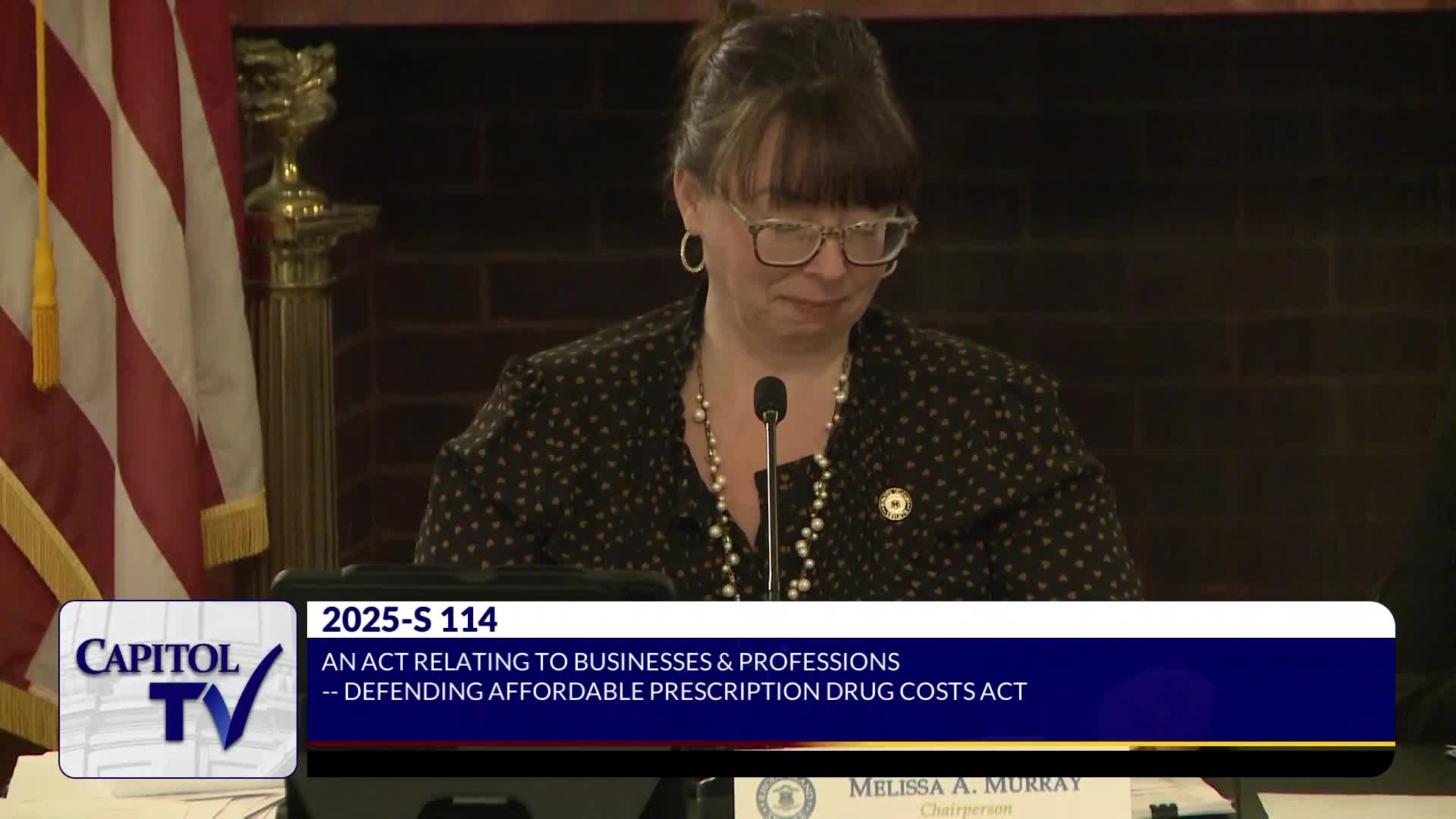
PROVIDENCE, R.I. — Senate Bill 114, proposing to bar pharmaceutical manufacturers, PBMs or insurers from discriminating against 340B covered entities by restricting contract pharmacy access, returned to the Senate Committee on Health and Human Services on March 20 for additional testimony.
PROVIDENCE, R.I. — Senate Bill 114, proposing to bar pharmaceutical manufacturers, PBMs or insurers from discriminating against 340B covered entities by restricting contract pharmacy access, returned to the Senate Committee on Health and Human Services on March 20 for additional testimony.
Senator Valverde, sponsor of SB 114, told the committee the federal 340B program was designed to let safety‑net hospitals and community health centers purchase medicines at discounted prices and use the savings to expand services for vulnerable patients. Community health center representatives, hospitals and specialty pharmacy managers described large revenue losses and program barriers when manufacturers restricted the contract pharmacies that covered entities could use.
Elena Nicolella, speaking for Rhode Island’s eight community health centers, said the centers serve more than 210,000 residents and “the decision of the pharmaceutical manufacturers to limit the number of contract pharmacies ... has caused the health centers to lose over $16,000,000 since 2022.” Matt Roman of Thundermist Health Center said the organization lost $5,600,000 in 2024 alone and attributed layoffs, elimination of a community health worker program and reduced feeding programs to that revenue loss.
Care New England’s Carolyn Sundberg, a licensed pharmacist, gave patient examples of how 340B savings funded free or reduced‑price medications and expanded on‑site services. “The 340B program has been vital in enabling us to stretch every dollar further,” she told the committee, citing charity care, patient assistance programs, behavioral health services and an on‑site pharmacy expansion.
Pharmaceutical industry witnesses opposed the bill. Rachel Caudill Latham of PhRMA said the program “has strayed far from its intended purpose” and warned that codifying universal contract‑pharmacy access could entrench a network of for‑profit actors monetizing the program and undermine accountability. She also said 340B is an entity‑ or site‑based program not tied to patient income, and urged careful study before changing the state law.
The hospital association, represented by Matt Roman (speaking on behalf of hospitals earlier in the hearing) and others, argued the hospitals that qualify as 340B entities serve disproportionate numbers of government‑insured and uninsured patients; they described community benefits paid for using 340B savings and cited services that include cancer treatment, diabetes education, opioid treatment, mental health services and food pantries.
Committee action: Senators voted to table SB 114 earlier in the hearing (motion made by Senator Vallejo, seconded by Senator Loria; committee voice vote to table). Later in the session the committee removed SB 114 from the table and then voted to hold it for further consideration (removal motion made by Senator Russo, seconded by Senator Ujifusa; subsequent motion to hold made by Senator Erso and seconded). The bill remains under active committee review.
Why it matters: Witnesses for safety‑net providers said contract‑pharmacy restrictions have directly reduced funds that cover charity care and community programs; industry witnesses said the program requires better federal transparency and that actions by manufacturers reflected attempts to curb program misuse. The committee asked both sides for documentation and asked state staff to track the fiscal and access implications before further action.