Get Full Government Meeting Transcripts, Videos, & Alerts Forever!
Get email alerts on the All Electric Buildings topic
No spam. Unsubscribe anytime.
Lawmakers and stakeholders debate All-Electric Building Act at committee hearing
Summary
Representatives, industry groups and advocacy organizations testified for and against an All‑Electric Building Act that would require new construction to use all‑electric systems beginning Jan. 1, 2027, with several exemptions and carve-outs discussed at length.
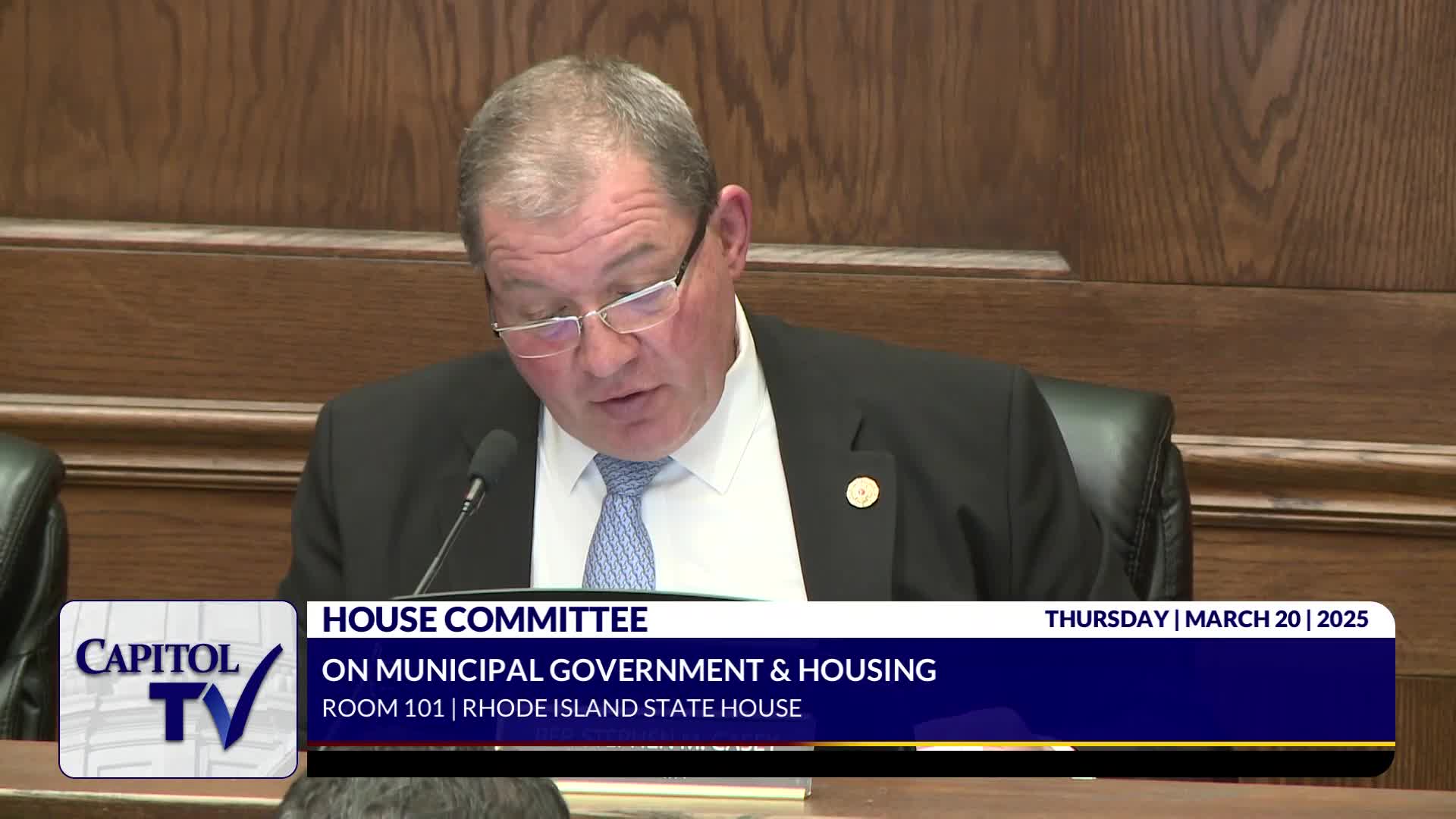
The House Committee on Municipal Government and Housing heard extended testimony on March 20, 2025, on House Bill 5450, the All‑Electric Building Act, which would generally require that building permits issued for new construction after Dec. 31, 2026, be for all‑electric buildings with limited exemptions (for hospitals, certain kinds of industry and where electrification is infeasible).
Representative Handy, sponsor of the bill, framed the proposal as a forward-looking step to reduce greenhouse‑gas emissions from building heating and to avoid installing new fossil‑fuel infrastructure that would have a 15–20 year equipment lifespan. “The idea here is to say, once we’re moving all‑electric, we’re going to keep on doing that with new construction,” he said.
Why it matters: Buildings are a major source of greenhouse‑gas emissions in Rhode Island. The bill attempts to avoid creating new fossil‑fuel lock‑in while steering new construction toward electric heat‑pump technology and electric appliances. Proponents said the measure aligns long‑term construction with state climate goals.
Supporters’ testimony - Green Energy Consumers Alliance (Tina Munter) testified that all‑electric construction helps meet the state’s 2030 and 2050 emissions targets, can be cost‑competitive with mixed‑fuel construction, improves indoor air quality by removing combustion pollutants and reduces duplication of systems (heat pump + AC). She cited analyses showing near‑parity in construction costs and highlighted co‑benefits for public health. - An all‑electric homeowner (Joel Gates) described a decade of experience living in an all‑electric, deep‑retrofit home with heat pumps and solar; he said the technology has performed reliably and reduces emissions.
Opposition and practical concerns - Industry groups representing heating‑fuel distributors and hearth dealers warned of practical and safety tradeoffs. Diane Quasnell, executive director of the Energy Marketers Association of Rhode Island, noted the heating‑fuel sector’s transition to renewable liquid fuels (a state biodiesel mandate that will reach 20% blends in July 2025 and industry plans for higher blends later) and stressed fuel‑diversity, consumer choice and reliability during grid outages. - Sean Rosser, owner of a local hearth business, told the committee modern gas and pellet appliances serve as reliable backup heat during power outages and recommended high‑efficiency fossil‑fuel appliances and a targeted wood‑stove change‑out program rather than a blanket ban on fuel options for new homes.
Committee questions and technical issues Committee members asked about the definition of “new construction” (whether a full rebuild after a fire or a major addition would trigger the requirement), the impact of high local electricity rates, the current fossil‑fuel content of the grid and grid readiness for electrification. Representative Handy and supporters replied that exemptions are included for infeasibility and that many cost studies show parity or savings for all‑electric construction in the medium term; they also said policy to manage grid reliability and rate issues needs coordination outside the bill.
What’s next The committee closed the hearing on HB 5450 after receiving written testimony from multiple business groups and housing advocates. No committee vote on the bill was recorded on March 20; committee members asked for further review and submitted written testimony for the record.
Ending The debate highlighted the tensions between near‑term consumer reliability and supply‑chain constraints and long‑term climate and public‑health goals. Stakeholders asked committees that consider utilities and environment policy to evaluate parallel grid and reliability questions while the housing committee weighs the construction‑sector regulation.