Get Full Government Meeting Transcripts, Videos, & Alerts Forever!
Get email alerts on the Water Resilience topic
No spam. Unsubscribe anytime.
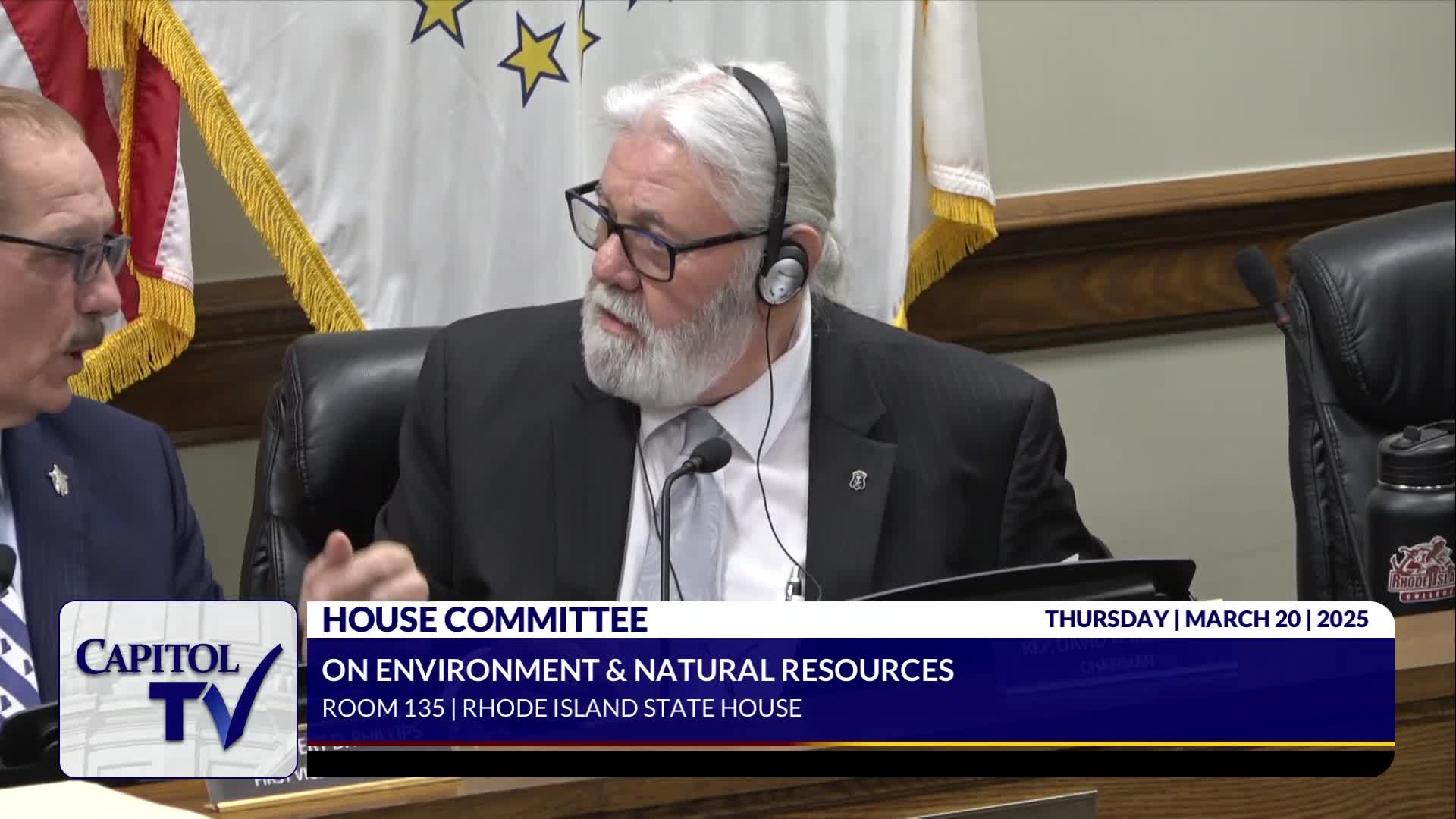
Committee hears bill requiring flood resilience plans from public water suppliers
Summary
House bill 5845 would require Rhode Island public water suppliers to prepare flood-resilience assessments and response plans; sponsor and staff said the measure would supplement existing water-supply planning to focus on climate-driven flood risks, but no vote or final action was taken.
House members heard testimony on House bill 5845 on the need for water-supply resilience planning to address flooding and other climate-driven risks to public drinking-water systems.
Representative Reed introduced the bill and turned the floor to a presenting witness identified in the record as Mr. Graf, who said the proposal “is intended to supplement existing legislation within the waters and navigation title of our general laws, specifically to have a greater focus on flood resilience rather than the existing water supply management plans currently in legislation.” Graf told the committee the bill would “definitively spell out the purpose of a resiliency plan, which is to identify risks and provide assessments and emergency response plans to address the resilience of our water supply systems to natural hazards and environmental related impacts.”
Witnesses and members cited recent severe storms and a state water-resources board survey that listed systemwide resiliency among its top priorities. Representative Reed said changes in rainfall and flooding patterns have heightened concerns and described the bill as a step to protect drinking-water infrastructure.
Committee members asked whether the bill covers municipal wells and private well users; Reed (and the presenting witness) clarified the bill applies to municipal departments, districts, and other entities engaged in treatment, transmission or distribution of drinking water and does not extend coverage to private domestic wells.
No formal vote on H-5845 occurred during the hearing; the committee adopted a separate procedural motion to hold all bills on the calendar for further study, which the chair described as procedural and not a statement on the merits of individual measures. The bill remained under study at adjournment.
Background: Committee members and witnesses framed the proposal as filling a gap between current water-supply management plans and the specific flood- and climate-resilience actions some communities now seek. The bill text references existing emergency-management material in the water-supply planning rules (cited in testimony as an "emergency management section 2.8.8") and would require supplier-level risk assessments and response plans tailored to flood hazards.