Get Full Government Meeting Transcripts, Videos, & Alerts Forever!
Get email alerts on the Education Funding topic
No spam. Unsubscribe anytime.
House rejects bill to direct excess lottery revenue to schools after amendment battle
Summary
Lawmakers debated House Bill 373, a proposal to allocate excess lottery revenue to school districts through a per‑quality educator formula. A floor amendment that would have split funds between innovation programs and property‑tax relief passed, but the amended bill failed second reading, 44‑56.
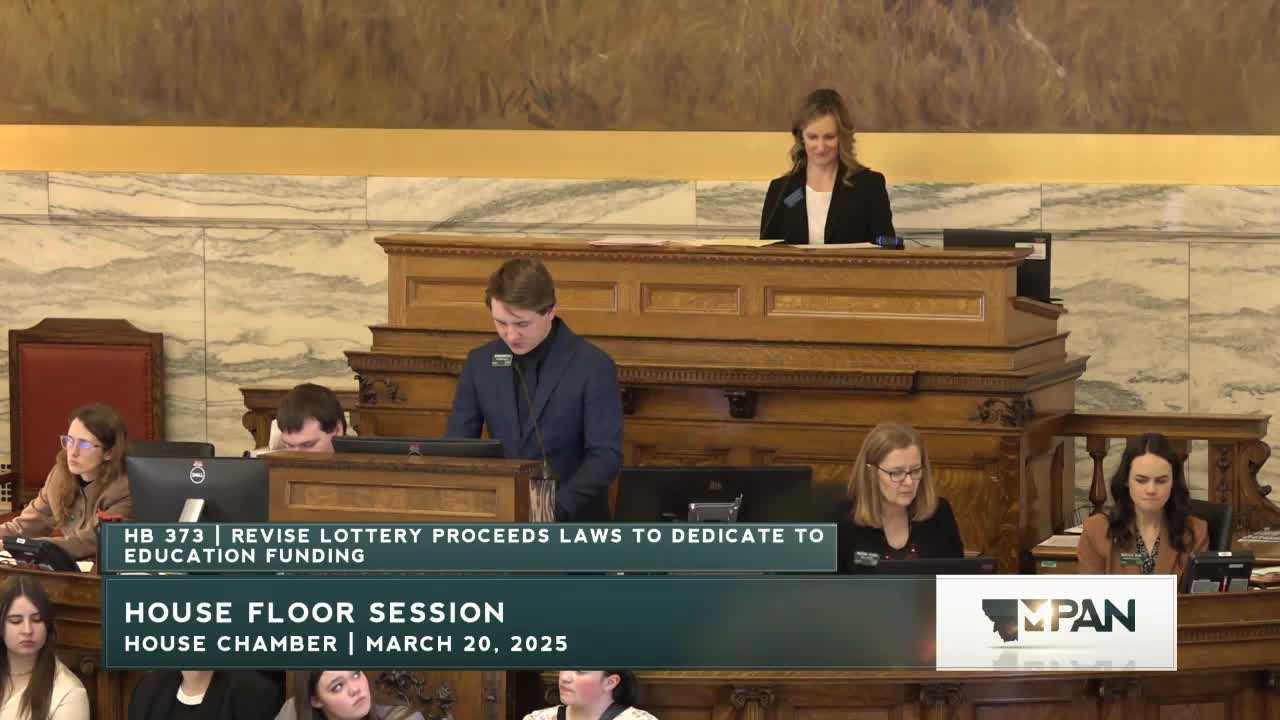
House Bill 373, which sought to redirect excess state lottery revenue to school districts via a formula tied to quality educator payments, was the subject of an extended floor debate and amendment on March 12.
Sponsor Representative Matthews opened by recounting the history of the state lottery and said the bill would direct leftover lottery revenue, after STEM grants and administrative costs, into a flexibility fund distributed to districts using the same formula as quality educator payments. “This money would go to a flexibility fund for the school districts,” Matthews said, describing the measure as intended to let local districts address differing needs including salaries, curriculum or professional development.
Representative (unnamed in the transcript) moved an amendment that would direct roughly one quarter of the funds to an innovative education program (described as STEM and similar projects) and dedicate 50% to raise the tax credit limits tied to scholarship tax credits (a description the sponsor said would increase those limits to about $12 million per side) with the remainder used to reduce property taxes through the state's SEPTA account. The amendment sponsor described the change as making the bill palatable to colleagues who wanted direct controls on how the money was used.
Matthews said she had considered the bill a messaging vehicle and said she would vote against her own bill after the amendment, urging members to vote no on final passage. After debate, the House recorded 44 votes in favor and 56 against; House Bill 373 failed to pass second reading.
Supporters of the amendment argued it balanced innovation, school flexibility and property tax relief; opponents warned the measure would divert lottery proceeds from their original public purposes and raised concerns about giving districts broad discretion via a flex fund.
The debate included clarifications that the proposal would not create new programs but would change where existing excess revenue is directed; proponents also said tax credit changes would be symmetric on public and private sides. The transcript shows the amendment passed in committee voting (57‑43) but the amended bill failed on second reading on the House floor.