Get Full Government Meeting Transcripts, Videos, & Alerts Forever!
Get email alerts on the Family Law Culture Heritage topic
No spam. Unsubscribe anytime.
Montana bill would add 'culture and heritage' to custody best‑interest factors
Summary
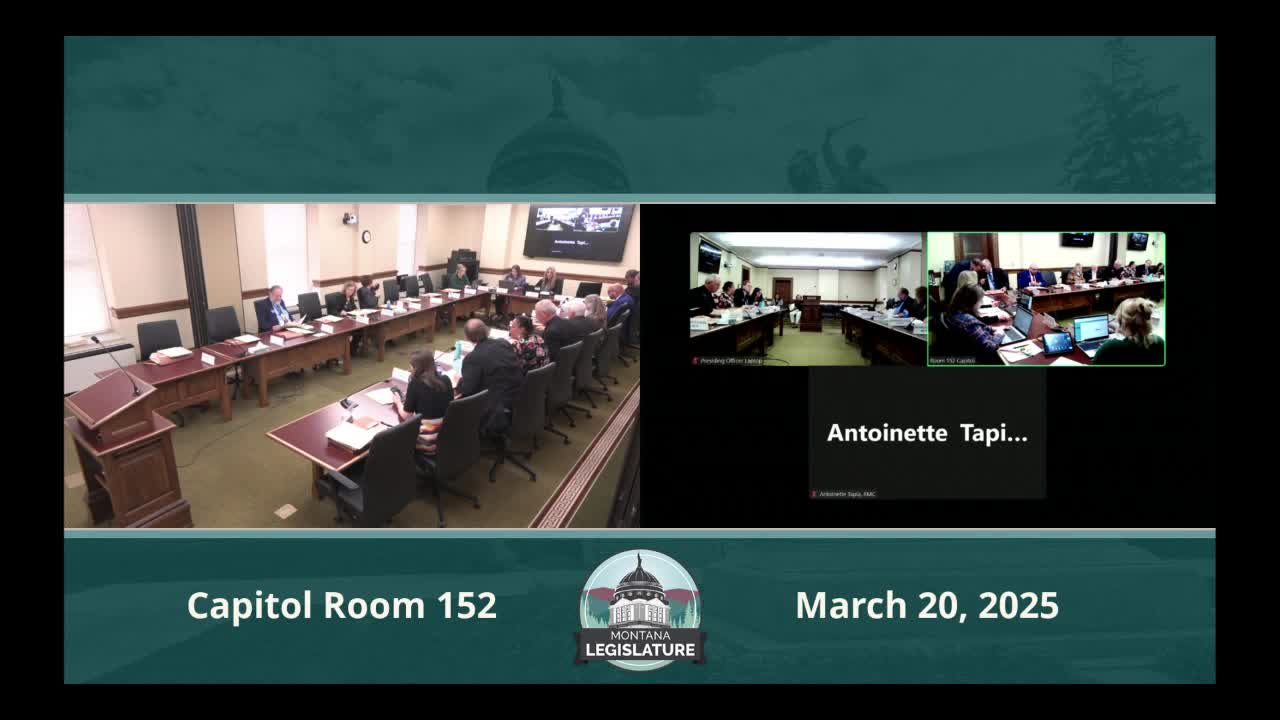
Senator Susan Weber opened a hearing on Senate Bill 180, which would add a child’s “culture and heritage” to the best‑interest factors judges use when setting parenting plans in divorce cases.
Senator Susan Weber opened a hearing on Senate Bill 180 on behalf of the House Committee on Health and Human Services, saying the bill would add consideration of a child’s “culture and heritage” to the list of factors courts use to determine parenting plans in divorce cases.
Weber told the committee SB 180 grew out of cases in her district and said the change would apply to “children of divorce” rather than children in foster care covered by the Indian Child Welfare Act. “All this wording but really that's the meat of the bill is to consider the culture and heritage of the child,” Weber said.
Supporters, including tribal and early‑childhood groups, told the committee the change would help judges recognize children who have Native ancestry but are not enrolled tribal members. Alyssa Snow, who said she represents the Blackfeet, Fort Belknap and Chippewa Cree communities, said current law and practice can leave descendant children disconnected from tribal culture. “A descendant would not be officially enrolled but may be recognized by the tribe as being the child of an enrolled member,” Snow said, urging a due pass on the bill.
Callie Parr of 0‑to‑5 Montana said SB 180 “ensures native children's cultural identities and heritage are recognized in custody and adoption decisions,” and that courts have overlooked heritage because of enrollment status or blood quantum. Kyla Hailstone, director of the Montana Family Court Awareness Project, told the committee that some standards referenced in Title 41 already require consideration of culturally appropriate services and that SB 180 would align Title 40 family law practice with those standards.
Amani Kindness Coleman of the Montana Budget and Policy Center described cultural socialization as the set of practices parents use to teach cultural knowledge, beliefs and traditions, and said preserving culture supports children’s development and school success. Keaton Sunchild of Western Native Voice said the bill “keeps [native children] connected to their families, traditions, and communities.”
Committee members expressed questions and concerns about the wording. Representative Love asked whether the provision could conflict with constitutional nondiscrimination language; Weber replied she did not see a conflict and that the bill is intended only to add consideration of culture and heritage to parenting‑plan factors. Several members asked whether terms such as “ethnicity” or “religion” in the bill could tilt judicial decisions or be misused in contested cases. Representative Kelly said family court judges are sometimes placed in extremely difficult positions and warned the new factor could complicate already fraught decisions.
Weber told the committee she had prepared an amendment that would remove “ethnicity” and “creed/religion” language but that amendment was not yet attached to the bill text before the committee. Multiple committee members said they would be open to amendments to narrow or clarify the language.
No formal vote was taken. Committee staff said they would work on potential amendments and aim to have edits ready for executive action (EA) later in the week; Weber said she would be open to amendments that preserve the core intent of adding culture and heritage as a factor.
The hearing record contains testimony from multiple tribal and early‑childhood organizations and several committee members asked for legal review and drafting changes to avoid unintended consequences. The committee closed the hearing on SB 180 with plans to consider amendments before a future EA session.