Get Full Government Meeting Transcripts, Videos, & Alerts Forever!
Get email alerts on the Elections Ranked Choice topic
No spam. Unsubscribe anytime.
Rhode Island senators hear testimony on bill to use ranked-choice voting in 2028 presidential primary
Summary
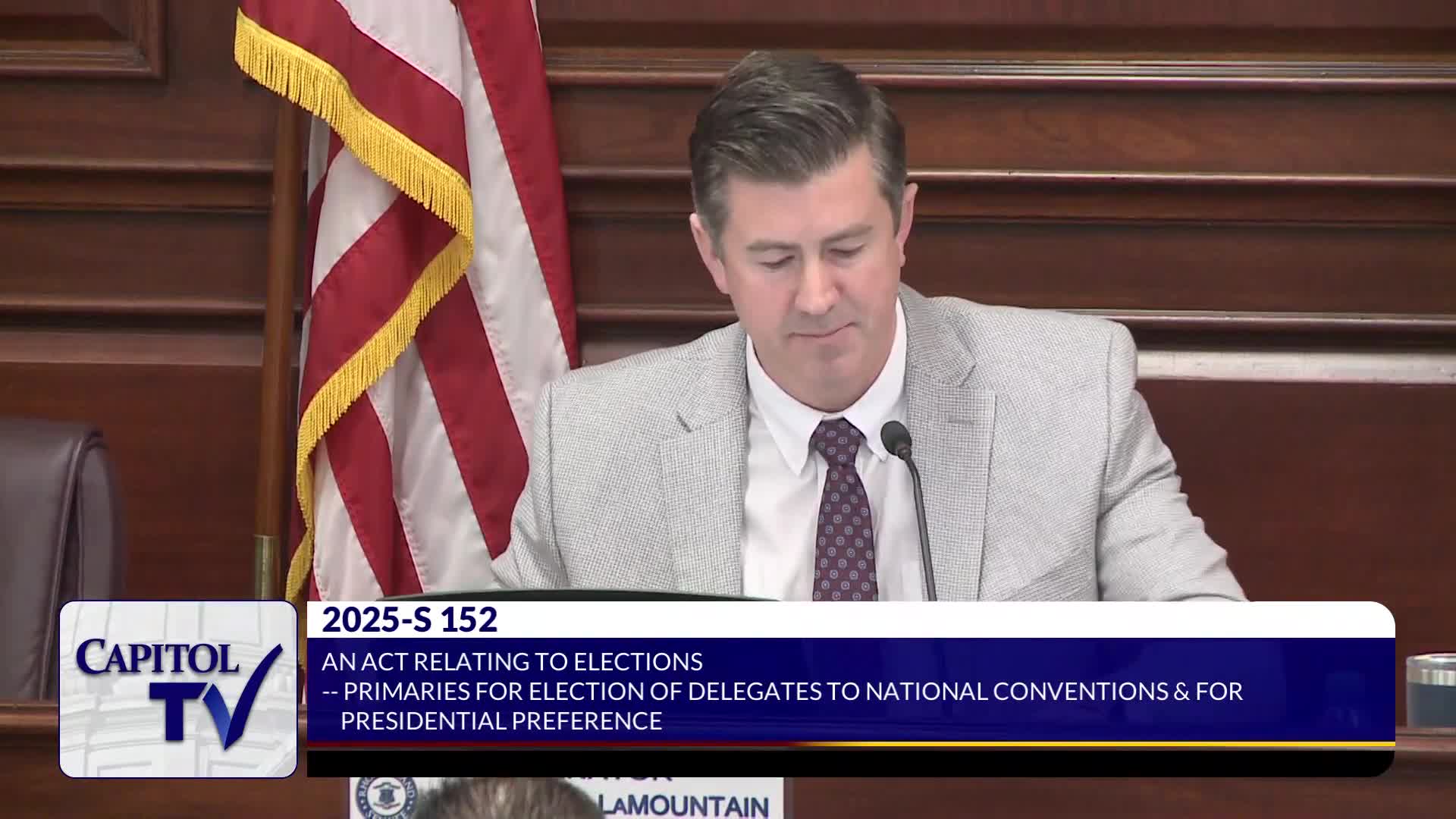
Senate Judiciary on Thursday heard hours of testimony on Senate Bill 152, which would allow Rhode Island to use ranked‑choice voting for the presidential preference primary beginning in 2028.
Senate Judiciary on Thursday heard hours of testimony on Senate Bill 152, which would allow Rhode Island to use ranked-choice voting (RCV) for the presidential preference primary beginning in 2028.
Proponents told the committee RCV would reduce “wasted” votes in crowded fields and help ensure the nominee has broader support. Senator Lawson, sponsor of the bill, told the panel the proposal is limited to the presidential preference primary and would give voters the ability to rank candidates in order of preference. “This is the same bill I introduced last year,” Lawson said, “and I think, Rhode Islanders now have a better, understanding of ranked choice voting primary.”
Why it matters: Supporters — including Common Cause Rhode Island, FairVote Action and multiple grassroots groups — argued that when many candidates run, voters who pick minor candidates often find their choice irrelevant when that candidate drops out. Deb Otis of FairVote Action told lawmakers the bill clarifies how ballots are treated when a candidate withdraws: “You treat that candidate as withdrawn from the ranked-choice voting tally. Every voter who voted for them... the ballot counts for their next choice.” Josh Daniels and other experts described RCV as an “instant runoff” that can produce majority-backed nominees without requiring separate, low-turnout runoff elections.
Supporters gave implementation and education advice. Rob Rogers of the Secretary of State’s office told senators the administration is neutral but warned the office would need to run a robust voter education campaign and recommended the Board of Elections rather than the secretary certify results if the bill advances. Rogers noted the long lead time in the bill is important: “Passing this bill now gives our election officials three years to prepare for a smooth transition.”
Opposition and concerns: Committee members raised administrative questions about ballot length, equipment and result timelines. Witnesses said most jurisdictions that use RCV set a practical cap of five rankings on a ballot and that modern scanners and tabulation systems can produce night‑of preliminary results in centralized jurisdictions like Rhode Island. John Marion of Common Cause said delayed results in Alaska were driven by geography and not by RCV itself. ACLU counsel and others pressed for careful attention to ballot design and auditing procedures.
Process: After testimony from more than a dozen expert and grassroots witnesses and an extended exchange about implementation, Senator Rapatakis moved to hold the bill for further study; the committee voted to hold the measure.
Where it goes next: The committee’s “held for further study” status keeps the bill alive for revision and follow-up testimony. If advanced, the bill would create a years‑long implementation window before the 2028 presidential preference primary.
Ending: Supporters urged the committee to give election officials time to prepare; officials said the state’s election infrastructure and a three‑year lead should make implementation possible if the legislature directs it.