Get Full Government Meeting Transcripts, Videos, & Alerts Forever!
Get email alerts on the Land Use Planning Malupa topic
No spam. Unsubscribe anytime.
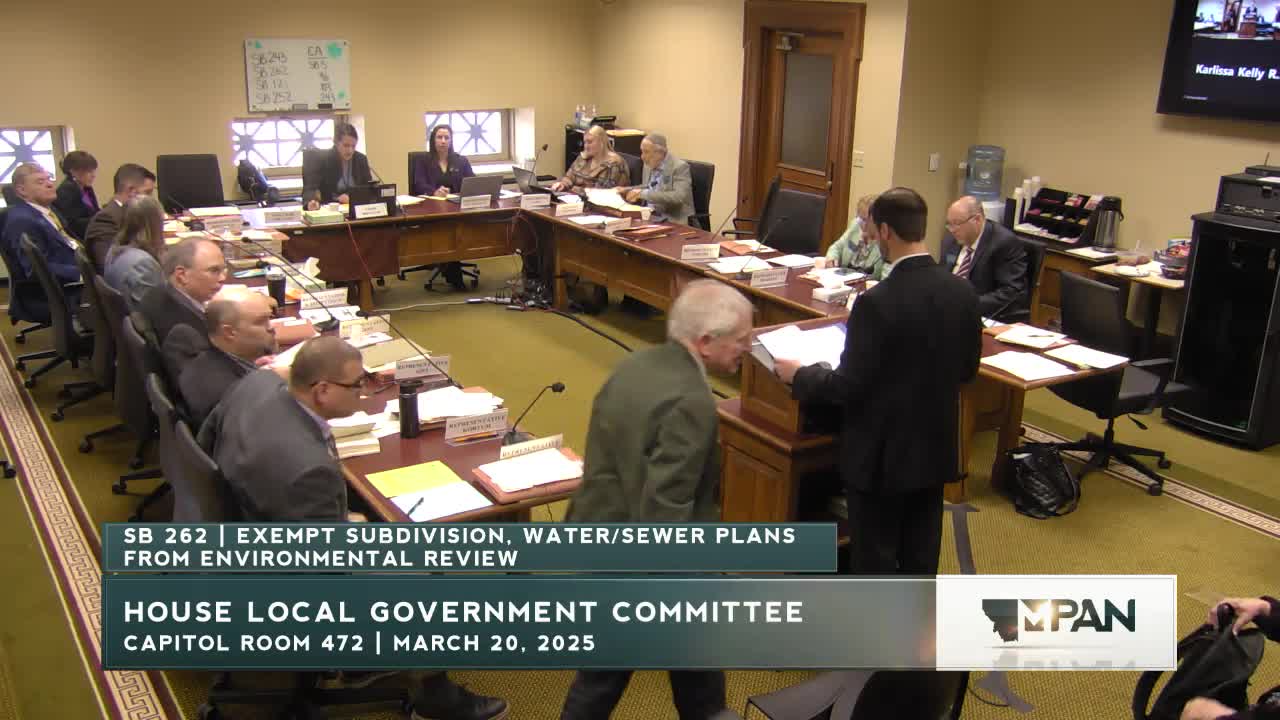
Committee considers cleanup to Montana Land Use and Planning Act; supporters call it technical, some residents fear extraterritorial zoning
Summary
Senate Bill 121 would tidy implementation language in the Montana Land Use and Planning Act (MALUPA); planners and municipal officials called the changes necessary technical fixes, while some residents in extraterritorial zones raised concerns about potential expansion of municipal authority.
Senate Bill 121 is a follow-up bill intended to clarify implementation details of the Montana Land Use and Planning Act (MALUPA), enacted last session. The sponsor and multiple municipal and planning organizations described the measure as technical cleanup to aid implementation of the earlier law.
Kelly Lynch, executive director of the Montana League of Cities and Towns, and representatives of planning and municipal associations said the bill corrects cross-references, restores a municipal facility exclusion, and clarifies rules about extraterritorial jurisdiction and how a city and county may interlocal-agree to extend municipal zoning or subdivision rules beyond city limits. Planners said the measure will help the communities that opted into MALUPA implement the statute’s planning and appeal provisions without upending local processes.
Proponents included Shelter Whitefish, the Montana Association of Realtors and the Montana Association of Planners, and municipal staff from Billings and other cities that are implementing MALUPA. They told the committee that most changes are “esoteric” drafting fixes requested by planners who are building the new procedures into local practice.
Opponents included a group called It’s My Land from Livingston, which said residents in Livingston’s two-mile extraterritorial zone (the “donut”) worry municipal authority could expand to apply zoning or subdivision rules without sufficient protections for property owners; the opponent said more clarity is needed to ensure that city-county interlocal agreements and local government structures preserve residents’ rights.
Committee members asked clarifying questions about whether the bill would change the existing requirement that a county must agree to a city’s extraterritorial zoning in certain government forms; municipal witnesses said case law and current practice already give counties a deciding role and that the bill does not revoke county authority. Proponents said they are preparing small amendments to respond to a recent court order affecting MALUPA’s administrative-review language.
The committee did not take a final vote. Sponsors and planners said they will propose limited amendments to address a recent court ruling and to ensure the statute’s streamlined review provisions comply with the court’s decision.