Get Full Government Meeting Transcripts, Videos, & Alerts Forever!
Get email alerts on the Homelessness Study Funding topic
No spam. Unsubscribe anytime.
Wilder Research warns Minnesota Homeless Study is at risk without steady funding; committee hears bill to secure support
Summary
Sen. Hoffman presented a bill to stabilize funding for the Minnesota Homeless Study. Wilder Research described the study’s methods, statewide reach (about 5,000 interviews on the night), and how fragmented funding jeopardizes continuation. Committee laid the bill over for possible inclusion in omnibus.
St. Paul — Senator Hoffman told the Senate Committee on Housing and Homelessness Prevention that funding instability threatens the Minnesota Homeless Study, a long‑running statewide point‑in‑time survey produced in partnership with Wilder Research and tribal nations.
Michelle Decker Gerard, senior research manager and co‑director of the Minnesota Homeless Study at Wilder Research, told the committee the study is conducted every three years and includes a one‑night, face‑to‑face survey at emergency shelters, domestic violence shelters, transitional housing, motel voucher sites and unsheltered locations. "It's about 5,000 interviews on that single night," she said; the study also conducts companion surveys with American Indian tribes and produces multiple issue briefs and regional data tables used by policymakers and service providers.
Decker Gerard explained the study’s uses: identifying trends (including a noted increase in older‑adult homelessness), informing program design for service providers, guiding public awareness and helping agencies and philanthropy allocate funding. She said the study gathers qualitative and quantitative details beyond simple counts — for example, where people stayed over the past 30 days — and provides data used by transit authorities and in emergency funding applications.
The witness told the committee the study’s current funding is a patchwork of public and private sources that has become harder to assemble over recent cycles. Decker Gerard said that without a more consistent funding stream the study is at risk of "being sunsetted" and that the bill before the committee is an attempt to streamline state support and maintain the study and its community supports.
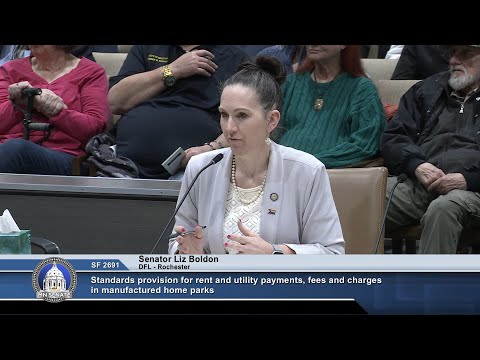
Committee members from both sides of the aisle praised the study’s depth and utility. Senator Bolden and others said the data is indispensable for designing services and making funding decisions. Hoffman noted federal requirements (CFR 24) that tied state assessment needs to broader federal processes, and she urged continued investment so the state can plan for prevention and services.
The committee did not take a final vote on funding language. Chair Port said the bill will be "laid over for possible inclusion in the omnibus." Supporters asked the committee to provide stable, centralized state funding and to fund technical assistance to help rural providers participate in the survey process.
Why it matters: The Minnesota Homeless Study is a long‑running, detailed source of statewide data on homelessness used by state agencies, local providers and funders. Advocates and providers said losing the study would leave a gap in planning and in targeting resources for populations such as older adults and unsheltered people.
What’s next: The committee laid the bill over for potential omnibus inclusion; Wilder Research said additional issue briefs from the 2023 study are imminent and urged lawmakers to consider stable funding.