Get Full Government Meeting Transcripts, Videos, & Alerts Forever!
Get email alerts on the Law Enforcement Search And Seizure topic
No spam. Unsubscribe anytime.
Committee lays over bill limiting warrantless searches by conservation officers after contentious hearing
Summary
Senate File 956 would restrict conservation officers' authority to conduct warrantless searches and seizures; the DNR enforcement director warned of public‑safety impacts and partner confusion, sponsors said the bill restores Fourth Amendment protections and parity with other peace officers; the committee laid the bill over for further work.
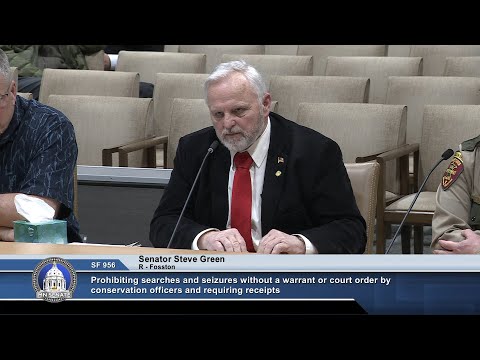
Senate File 956, a proposal to limit warrantless searches and seizures by conservation officers, prompted a contentious hearing on March 20 and was laid over for further study.
Senator Green, sponsor of the bill, said the measure was intended to require conservation officers to follow the Fourth Amendment and a 2001 directive that advised officers to obtain consent or a warrant before entering fish houses. He said complaints from constituents across northern Minnesota reflected a loss of trust stemming from what they describe as aggressive searches and seizures by DNR enforcement staff.
Steve Porter, a long‑time hunter and board member of a hunters' group, testified that conservation officers had entered fish houses without consent, confiscated firearms and imposed fines; Porter said the bill is "not asking for anything new... We're just asking that they would follow the Fourth Amendment." Several sheriffs and local law‑enforcement representatives provided input supportive of Fourth Amendment parity, according to the sponsor.
The Minnesota Department of Natural Resources Enforcement Director, Colonel Rodman Smith, strongly opposed the bill, calling it "an extreme and punitive bill" that would "put conservation officers and the public in harm's way." He said conservation officers are trained, licensed peace officers who follow the same search and seizure laws as other officers and that removing current search authority for conservation officers would create a double standard, complicate mutual aid and slow responses to urgent public‑safety incidents.
Other testimony included criminal‑defense and constitutional perspectives. Attorney Sarah McKeown, a defense lawyer, said she opposed a special carve‑out that would give conservation officers different rules from other peace officers and advised caution about creating a separate statutory regime. Senator Wiesenberg, speaking from the floor remotely, recounted his own concerns about DNR practices and broader regulatory disputes, and urged enforcement of constitutional protections.
Committee members debated whether the bill would create a different standard from other peace officers or merely affirm constitutional protections. Several senators asked for clarifying legal language. Sponsor Senator Green asked to lay the bill over so staff could work with him to refine the text; the committee agreed to hold the bill for further work.