Get Full Government Meeting Transcripts, Videos, & Alerts Forever!
Get email alerts on the Housing topic
No spam. Unsubscribe anytime.
City Council condemns proposed HUD cuts after lengthy public testimony on homelessness
Summary
Philadelphia City Council adopted a resolution condemning proposed federal cuts to the U.S. Department of Housing and Urban Development (HUD) after public testimony from housing providers, faith groups and community advocates urged local action to blunt impacts on unhoused and low-income residents.
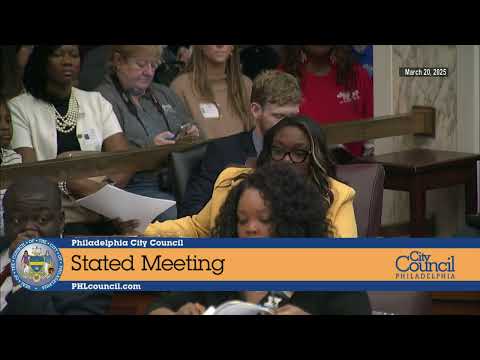
Philadelphia City Council on March 20 adopted a resolution condemning the Trump administration's proposed deep cuts to the U.S. Department of Housing and Urban Development, after more than an hour of public testimony from housing advocates, faith groups and community organizations.
The resolution, introduced by Councilmember Ruth C. Landau, says the proposed reductions “will have a devastating effect on the enforcement of fair housing laws, damage communities, and escalate the affordable housing crisis.” The motion to adopt the resolution was moved by Landau and was approved by voice vote; the clerk later announced the motion had carried.
Why it matters: Testimony at the podium outlined concrete ways HUD funding supports Philadelphia — from vouchers and public housing to staffing that administers federal programs. Speakers warned that staffing and budget cuts at HUD would worsen an already acute housing and homelessness crisis and urged city officials to step up local support.
Community groups and service providers said cuts would increase barriers for people experiencing homelessness and would strain local nonprofits.
“Now is the time for strong local leadership to defend our affordable housing gains and protect our most vulnerable and at-risk residents,” Garrett O'Dwyer, associate policy director for the Philadelphia Association of Community Development Corporations (PACDC), told council. “We share your outrage at these proposed cuts. They're cruel, and they are senseless.”
Faith-based groups and congregations also testified. Kenneth Baer, speaking for Power Interfaith and Arch Street United Methodist Church, called for immediate local partnerships to expand consistent shelter and services for people living outdoors. “The truly homeless have a much smaller array of services,” Baer said, describing drop-in centers that provide meals, showers and medical attention.
Representatives from neighborhood nonprofits and community developers pressed council to bolster local housing production and to reform land bank and development processes so community-based organizations can better produce permanently affordable housing. Julianne Rios of Seva urged support for community development corporations and reforms to the Philadelphia Land Bank to increase local capacity.
Council action and next steps: The council's adoption is a formal statement of opposition; it does not bind federal spending. Councilmembers and several witnesses called for local policy steps and to increase city funding to mitigate federal losses.
Councilmembers in the chamber did not attach a follow-up ordinance to the resolution during the session, but several members said they would pursue city-level measures and hearings in coming weeks to explore responses and to coordinate with community partners.
Public-comment context: The public-comment period on the second-reading calendar included dozens of speakers; many of those who addressed HUD funding also asked council to press the city and state to expand rental assistance, remove administrative barriers for unhoused residents seeking services, and partner with CDCs and congregations to increase shelter capacity and rapid rehousing throughput.
Ending: The adopted resolution adds Philadelphia's voice to a growing number of local governments opposing federal cuts and signals expectations that the city will seek ways to shield vulnerable residents if the federal reductions proceed.