Get Full Government Meeting Transcripts, Videos, & Alerts Forever!
Get email alerts on the Groundwater‑sustainability Plan topic
No spam. Unsubscribe anytime.
Wyandotte Creek GSA directs staff to prepare amendments after periodic GSP evaluation
Summary
Following a consultant briefing, the Wyandotte Creek Groundwater Sustainability Agency on March 20 directed staff to develop formal amendments to its groundwater sustainability plan to address DWR corrective actions, monitoring gaps and water-quality exceedances.
The Wyandotte Creek Groundwater Sustainability Agency on March 20 directed staff to prepare formal amendments to its groundwater sustainability plan after a consultant presented a periodic evaluation and Department of Water Resources (DWR) corrective actions.
The evaluation, presented by Ryan Fulton of Larry Walker Associates, explained that a periodic GSP evaluation is required under the State Water Code and is due every five years; the first is due in January 2027. Fulton said the evaluation "provides an assessment of the subbasin's current conditions, including an evaluation of project and management actions" and recommended a package of amendments to respond to DWR comments and fill data gaps.
Board members heard that DWR's written corrective actions request removal of a "two non‑dry year" condition that the GSP used in its undesirable‑result definitions and asked the GSA to better quantify risks to domestic wells, interconnected surface waters and groundwater‑dependent ecosystems (GDEs). Fulton told the board that the planned amendments will include updates to sustainable management criteria (SMCs), enhancements to the monitoring network and clarified projects and management actions.
Fulton and staff highlighted several technical findings and proposed changes. Three of six representative monitoring wells in the basin exceeded the plan's electrical conductivity (salinity) minimum thresholds in 2024, a condition the presentation flagged for closer study. On subsidence, InSAR (Interferometric Synthetic Aperture Radar) data show no detectable, basin‑wide subsidence above the technique's uncertainty; the consultants recommended adopting InSAR as the primary data source for subsidence SMCs going forward. Fulton noted InSAR can resolve changes to within roughly a tenth of a foot and suggested an example MT (maximum threshold) used elsewhere of 0.5 foot over five years as a reference point.
Groundwater‑level SMCs now are set to protect approximately 85% of domestic wells from going dry. The consultants said the GSA will update its domestic well inventory; current maps shown by the consultant indicate roughly 1,300 parcels likely to have domestic wells. The presentation said the GSA should elaborate a domestic‑well mitigation program; the consultant noted an estimated per‑well cost to deepen or repair a domestic well of about $30,000 and that roughly 15% of domestic wells were identified as the cohort most at risk based on existing data. The board and staff discussed opportunities to coordinate mitigation and resiliency efforts with Butte County's drought resilience plan and existing programs that repair or replace dry wells.
The GSA also described planned expansions of the monitoring network to better capture conditions near streams and GDEs: maps shown to the board identified nine existing shallow monitoring wells and plans for about 18 new shallow wells targeted near streams and groundwater‑dependent ecosystems; there are five existing deeper monitoring wells and three proposed new deep, multi‑completion wells that will allow upper/lower aquifer comparisons. The consultants said that SMCs for interconnected surface waters should in many cases be set using the shallow monitoring network as a proxy, but that some streams (for example the Feather River versus smaller ephemeral tributaries) will require different approaches.
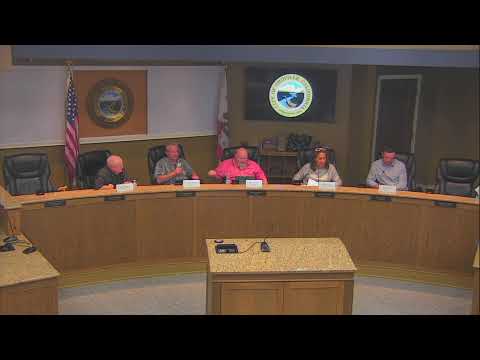
On schedule, staff said the GSA will present the evaluation and draft amendments to its advisory committee (WAC) on April 3, incorporate input, and hold a public workshop tentatively in May or June. The consultant said a draft evaluation and plan amendment should be ready by October 2025 to allow public noticing, with final documents targeted for March 2026. At the March 20 meeting the board gave direction to move forward with preparing the amendments; the board did not take a formal roll‑call vote but expressed collective agreement by voice and nods during the session.
The board also discussed funding sources and grants that support the contract work; staff noted the current contract amendment is being finalized to list the amendment and evaluation as deliverables tied to existing grant funding. The board asked staff to return with updates as the monitoring network is installed and as additional data inform whether SMCs need to be raised for specific sites.
Next steps listed in the presentation include: advisory committee review (April 3), public workshop (May–June), completion of a draft evaluation and amendment (October 2025), and final action by March 2026. Staff asked for board confirmation to proceed; the board indicated support and no members voiced objections.