Get Full Government Meeting Transcripts, Videos, & Alerts Forever!
Get email alerts on the School Budget topic
No spam. Unsubscribe anytime.
Freetown‑Lakeville officials present FY26 budget; district could cut 14–16 positions, ask towns to hold $400,000 placeholder
Summary
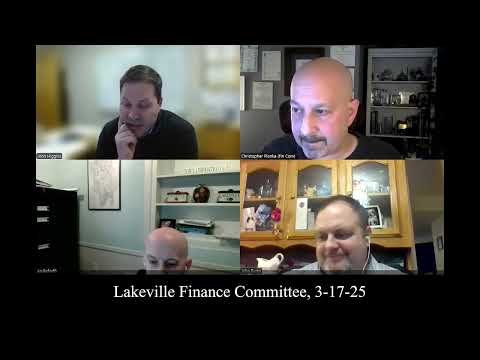
Freetown‑Lakeville Regional School District business manager Jack Higgins presented the district’s proposed fiscal year 2026 budget to the Town of Lakeville Finance Committee on March 17, laying out revised totals, multiple funding scenarios and a possible reduction of 14 to 16 staff positions tied largely to lower enrollment and uncertain state and federal funding.
Freetown‑Lakeville Regional School District business manager Jack Higgins presented the district’s proposed fiscal year 2026 budget to the Town of Lakeville Finance Committee on March 17, laying out revised totals, multiple funding scenarios and a possible reduction of 14 to 16 staff positions tied largely to lower enrollment and uncertain state and federal funding.
Higgins told members the district began FY26 planning from a FY25 base of $46,550,959. An initial FY26 proposal presented in February totaled $49,135,217 (about a 5.5% increase), but subsequent adjustments and identified savings brought a revised draft to roughly $47.575 million (about a 2.2% increase from FY25). Higgins said the school committee is considering an interim “placeholder” use of $400,000 from school‑choice funds between the committee vote and town meetings while awaiting potential state aid; using that placeholder would raise the working budget to about $47 million and represent roughly a 3.1% increase, he said.
Why it matters: Higgins warned that revenue uncertainty — including possible changes to federal IDEA and other grant funding, the pace of Chapter 70 and millionaire‑surtax distributions, and the outcome of ongoing contract negotiations with staff — could force the district to cut positions or reduce services. He and committee members discussed potential impacts on special education services, classroom sizes and programs added with one‑time funding.
Key figures and proposals
- FY25 adopted budget: $46,550,959 (Higgins). - Initial FY26 proposal (Feb presentation): $49,135,217 (≈5.5% increase). - Revised FY26 draft sent to towns / administrators: $47,575,033 (≈2.2% increase). - Placeholder proposed from school‑choice funds: $400,000; if used as a temporary measure the school committee’s working budget would be roughly $47 million (Higgins said this would equate to about a 3.1% increase). - Estimated assessment impact in the draft Higgins cited: Lakeville +$726,649; Freetown −$5,231 (Higgins attributed the disparity to differing changes in each town’s required local contribution calculated by the state).
Staffing and program risks
Higgins said the district expects enrollment declines that require reductions “at the top end and the bottom end” of staffing, noting eight positions would be reduced directly because of enrollment and that the total reductions needed to meet towns’ fiscal constraints could be around 14–16 positions depending on which roles are eliminated and whether affected employees have family health insurance (which can add roughly $19,000 in benefits cost for some new hires). He said several recently added positions — including roles funded initially with ESSER dollars — would be among those at risk when the district rolls them onto the general fund.
Multiple members, including Lakeville resident and finance committee member Barbara Mankovsky, pressed Higgins on special education funding and federal grants. Higgins said the district receives about $750,000–$850,000 annually from IDEA and about $400,000 from Title I, and that a combined reduction of roughly $1.25 million in federal funding would be “very difficult” to absorb without affecting class sizes or program delivery. He said the district would try to avoid cutting IEP‑mandated services but that reduced funding would likely be spread across programs, which could increase class sizes and change instructional delivery.
Funding possibilities and assumptions
Higgins described ongoing lobbying by the Massachusetts Association of Regional Schools (MARS) for a larger share of millionaire‑surtax revenue to help regional districts — particularly for transportation. He said the district has reason to believe it could receive additional funding in FY25 (one‑time relief) and possibly in FY26; Higgins estimated a Chapter 70 bump of about $75,000 and a possible regional transportation increase in the $300,000–$325,000 range if proposed allocations are realized. He named several scenarios: if no additional state funds arrive, the district would move the $400,000 back into school‑choice reserves without changing town assessments; if partial funds arrive, the district would use a smaller share and restore funds accordingly; if additional funds exceed the placeholder, the excess would reduce town assessments.
Fund balances and near‑term cash
Higgins and committee members reviewed fund balances the district expects to carry: circuit breaker reimbursements were projected at about $1,100,000 at fiscal year end and school‑choice balances “just a little over a million,” he said. He also reported an FY25 excess and deficiency (E&D) amount of $2,211,690.70. Committee members asked how those balances are being applied; Higgins explained that portions of reimbursements and one‑time funds are being counted toward next year’s cash flow and the proposed use of $400,000 is intended as a temporary measure while the district awaits state decisions.
Collective bargaining, benefits and timing
Higgins said contract negotiations with teachers, paraprofessionals and secretaries informed the budget and that salary step and lane movements could increase some employees’ pay by 6–7% even though the district had been modeling a 3% base increase for many staff. He noted health‑insurance cost increases came in a bit below earlier estimates — about a 10.5% increase versus an expected 12% — and that the district is pursuing plan‑design changes that could lower the district share of premium growth but would require bargaining and PEC (public‑employee committee) processes; the district had soft and hard administrative deadlines in April and May tied to open enrollment.
Other operational notes
Higgins said the district is watching several capital and maintenance needs — a 10‑year‑old track that needs resealing and aging long‑jump pits — and that recent state earmarks covered projects such as the Assawamsee Playground and building security improvements. He also said the technology director has rotated Chromebook replacements and that the district used remaining ESSER funds last summer to cover a larger replacement cycle.
Next steps and schedule
Higgins told the Lakeville Finance Committee that the regional finance subcommittee would meet the night after the Lakeville meeting to make a recommendation, that the regional school committee would hold a public hearing on March 26, and that the school committee’s formal vote on the budget is scheduled for April 9. He said the committee can vote down the proposed number but not increase it after the public vote timeline described.
Ending
Committee members thanked Higgins and encouraged residents to watch the upcoming regional finance and school committee meetings. The Lakeville Finance Committee opened and closed its own meeting by formal motion; no final vote on the district budget occurred at the Lakeville Finance Committee meeting on March 17.