Get Full Government Meeting Transcripts, Videos, & Alerts Forever!
Get email alerts on the County Budget topic
No spam. Unsubscribe anytime.
Pender County finance chief, bond advisors outline debt plan as board weighs library, school and courthouse options
Summary
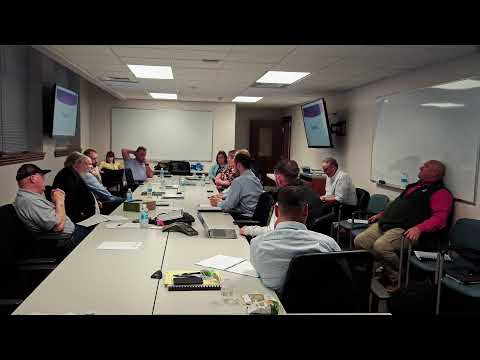
Meg Blue, Pender County finance director, told commissioners at the county retreat that the countys combined general funds total about $128,000,000, other governmental funds about $44.5 million and utility funds about $26.6 million as the board begins the budget cycle.
Meg Blue, Pender County finance director, told commissioners at the countys retreat that the countys combined general funds total about $128,000,000, other governmental funds about $44.5 million and utility funds about $26.6 million as the board begins the budget cycle.
The numbers matter because recent borrowing for the health and human services building, a law enforcement center and school projects has pushed several debt ratios above the countys policy thresholds even while the county maintains well-above-policy reserves. "Your unassigned fund balance as a percent of expenditures in fiscal 2024 was almost 60%," Ted Cole of Davenport Public Finance said, citing audit figures and Moodys-style comparatives.
At issue for the board: (1) whether to issue the remaining roughly $34 million in voter-authorized general obligation (GO) school bonds in fiscal 20272828and 2028), (2) how much of the countys excess reserves to spend for capital (including a possible $15 million toward a new library) and (3) whether to proceed with a proposed $58 million courthouse and, if so, how to pay for it.
Cole said Pender Countys total tax-supported debt outstanding is roughly $300 million and that the countys 10-year payout measure is about 53%, meaning roughly half of outstanding principal will be repaid under current schedules in the next decade. He noted the county holds ratings from Moodys (AA2) and Standard & Poors (AA). "The rating looks at economy, financial performance, institutional framework and leverage," Cole said, explaining the agencies four-part approach.
The presenters walked commissioners through three planning cases. A base case showing only the remaining $34 million in school GO bonds is covered by currently budgeted revenues and planned uses of a debt-service reserve. A second case that also fully debt-finances a $58 million courthouse would create a multi-million-dollar structural shortfall beginning around fiscal 2029. Davenports model estimates the shortfall as roughly $6.5 million a year in that scenariothe equivalent of roughly 6 to 7 pennies of tax rate revenue under current valuation assumptions. A third scenario assumed dedicating an additional $15 million of cash to the courthouse; that would reduce but not eliminate the shortfall.
Blue flagged several mechanics the public and new board members asked about: how the countys tax-rate "pennies" are allocated (for example, a 9.25¢ EMS tax and a 7.81¢ county debt-related levy), how non-tax revenues such as sales tax and lottery funds are applied, and that the countys fund-balance policy sets a minimum unassigned balance equal to 20% of general fund expenditures but also permits appropriation of excess for one-time capital uses. "Anything in excess of 20% may be appropriated for pay-as-you-go capital or other one-time uses," Blue said.
Commissioner Groves asked whether the board had already approved spending $15 million on a library; staff clarified that architectural and engineering (A&E) work of about $1.5 million has been authorized, but the full appropriation for construction would come back to the board for approval. "The full $15 was not yet approved," Blue said.
Cole and Blue emphasized that decisions remain with the board: the remaining school GO authorization has been planned for but not issued, the library construction appropriation would require a separate board action, and the courthouse would require policy choices about issuing new debt or using reserves. Both presenters recommended revisiting the model as budgets and valuations update and noted that the county could seek alternatives (phased projects, partial cash contributions, or changes to the tax-rate allocations) to reduce future revenue requirements.
For now, the retreat left three clear next steps for the board: confirm whether to issue the remaining school GO bonds, decide whether to appropriate reserve cash (and how much) for library or courthouse work, and direct staff to return with updated budget-year projections and an issuance plan if the board wishes to consider debt for the courthouse.