Get Full Government Meeting Transcripts, Videos, & Alerts Forever!
Get email alerts on the Workforce Development topic
No spam. Unsubscribe anytime.
Georgia workforce leaders outline data center growth, neurodiversity hiring and training partnerships
Summary
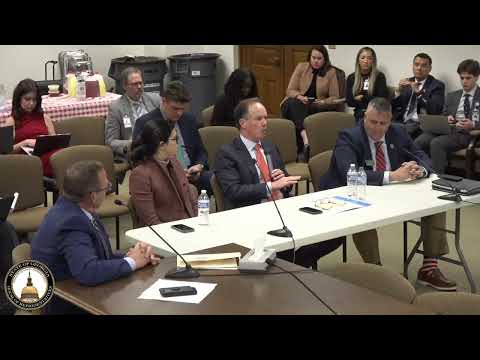
At a lunch-and-learn convened by the Economic Development & Tourism committee in Savannah, T5 Data Centers, Autism Speaks, the Technical College System of Georgia and Goodwill discussed data center expansion, barriers to employment for autistic job seekers and the state's technical training pipelines.
Leaders from T5 Data Centers, Autism Speaks, the Technical College System of Georgia (TCSG) and Goodwill of Southeast Georgia discussed workforce development needs for Georgia during a lunch-and-learn hosted by the Economic Development & Tourism committee in Savannah; the session's date was not specified in the record.
The panel focused on three interlocking issues: the rapid growth of data-center development and the skills needed to build and operate those facilities; programs to increase employment among autistic and neurodiverse Georgians; and the role of technical colleges and workforce programs in supplying trained workers to industry.
Pete Marron, president and CEO of T5 Data Centers, described the company's business and the factors that attract data centers to Georgia. "For someone to be a successful data center developer, you need 5 ingredients," Marron said, listing land, power, capital, a team and equipment supply as the key components. He said Georgia is currently the No. 2 data-center market in the United States and that T5 plans long-term campus development in the state. Marron said T5 is a roughly 500-person company with about 100 open positions on a typical basis and that building one large campus can involve more than 1,100 construction workers at peak.
Ariana Esposito, vice president for services and support at Autism Speaks, outlined the organization's Workplace Inclusion Now program, which trains employers to attract and support autistic and neurodiverse applicants and provides resources to job seekers. "Nationally, there is a 20 percent employment rate for people with disabilities including autism," Esposito said, adding that roughly 70,000 adolescents age out of school services each year. She said the program offers digital trainings and a nationwide Autism Response Team that conducts information and referral work during business hours in every U.S. time zone.
Esposito described partnerships already underway in Georgia, including training for staff in school nutrition programs and pilot placements with manufacturers. She encouraged school districts and businesses to contact AutismSpeaks.org/WIN for program support and noted a grant to support Georgia School Nutrition Association counties.
Mark Peavey, chief of staff for the Technical College System of Georgia, described the system's role supplying workers across multiple sectors. "We are effectively the workforce development engine for the state of Georgia," Peavey said. He said TCSG operates 88 campuses and 22 colleges, that about 45,000'to'50,000 students participate in technical education programs annually, and that roughly 25'to'30 percent of those students are in high-demand industries such as cybersecurity, nursing, manufacturing and automotive. Peavey said TCSG reports a 92 percent in-field job placement rate for graduates and that Quick Start and WorkSource Georgia (the state's federally funded employment-and-training network) connect training to employer needs.
Bill Kelso, introduced as Executive of External Affairs for Goodwill Industries of Southeast Georgia, described local partnerships that place trainees in entry jobs and pay tuition for technical certificates. Kelso gave an example of a trainee who completed a program at Savannah Technical College, was paid for by Goodwill, and was hired by a local aerospace employer within 30 days.
Panelists emphasized that different job types suit different workers and that employers who adapt hiring and onboarding practices can benefit from lower turnover and stronger retention. Esposito said workplaces that intentionally position roles and provide modest accommodations "are really warm and welcoming to autistic employees" and that such efforts also yield business benefits.
The discussion closed with Marron describing T5's longer-term plans: the company aims to build multiple scaled campuses in Georgia over a multi-year horizon. He said those projects will require substantial power, land and construction labor, and will create both construction and ongoing operations jobs. Peavey and other panelists said TCSG and Quick Start routinely work with new employers to build initial workforces and to maintain local training capacity over time.
Panelists did not record any formal motions or votes during the session. The meeting included questions from committee members identified in the transcript as Representative Franklin and Representative Harry and concluded with a reminder to attendees to take lunch.
Less-critical details: Esposito noted upcoming observances for Autism Acceptance Month in April and encouraged people seeking resources to contact Autism Speaks; Marron said T5 historically hires many veterans, particularly former Navy nuclear technicians; Goodwill noted a local Reardon Center that supports its programs.