Get Full Government Meeting Transcripts, Videos, & Alerts Forever!
Get email alerts on the Tort Reform topic
No spam. Unsubscribe anytime.
Georgia House Passes SB 68, Revising Civil-procedure, Evidence and Premises-liability Rules
Summary
After hours of debate, the Georgia House approved Senate Bill 68, a package of changes to civil procedure, evidence rules and premises-liability standards that supporters say will reduce litigation costs and opponents say will limit victims' access to justice. The measure passed 91–82 and was sent immediately to the Senate.
ATLANTA — The Georgia House of Representatives on March 20 passed Senate Bill 68, a package of changes to the state's civil practice and evidentiary rules and to premises-liability law that backers said will curb abusive litigation and opponents said will limit access to the courts for injured Georgians.
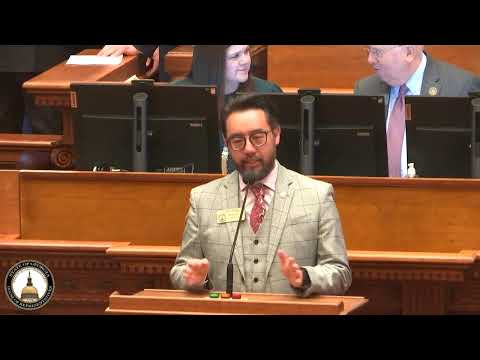
Supporters framed the bill as a procedural and evidentiary update aimed at reducing litigation costs for businesses and insurers. "This is a bill that makes reasonable revisions to our Civil Practice Act and reasonable revisions to our evidentiary code," Representative James Burchett, who presented the measure in the well, told colleagues during floor debate. He described the changes as largely technical and procedural, adding: "It's about how lawyers act in court and then how and when a person can be sought for liability for negligent security. That's that. That's it."
Critics said the statute will erect new barriers for people seeking compensation after catastrophic injuries and that it contains provisions that will not demonstrably lower insurance premiums. "There isn't a single line in this bill that requires insurance providers to reduce premiums," Representative Roberts said. Representative Al Williams, a long-time critic, warned the bill would leave some injured Georgians without meaningful recovery: "Don't let some girl who's been raped not be made whole," he said during debate.
Major provisions described on the floor and in committee testimony include: - Timing for voluntary dismissal: the bill moves limitations on a plaintiff's voluntary dismissal to a point tied to the defendant's answer (the house debate referenced a shift to "60 days after an answer"). - Limits on "anchoring" evidence: attorneys will be restricted from making numeric suggestions for non-economic damages to juries until the appropriate stage of argument; advocates must tie damage arguments to evidence presented. - Discovery stays and procedure: the measure tightens rules governing stays of discovery while certain pretrial motions are pending, a change proponents say prevents abusive filings and opponents say may delay meritorious cases and make evidence harder to obtain as memories fade. - Seat-belt evidence: the bill allows admission of evidence about seat-belt use in motor-vehicle matters. - Premises liability / negligent security: the bill raises the factual threshold for third-party premises-liability claims in many settings and narrows the types of evidence that may support those claims; it contains an explicit carve-out for specified victims of trafficking. - Collateral-source and health-care access concerns: opponents, including Representative Park Webb, said changes to the collateral-source treatment could reduce access to health-care financing tools doctors use to treat underinsured or uninsured patients.
Supporters argued the changes will create predictability and reduce insurance costs. "By enacting these reforms we create a more predictable and equitable legal environment," Representative Chaz Cannon said, calling the bill an "economic imperative" for small businesses. Members of the bill's subcommittee and the Rules Committee said they spent many hours hearing testimony and adopted multiple amendments before advancing the measure.
Opponents disputed the insurance argument and cited evidence from other states. Representative Roberts noted that in some jurisdictions that enacted similar reforms, premiums did not fall, and he said insurer investment income and market behavior also influence rates. Several speakers warned the bill would make it harder for victims of violent crime, medical negligence and catastrophic accidents to secure full compensation; Representative Stacy Evans said the proposal would "make our court system less efficient and create more of a backlog." Representative Tanya Miller framed the debate in constitutional terms, urging colleagues to preserve jury trials as a core protection for ordinary citizens.
After the debate concluded, the House adopted the committee substitute and, on final passage, recorded a roll-call tally of 91 yeas and 82 nays. Representative Burchett subsequently moved immediate transmittal to the Senate; that motion passed 94'to'77. The bill will now be considered by the Senate.
Votes at a glance: Senate bills and outcomes recorded in the House on March 20, 2025 - Senate Bill 68 (tort / civil practice, evidentiary and premises-liability changes): Passed House 91''yeas, 82 nays; immediate transmittal to Senate passed 94''yeas, 77 nays. - Senate Bill 153 (annual code revision bill, reenacts and corrects statutory code): Passed House 169'yeas, 0 nays (committee substitute adopted). - Senate Bill 252 (allows conveyance of municipal property interests to independent school systems in certain exchanges, cited example: City of Atlanta and Atlanta Public Schools): Passed House 169'yeas, 0 nays (committee substitute adopted).
What's next: Because the House adopted the bill and voted to transmit immediately, SB 68 moves to the Georgia Senate for further consideration. Any final change by the Senate would require conference or concurrence before reaching the governor.