Get Full Government Meeting Transcripts, Videos, & Alerts Forever!
Get email alerts on the Pilot Moratorium And Repository topic
No spam. Unsubscribe anytime.
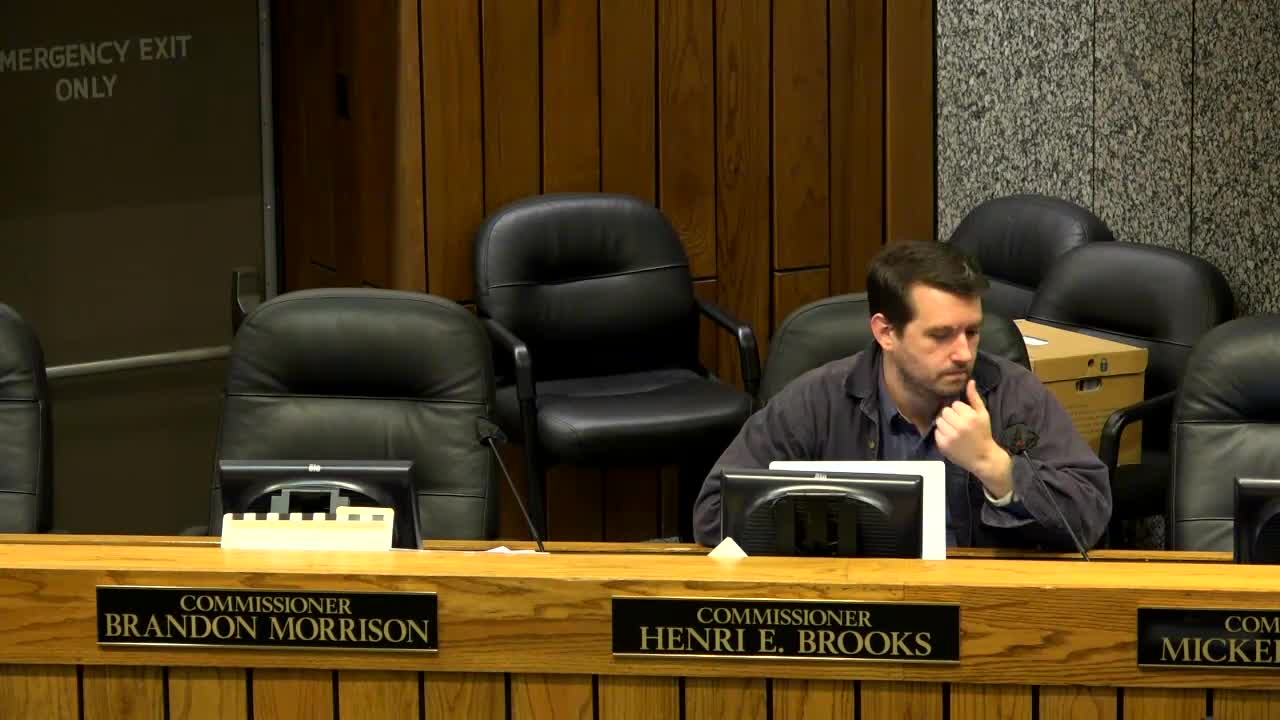
Shelby County ad hoc committee to refine pilot moratorium, press for centralized PILOT repository
Summary
Members of the Shelby County Commissionad hoc committee clarified legal authority over tax abatement boards, debated shortening or narrowing a proposed moratorium on PILOTs, and agreed to pursue a shared repository and outreach to pilot-granting entities.
Shelby County ad hoc committee members spent their meeting on options for a pilot-program (PILOT) moratorium and on building a centralized repository to track tax-abatement deals, bond counsel opinions and quarterly compliance reports.
The committee discussed whether to shorten or narrow a previously drafted moratorium on new pilot agreements, reviewed a bond-counsel and legislative-counsel reading of Tennessee Code Annotated provisions related to industrial development boards (IDBs), and agreed to invite the nine local agencies that can grant abatements to discuss data sharing, standardization and reporting.
The discussion matters because PILOTs (payments in lieu of taxes) shift tax revenue away from county services and committee members said inconsistent documentation and limited public data make it hard to evaluate the fiscal and housing impacts of those programs. Janice Banks, SPW Community Strategies, pointed to bond- and legislative-counsel materials that, she said, indicate the legislative body can require IDBs to submit agreements for approval: "the legislative body of the municipality or municipalities making such delegationmay require the IDB submit for approval any agreement with any of the corporations lessees providing for the acceptance or waiver of payments in lieu of taxes." Banks read that language from the counsel materials distributed to the committee.
Committee member Austin Harrison, who described himself as a data specialist, advocated a two-track approach: limit the scope or length of a moratorium while simultaneously building a repository of existing pilot agreements. "There are groups that are sharing that information, and then there are groups that aren't," Harrison said, arguing the committee should first try to assemble a coalition of willing agencies and use early participants as models rather than immediately imposing a full moratorium.
Legislative counsel Marcy Ingram clarified the current procedural status of the commission-level item: "I confirmed with the minutes clerk from the last meeting, the pilot moratorium resolution did not fail. It came back to thisit was referred to this body to make additional recommendations." Ingram told the committee that altering the resolution's duration or carving out specific entities would be legally permissible and that draft language could be revised and returned to the full commission for a vote.
Committee members repeatedly raised implementation questions. Several speakers noted differences among agencies in record keeping and capacity; Downtown Memphis Commission representative Shandell Ryan described the DMC's project database as digitized and searchable and said for the record, "we do not extend pilots." Other agencies, committee members said, still hold paper records, making standardized analysis difficult.
Members reviewed attorney notes and a bond-counsel opinion that the committee said could be used to assert the county's authority to require prior approval or enhanced reporting in at least some circumstances. The bond-counsel materials also noted prior charter amendments and county policies (cited by counsel) that condition certain pilot leases on prior consent of the commission or county mayor.
The committee also discussed housing-sector data distributed in prior meetings showing elevated eviction rates at some PILOT-subsidized properties. Austin Harrison summarized recent analysis: for 2024, "16 percent of all evictions" in the dataset came from HEHF properties; over a five-year span he said the number rises to roughly 20 percent. Committee members said those figures underscore the need to link abatements and program outcomes.
Next steps decided by the committee included: (1) scheduling an interim Zoom meeting before the next regular session to draft recommended changes to the moratorium resolution, including shorter durations (examples discussed: 180 days versus 90 or 60 days or a three-month moratorium), and possible entity carve-outs; (2) issuing invitations to the nine pilot-granting entities to explain the committee's goals and to ask each agency to volunteer to participate in a shared repository or to present at a subsequent meeting; and (3) asking legislative counsel to draft any necessary resolution language or procedural steps to require IDBs to seek prior approval if the committee recommends that course.
The committee set a next regular meeting for April 17, 2025, and agreed to convene at least one earlier Zoom meeting to finalize recommended changes to the moratorium language and an outreach plan for pilot-granting entities. Marcy Ingram said the commission will not act on the resolution until the ad hoc committee submits its recommendations.