Get Full Government Meeting Transcripts, Videos, & Alerts Forever!
Get email alerts on the Opioid Settlement Funding topic
No spam. Unsubscribe anytime.
Toledo committee hears how OneOhio settlement dollars are funding local addiction prevention, treatment and recovery supports; councilmember presses for state‑l
Summary
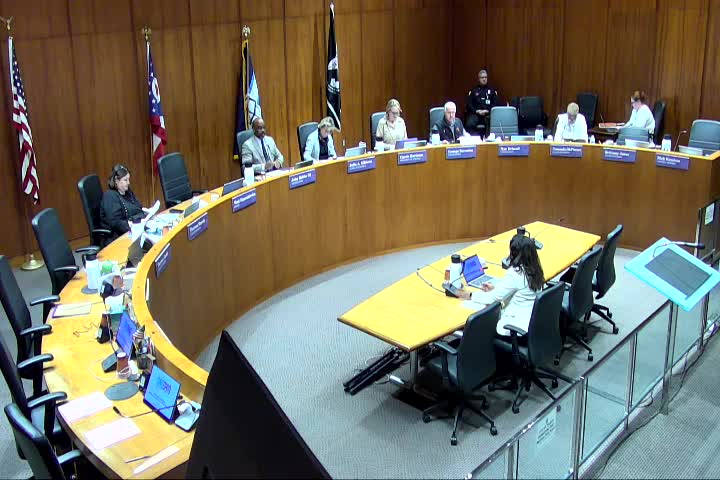
The Toledo City Council Public Safety and Criminal Justice Reform Committee on March 20 heard from OneOhio Recovery Foundation and local service providers about how opioid settlement money is being used in Lucas County and elsewhere in Ohio.
The Toledo City Council Public Safety and Criminal Justice Reform Committee on March 20 heard from OneOhio Recovery Foundation and local service providers about how opioid settlement money is being used in Lucas County and elsewhere in Ohio.
OneOhio Recovery Foundation Executive Director Alicia Nelson told committee members the foundation views addiction as “a treatable chronic, medical disease involving complex interactions among brain circuits, genetics, [and] the environment,” and described the foundation’s role in awarding grants to programs across the state. Nelson said OneOhio’s 2024 regional grant round awarded “a little over $45,000,000” to 245 projects statewide and that Region 4 (Lucas County) received $2,140,000 to fund eight organizations.
The briefing centered on how settlement funds are distributed and used. Nelson said the statewide memorandum of understanding that guided settlements put 55 cents of every dollar to the foundation, 30 cents to local governments and 15 cents to the state, and that the foundation did not receive its first payments until March 2023. She also pointed attendees to a settlement‑payment tool and the Brown Grier settlement administrator website for payment totals, and said the Auditor of State has issued guidance for how local governments should account for and report the funds.
Why it matters: the committee sought local detail on programs paid for by settlement dollars and how those funds are tracked and reported. Council members and audience members asked whether the state’s handling of its share is transparent and whether local recipients are publicly accountable for spending.
Key local grantees described how OneOhio funds are being used in Lucas County:
- Lucas County Children’s Services (LCCS) said it was awarded $463,802 from OneOhio to expand services for families affected by substance use. Jana Beal, director of social services for LCCS, and Amy Galvin, manager of Family and Community Engagement, described plans to add a third Ohio START dyad (Ohio START: Sobriety, Treatment, and Reducing Trauma), expand kinship navigation through the Area Office on Aging, and partner with the statewide Connect to Family program to locate and engage relatives for children in care. LCCS reported that 43 percent of its 2024 opened cases involved substance use and that 37 percent of substance‑related cases involved heroin or other opioids.
- The Zepf Center (presented by CEO Deb Flores and Brandon Smith, senior director of recovery services) described a broad continuum of care in Lucas County spanning outpatient, medication‑assisted treatment (methadone, buprenorphine/Suboxone, Vivitrol), inpatient detox and residential treatment, recovery housing and a crisis stabilization unit. Flores said Zepf used its OneOhio award under the “recovery supports” abatement strategy and that the regional award permitted $400,000 over two years for recovery supports in the region (approximately $200,000 per year). Zepf said the funds were used largely to employ certified peer support specialists and to expand workforce and activities‑of‑daily‑living training in its recovery housing. Brandon Smith described peers’ duties: recovery planning, coordinating meetings and supports, and training residents in daily living skills.
- Harbor (represented by Dr. Phil Atkins) described a prevention initiative targeting transitional young adults (ages 18–26), especially LGBTQ young adults, using an evidence‑based curriculum called Affirm alongside SBIRT screening and peer support. Dr. Atkins said the project’s goals are to create safe, drug‑free community settings, teach advocacy and refusal skills, build trusted referral pathways into behavioral health care, and convene an advisory council and coalition of providers.
Several presenters emphasized peer support as a core strategy. Zepf said it now employs certified peers across many departments, and Dr. Atkins described certified peer support as an emerging profession that helps connect people to services and reduce isolation.
Concerns about transparency and oversight surfaced during questioning. Councilwoman La'Quetta Morris said she did not “believe in the state of Ohio” on transparency after citing news coverage about untraceable state funds, and pressed Nelson to explain how the funds are tracked. Nelson said local government shares are paid directly by the settlement administrator (Brown Grier) to about 1,500 local entities and that the OneOhio foundation does not control those local or state checks; she pointed the committee to the Brown Grier site and Auditor of State guidance for public accounting and reporting.
Committee follow‑up and process notes: Nelson said she would provide more detailed demographic materials on overdose rates and on the cited statistic that some demographic groups (for example, Black men) have higher overdose rates; Dr. Phil Atkins requested Nelson email additional notes and data. Zepf and Harbor offered to return to the committee to discuss crisis response, diversion partnerships with law enforcement, and the full crisis continuum, including the 24/7 crisis line the Zepf Center operates.
No formal motions or votes were taken at the March 20 meeting. Presenters and council members framed their discussion as informational and focused on program delivery, funding distribution and transparency.
Ending: Committee members thanked agency leaders for the presentations and asked staff and presenters to provide follow‑up materials and return for more detailed briefings on crisis response and prevention strategies.