Get Full Government Meeting Transcripts, Videos, & Alerts Forever!
Get email alerts on the Sports Facilities topic
No spam. Unsubscribe anytime.
Brentwood narrows goals for indoor racket facility; consultants to model resident-first, self‑supporting plan
Summary
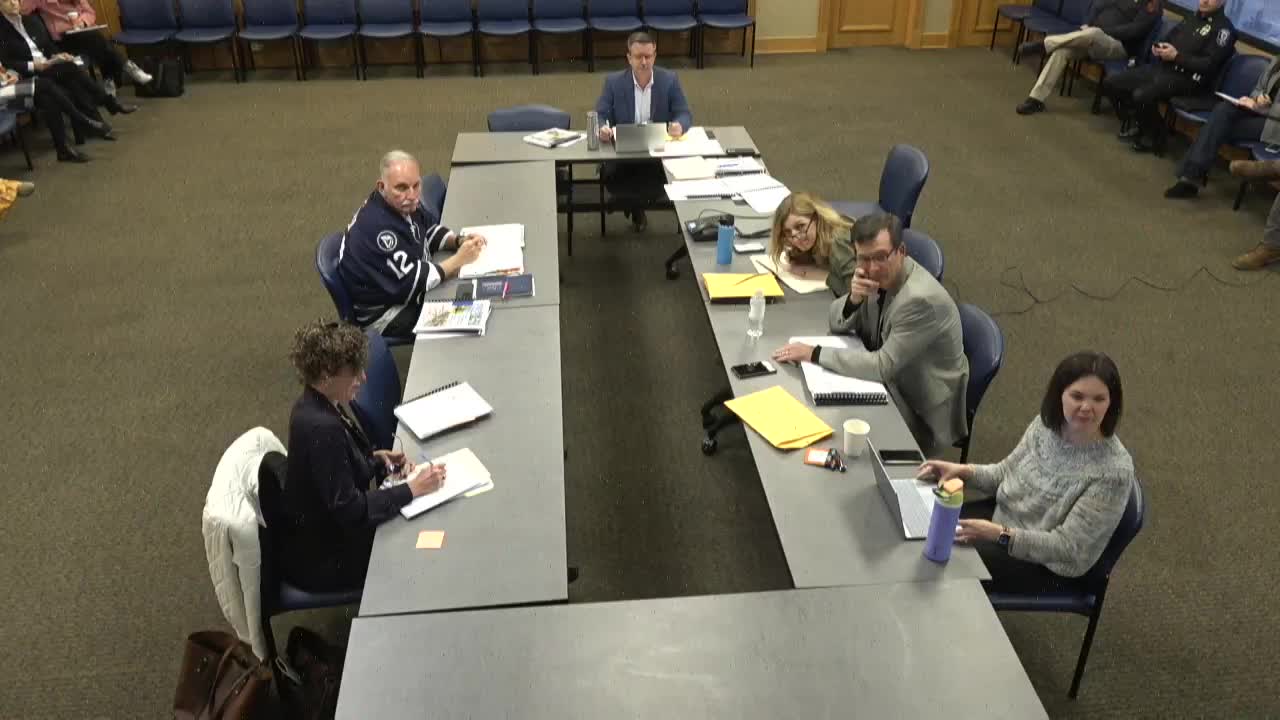
Brentwood City Commission members and staff told Sports Facilities Companies advisers on Tuesday that any indoor “racket” facility should be resident‑focused, support year‑round youth programs and lessons, and be structured to at least break even operationally.
Brentwood City Commission members and staff told Sports Facilities Companies advisers on Tuesday that any indoor “racket” facility should be resident‑focused, support year‑round youth programs and lessons, and be structured to at least break even operationally.
Kevin Hsu, an account executive with Sports Facilities Companies, and Ryan Ferguson, the project manager on the advisory team, led a remote briefing and sought details the consultants said they need to build a detailed financial pro forma. "We're going to be very specific...to the dollar the expectations and projections of revenue streams, expenses, operational expenses," Hsu said, describing the team's approach to market analysis, utilization projections and revenue modeling.
City staff said their expectation is clear: the facility should be fully utilized and "more than breaks even," with enough ongoing revenue to fund routine replacements and renewal without an ongoing tax subsidy. "Maximizing revenue is not necessarily the goal," a city staff member, Jay, told the advisers, "but providing a quality facility that the community enjoys and uses to its fullest, while fully paying for itself and its future replacement would be our vision of success." The commission reiterated that priority access should favor Brentwood residents, though staff and commissioners said they are open to allowing county users when resident demand is met.
Consultants and commissioners discussed key operational assumptions the pro forma will test: resident priority booking and resident pricing; a focus on youth programming during after‑school hours; keeping alcohol off site; light concessions and "grab‑and‑go" food that supports user experience without running a full restaurant; and limited hosting of tournaments. Multiple commissioners said residents have voiced opposition to large, recurring out‑of‑town tournaments that would generate heavy traffic near nearby schools and churches, so the facility should be designed for occasional regional play but not as a national tournament venue.
On concessions and on‑site food and beverage, Hsu said industry practice for social sports such as pickleball is to provide seating and modest food and drink options to extend user experience and capture revenue. "We want concessions...and cafe seating areas, places to sit and socialize and hang out after the game," he said, adding that the city could choose to limit alcohol and avoid competing with private restaurants. The commission agreed that modest concessions to serve parents and participants would be appropriate; the city attorney indicated alcohol would not be allowed at a city park facility.
The consultants also asked to include sponsorship revenue as a line item in the pro forma. Staff confirmed the city has an existing sponsorship policy and that naming rights and sponsorship approval levels would require additional city commission review.
Finance staff briefed commissioners on how the facility could be funded and accounted for. Karen, a finance staff member, outlined the tradeoffs of an enterprise fund versus accounting for the facility in the general fund. She told the commission that Governmental Accounting Standards Board (GASB) guidance and city policy can require an enterprise fund if the city adopts a user‑fee model intended to fully recover operating and capital costs (including debt whose repayment is pledged to facility revenues). "If you want this facility's user fees and charges to cover the cost, GASB requires that it be an enterprise fund," she said, adding that enterprise accounting increases transparency but also adds administrative complexity and market risk if revenues do not meet projections.
Commissioners asked consultants to model multiple scenarios — resident‑only priority use, mixed resident/county use, and limited tournament hosting — and to include sponsorship options and concession assumptions. The city asked the consultants to incorporate technology and residency verification options (for example ZIP code checks and address confirmations) to support resident priority in the booking system.
Next steps: Sports Facilities Companies will proceed with the detailed market and financial analysis and return a pro forma and utilization estimates to staff. The commission asked staff and consultants to return with a clearer estimate of one‑time capital costs, operating revenue projections, and options for enterprise fund accounting and debt treatment before the council makes a final decision on the facility model or funding plan.