Get Full Government Meeting Transcripts, Videos, & Alerts Forever!
Get email alerts on the State Budget topic
No spam. Unsubscribe anytime.
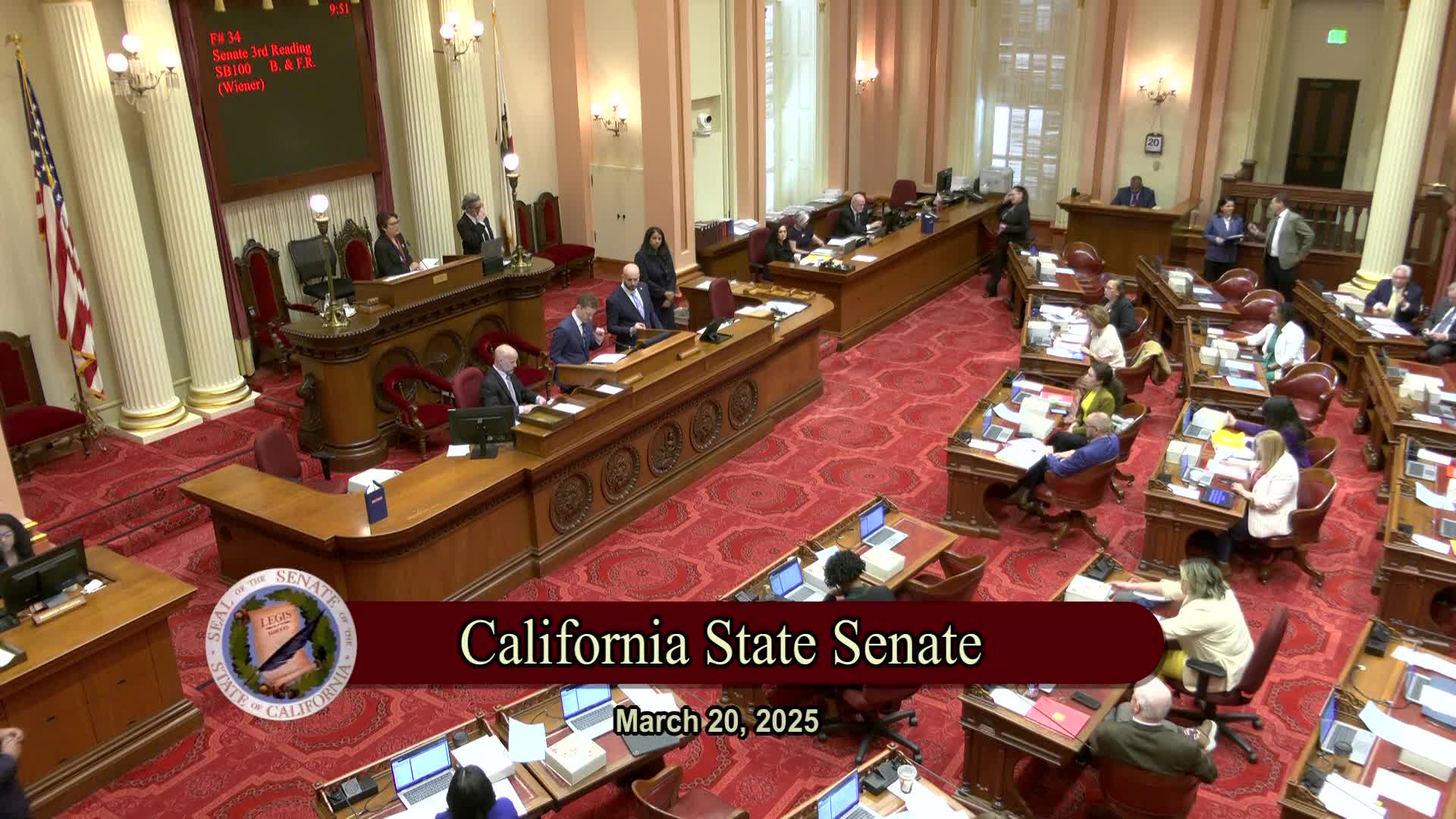
Senate advances SB 100 and 20 budget "trailer" vehicles after contentious debate over process
Summary
The California State Senate on March 22 advanced SB 100 — a vehicle to carry Budget Act implementing language — and moved a set of companion bills used for the 2025–26 budget. The 28-10 vote exposed sharp divisions over the trailer-bill process and transparency of budget negotiations.
The California State Senate voted 28-10 on March 22 to advance SB 100, a procedural vehicle described on the floor as part of the Budget Act of 2025, and to apply that roll call to a range of companion trailer bills (listed on the record as SB 101 through SB 219). The vote and ensuing debate focused not on the substance of specific budget provisions but on whether the so‑called trailer‑bill process reduces public oversight of major policy changes.
Senator Wiener, the bill's floor author, said the step was a routine procedural action to allow the Senate and Assembly to assemble final implementing language and to keep the timeline that produces a June 15 budget. "This is extremely normal. This happens — this is how the budget process works every year," Wiener said, adding that language for most trailer bills had been posted on the Department of Finance website.
Opponents framed the maneuver differently. Senator Niiello (as recorded on the floor) called the practice "a backroom budget deal" that leaves the public and many members of the Legislature in the dark. "This process so minimizes oversight and accountability ... that it actually, perhaps intentionally, empowers backroom deals with little or no input," Niiello said, urging colleagues to reject the measure.
Other senators amplified concerns about accountability and the role of trailer bills. Senator Alvarado Gill expressed worry that passing blank or short placeholder bills precludes members from knowing what they are approving. "You don't know what you're voting for because these are empty bills being exchanged back and forth between two houses," she said. Senator Jones and others urged more visible linkage between subcommittee hearings and what appears in the final budget.
Supporters replied that the subcommittee process is public and that the step is necessary this year because of federal uncertainty that could force rapid changes to state funding. Senator Wiener and other proponents argued the early movement of trailer vehicles allows the Legislature to respond quickly if federal action reduces funding for critical programs such as Medicaid, SNAP and education.
The roll call recorded 28 ayes and 10 noes on the motion to advance SB 100 and apply that vote to the listed companion bills; the clerk recorded the measure as adopted on that tally. The clerk then applied the same roll call to an extended list of bills (file items 35 through 153 on the daily file) and the bills were deemed passed per the record.
What passed today is a procedural step in a larger budget cycle. Committee hearings at the subcommittee and full budget committee level will continue through mid‑May, and members said they expect further amendments and public hearings before final budget enactment in June.
The debate underscored two persistent tensions in the Capitol: (1) members and observers who say trailer bills can hide policy changes from public view and (2) legislative leaders and budget chairs who view the vehicle approach as a practical means to prepare complex implementing language on a compressed timetable.
Votes and next steps: The floor record shows the SB 100 motion passed 28-10. Senators on all sides said the substantive budget decisions will be worked out in subcommittees and the full budget committee, and the final budget will return to the floor for an up-or-down vote in June.
(Reporting note: quotes and attributions in this article are taken from remarks recorded on the Senate floor on March 22, 2025.)