Get Full Government Meeting Transcripts, Videos, & Alerts Forever!
Get email alerts on the Forensic Services Dna topic
No spam. Unsubscribe anytime.
LAO urges shared-cost plan for DNA identification fund; DOJ and Finance warn of local impacts
Summary
The Legislative Analyst's Office recommended the Legislature reject an ongoing general‑fund backfill for the DNA Identification Fund and instead require a DOJ plan to transition to a user cost‑sharing model for Bureau of Forensic Services operations.
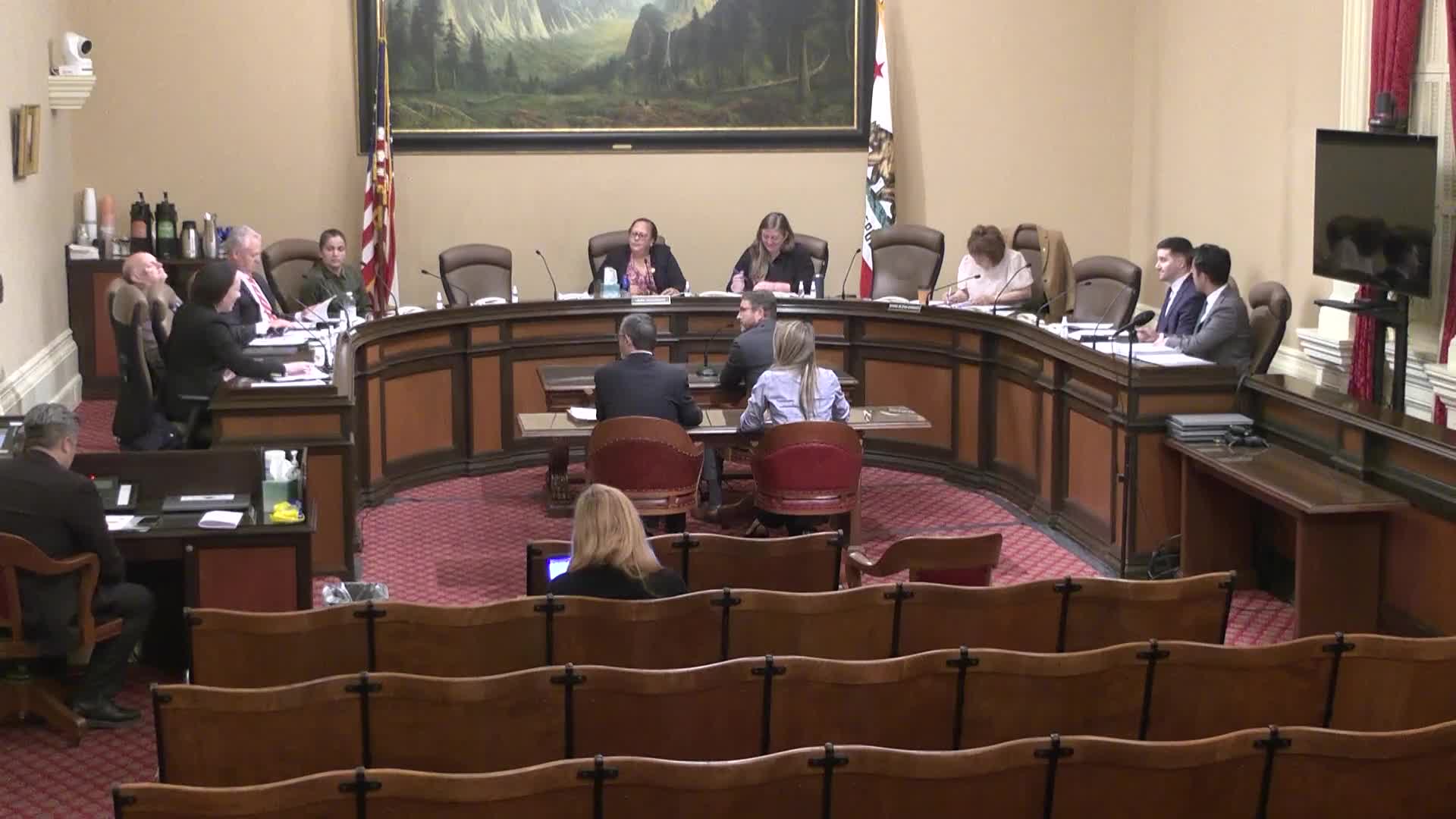
The Senate budget subcommittee heard competing fiscal recommendations on the DNA Identification Fund and the Bureau of Forensic Services (BFS). The Legislative Analyst's Office said the Legislature should reject a permanent general‑fund backfill and instead implement a user-cost sharing model with a plan submitted by DOJ by October 2025.
"The governor's budget is proposing an ongoing general fund backfill beginning in 20 six-twenty 7 for the DNA identification fund," Anita Lee of the Legislative Analyst's Office told the subcommittee, and the LAO recommended rejecting that approach in favor of a cost‑sharing structure that would require users of BFS services to partially support operations beginning in 2026–27.
LAO argued that a shared funding model would address insolvency in the DNA Identification Fund, reduce the state general‑fund burden and create incentives for more efficient evidence submission. The LAO recommended DOJ submit a plan by October 2025 describing how user payments would be calculated, possible sliding scales by agency size or service speed, and a proposed share of operations costs borne by users.
Department of Finance and DOJ witnesses, and BFS leadership, cautioned that charging local law enforcement or prosecutors for forensic services could create inequities, especially for smaller or rural counties, and might incentivize local agencies to withhold or triage evidence. Barry Miller, forensic scientist and BFS laboratory director, said the bureau was formed in 1972 to provide equitable access statewide and that the bureau often guides collection decisions and triages evidence with investigators.
Miller described past analyses and reports (including a San Diego grand jury report and prior research) that found fee-for-service models produced collection shortfalls and inequities in other jurisdictions. He said the bureau provides statewide services such as the California DNA Data Bank and missing‑persons DNA work, and warned that user fees could disrupt long-standing regional assistance to smaller counties.
The committee discussed trade-offs between state general-fund support and local capacity; no formal budget action was taken at the hearing. The LAO's recommendation invites a rule-making and stakeholder consultation process, while DOJ and Finance stressed concerns about equity and local budget impacts.