Get Full Government Meeting Transcripts, Videos, & Alerts Forever!
Get email alerts on the Firearms Budget topic
No spam. Unsubscribe anytime.
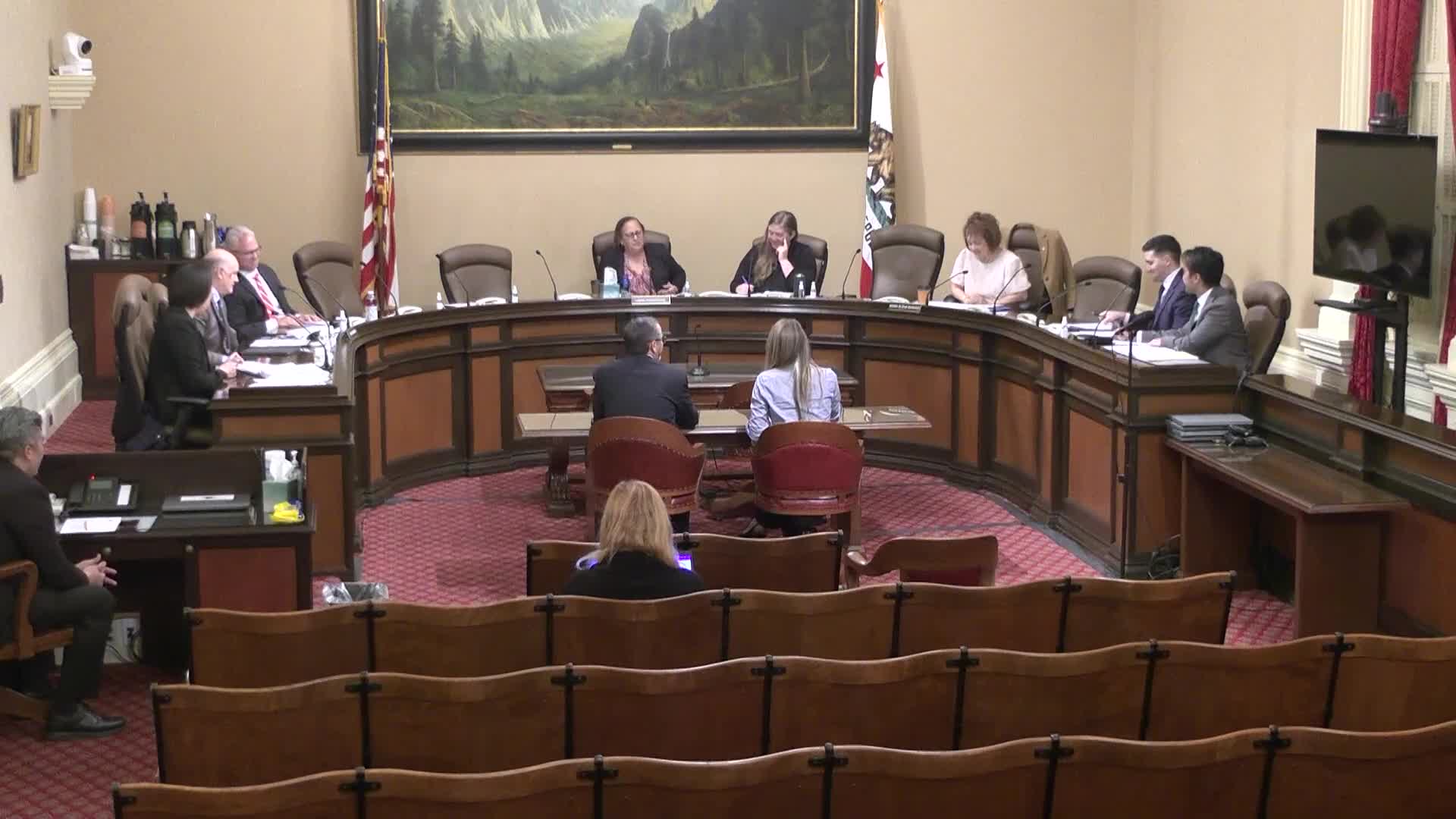
Senate panel hears DOJ firearms budget request and LAO urges framework to align fees and workload
Summary
DOJ told a Senate budget subcommittee the governor's budget includes a firearms package—about $19.2 million in 2025–26—mainly supported by the general fund, and LAO recommended a formal framework to align firearms workload with fee revenue amid special-fund solvency risks.
The Department of Justice presented proposals to fund increased firearms workload and a multiyear IT modernization project to a Senate budget subcommittee, and the Legislative Analyst's Office recommended the Legislature direct DOJ to submit a framework for matching workload to funding sources.
"The governor's budget proposes 19,200,000.0 in 2526 which includes 18,600,000.0 general fund and 640,000 from various special funds," Ashley Harp of DOJ said, summarizing the administration's firearms proposals. She described core functions such as background checks, the concealed-carry program and an effort to modernize firearms IT systems (referred to in testimony as FITZSIM), and said some workload growth resulted from recent legislation and court decisions.
Anita Lee of the Legislative Analyst's Office told the committee she had "no concerns with the proposals because they are to enact recently implemented legislation or to deal with increased workload," but she urged the committee to require DOJ to submit, by January 2026, a framework for deciding what portion of firearms work should be supported by regulatory fees and what should be paid from the general fund. Lee noted the DROS special account has solvency concerns and that the FITZSIM replacement of about 17 existing firearm and ammunition systems could require "several hundred million dollars" over coming years.
DOF and DOJ witnesses acknowledged the complexity and legal considerations tied to regulatory fees and said they would work with LAO and the Legislature. Senators pressed whether recurring general-fund commitments were appropriate given projected multiyear deficits and whether raising fees could risk litigation or unintended market effects.
Committee members also asked DOJ to analyze trends such as ghost guns, off-market purchases and cross-border purchases that could be affected by fee levels. DOJ said it would follow up with data for the committee. No formal vote was recorded on firearms proposals at this hearing; the subcommittee sought the LAO-recommended framework and additional data ahead of next year's budget cycle.